Baghdad: The Next Arena of U.S.-Iran Competition

Militia Influence Extends Beyond Arms… Al-Zaidi’s Government Faces the “Statehood Test”
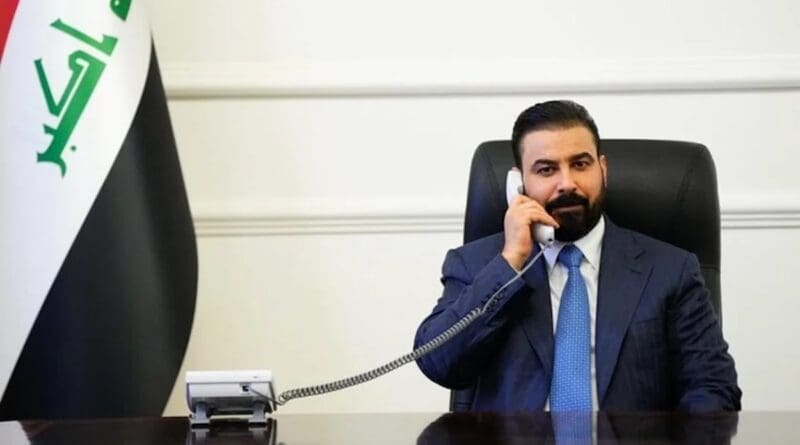
More than a month after securing parliamentary confidence on 14 May 2026, the government of Ali Al-Zaidi remains incomplete. Nearly ten ministerial portfolios have yet to be filled, including the Ministries of Interior and Defense, two institutions that occupy a central place in Iraq's state architecture.
In a country where governments have traditionally emerged only after lengthy negotiations among political parties, parliamentary blocs, patronage networks, and regional actors, such delays may appear routine. Yet this impression is only superficially accurate. The failure to complete the cabinet reflects not merely the familiar difficulties of dividing ministerial positions; more fundamentally, it reveals that the political settlements which brought Ali Al-Zaidi to power have not yet produced a genuine governing equilibrium.
As a result, the prime minister enjoys parliamentary legitimacy without exercising full control over the executive apparatus. His government exists legally, but remains politically incomplete. Consequently, the central issue is no longer the completion of the cabinet itself, but rather the political room for maneuver that Al-Zaidi will be granted to implement his economic, political, and security agenda.
Will Ali Al-Zaidi simply manage a compromise engineered by the dominant Shiite political forces, or will he gradually transform that compromise into a genuine platform for governance capable of restoring—even partially—the Iraqi state's capacity to initiate policy rather than merely react to competing pressures?
Against this backdrop, Al-Zaidi's anticipated visit to Washington in mid-July assumes exceptional importance. Far more than a routine diplomatic trip, it will represent the first real test of his premiership. Alongside discussions on economic cooperation, energy, and security, the visit will provide an opportunity to evaluate his ability to strengthen Iraq's international legitimacy, expand his independence from the political forces that elevated him to office, and define the nature of his relationship with the U.S. administration at a time when Washington's priorities in Iraq appear to be evolving.
Iraq Within a New Regional Equation
Many observers were struck by the strategic surprise engineered by Tehran when it disrupted navigation through the Strait of Hormuz and introduced a troubling new precedent in international law by asserting what it described as its "right of control" over the waterway.
The subsequent interim understanding reached between Washington and Tehran established a ceasefire and opened the door to a new phase of negotiations. While this arrangement is likely to reduce the risk of direct military confrontation in the short term, it resolves none of the underlying disputes that continue to divide the United States and Iran across the Middle East. On the contrary, their strategic rivalry appears increasingly likely to shift toward arenas where their interests continue to intersect—foremost among them, Iraq.
For Baghdad, this development presents a clear paradox.
On one hand, the relative easing of tensions between Washington and Tehran could provide Ali Al-Zaidi's government with additional political space to pursue domestic reforms without directly bearing the consequences of regional escalation.
On the other hand, the same détente could relocate U.S.-Iran competition into Iraq's own institutions, effectively transforming the Iraqi state itself into the principal arena of strategic rivalry.
Moreover, the emerging U.S.-Iran understanding reopens the Iraqi file within a broader geopolitical context.
The Gulf states are expected to accelerate efforts to consolidate their regional influence, particularly in Iraq, Syria, and Lebanon. At the same time, Turkey is likely to deepen its presence through its geopolitical strategy centered on energy corridors and regional connectivity.
Meanwhile, both China and Russia will seek to reinforce their positions along what they increasingly regard as the "southern front" of American—and more broadly Western—strategic pressure across Eurasia. In their strategic calculus, Iran constitutes this southern front, complementing the western front represented by Ukraine and the eastern front represented by Taiwan, together with the surrounding zones of geopolitical connectivity.
In principle, Iraq stands to benefit from this renewed competition for regional influence, particularly by attracting greater foreign investment and securing stronger support for its regional integration and normalization efforts.
This geopolitical transformation will inevitably reshape Iraq's position within the broader U.S.-Iran rivalry. For nearly two decades, Iraq's political order has rested upon an ambiguous balance: neither an American protectorate nor an outright Iranian client, but rather an open arena in which external powers, domestic elites, sectarian parties, armed factions, fragile institutions, and a rent-dependent economy have continuously negotiated influence.
Despite its inherent fragility, this model managed to preserve a measure of stability for many years. Today, however, mounting evidence suggests that Iraq is entering a new phase—one that, at least in theory, aims to strengthen the authority of the state and consolidate its institutions.
A Shift in U.S. Policy
The Trump administration no longer appears willing to fully accept the implicit formula that governed the Iraqi file over recent years—one based on a form of direct or indirect co-management between Washington and Tehran.
Signals emerging from Washington indicate a strategic approach aimed at establishing long-term American influence by strengthening Iraq's state institutions themselves. The underlying assumption is that more capable and credible institutions—supported through technocratic tools and, perhaps, a greater degree of ideological neutrality—would gradually tip the balance in favor of Iraq's national interests, particularly its economic interests, at the expense of Iranian influence.
A number of officials within the U.S. administration appear to embrace this vision, arguing that Iraq can progressively reduce its dependence on Iranian support if state institutions regain their effectiveness and public credibility.
With the scheduled withdrawal of U.S. military forces in September 2026 approaching, a purely security-centered strategy appears increasingly insufficient. This is especially true given that repeated operations targeting militia leaders and organizational structures since 2020 have failed to produce any fundamental shift in Iraq's balance of power.
Among the strongest advocates of this approach is Tom Barrack, who occupies a distinctive position within the administration's regional strategy. Serving simultaneously as U.S. Ambassador to Türkiye and as one of President Donald Trump's closest associates, Barrack is also known for his close relationship with Turkish President Recep Tayyip Erdoğan and has emerged as a key American figure in both the Syrian and Iraqi files.
Barrack belongs to the traditional strategic school which maintains that sustainable influence in the Middle East cannot exist without functioning central states possessing a minimum degree of institutional credibility and political legitimacy.
Accordingly, he supports a pragmatic normalization process with Syria's new authorities. In Iraq, this philosophy translates into particular emphasis on strengthening Baghdad's role while fully recognizing the strategic importance of Erbil.
This broader strategic logic explains the recent revival of several regional initiatives. Efforts to reduce tensions between Baghdad and Erbil, encourage closer coordination between Baghdad and Damascus, and revive regional connectivity projects are not merely diplomatic initiatives. Rather, they form part of a coherent strategy designed to strengthen the Iraqi state's capacity to reassert itself gradually as the central actor in regional affairs.
Resolving the long-standing disputes between the federal government and the Kurdistan Region—whether concerning the federal budget, oil exports, energy management, or the distribution of constitutional powers—would significantly strengthen Baghdad's position and, by extension, reinforce Prime Minister Ali Al-Zaidi's political standing.
The same reasoning applies to relations between Baghdad and Damascus.
Influenced in part by Barrack's thinking, U.S. policymakers increasingly appear to favor pragmatic coordination between the two capitals—not necessarily because they endorse Syria's new government, but because they view stability along the Iraqi-Syrian border as a vital component of regional security.
The Iraqi-Syrian frontier remains a strategic arena in the fight against armed groups, smuggling operations, and illicit cross-border networks. At the same time, should political conditions improve, it also has the potential to regain its historical role as a corridor for trade, energy flows, and economic integration.
Within this context, renewed discussion of reopening the Kirkuk–Banias oil pipeline has acquired fresh strategic significance.
The project carries implications that extend well beyond economics. It would provide Iraq with an additional export outlet through the Mediterranean Sea, reducing—at least partially—its dependence on existing export routes through the Arabian Gulf and Türkiye.
More importantly, it would symbolize Iraq's return to its historical role as the strategic bridge linking the Arabian Gulf, the Levant, and the Mediterranean.
Although such a project alone cannot resolve Iraq's structural economic crisis, it reflects a broader ambition to reposition Iraq at the heart of regional geopolitical dynamics rather than allowing it to remain merely an arena in which external powers compete.
Governing Under Financial Constraints
This strategic vision, however, remains extremely fragile in light of Iraq's deteriorating domestic economic conditions.
Ali Al-Zaidi inherited a government burdened by severe fiscal pressures. The state's room for maneuver has narrowed considerably because of obligations accumulated over recent years, particularly during the tenure of Prime Minister Mohammed Shia' Al-Sudani.
Public-sector salaries, social spending, domestic debt, and a wide range of financial commitments now consume a substantial share of state revenues.
These pressures are compounded by continuing difficulties affecting Iraq's oil exports. Negotiations with Türkiye over the resumption of exports through the Ceyhan pipeline remain unresolved, depriving Iraq of a significant source of oil income. Prior to the suspension, hundreds of thousands of barrels per day were exported through this route.
Consequently, Iraq's current predicament is not merely a temporary financial challenge. Rather, it exposes the structural limits of the political and economic model established after 2003.
Over time, the Iraqi state has evolved into an extensive mechanism for redistributing oil rents. Government salaries, pensions, welfare benefits, public contracts, state-owned enterprises, and extensive subcontracting networks have become the principal instruments through which both political stability and social equilibrium are maintained.
Within such a system, the regular payment of salaries has ceased to be simply a fiscal or budgetary issue. It has become a central pillar of regime stability itself.
Nearly five million public-sector employees depend directly upon government finances, alongside millions of pensioners and recipients of social welfare programs. Any prolonged disruption to this system could rapidly trigger widespread social unrest while simultaneously weakening a government already confronting multiple political challenges.
Nor are the available policy options particularly attractive.
Issuing government bonds might provide temporary liquidity, but it would not address Iraq's deep structural imbalances. Likewise, domestic borrowing remains constrained by the limited liquidity available within the national economy.
Seeking financial assistance from the World Bank or the International Monetary Fund remains possible, but such support would inevitably be accompanied by stringent conditions, including restructuring state-owned enterprises, reducing public expenditures, improving fiscal governance, and gradually scaling back certain forms of government subsidies.
While these reforms might reassure international partners, they also carry significant political risks by potentially fueling public dissatisfaction in a country where the state remains both the largest employer and the primary social safety net protecting citizens from economic hardship.
Militias Between Institutionalization and Reinvention
Iraq's economic crisis is inseparable from its security dilemma. The Iraqi state is no longer merely a rentier system distributing oil revenues; it has evolved into a complex space where state institutions intersect with intertwined political, administrative, economic, and military networks, all of which draw—albeit to varying degrees—from public resources.
Accordingly, Iraq's armed factions no longer derive their influence solely from military capabilities. Over the past two decades, they have undergone a gradual process of institutionalization that has enabled them to establish a presence within parliament, the executive branch, the public administration, and extensive financial and economic networks. Many also operate media outlets, social organizations, security offices serving oil companies, and enjoy a degree of legitimacy earned during the war against ISIS.
Viewing these factions merely as armed groups operating outside the state therefore no longer reflects post-2003 Iraqi realities. The overlap between the state and the militias is no longer simply a matter of infiltration; rather, it has become an integral feature of how the Iraqi political system functions.
This reality also calls for moving beyond another common simplification frequently found in Western analyses—namely, portraying these groups simply as "Iranian proxies."
Not all Iraqi factions maintain the same degree of proximity to Tehran, nor do they share identical levels of political or military dependence. Some retain considerable operational autonomy and prioritize Iraqi domestic calculations, while others remain more deeply integrated into Iran's regional networks.
For this reason, it is more accurate to describe them as "Iraqi factions aligned with Iran" rather than reducing them to direct extensions of Iranian power. Such reductionism overlooks the profound transformations these organizations have undergone within Iraqi society and state institutions.
This distinction is essential for understanding the ongoing debate over the future of these groups.
Some factions now appear willing to consider a gradual restructuring of their status. Current negotiations with the government focus less on immediate disarmament than on deeper integration into the Popular Mobilization Forces (PMF) and on establishing a clearer separation between political activity and military command.
Other organizations—notably Kata'ib Hezbollah, Harakat al-Nujaba, and Kata'ib Sayyid al-Shuhada—remain considerably more reluctant to embrace any process that might reduce their autonomy or redefine their relationship with the state.
The central question, however, is not whether political and military functions can be separated in theory, but whether such separation is possible within institutions where both already coexist.
Can conventional models of disarmament, demobilization, and reintegration be applied to organizations that are no longer external to the state itself?
Today, these factions are no longer defending merely their military arsenals. They are defending their institutional positions, their access to public resources, their economic networks, and social constituencies that increasingly depend upon them for employment, salaries, services, and welfare.
Current estimates place their combined membership at between 200,000 and 300,000 personnel. Including their families, this means that millions of Iraqis have become linked to this ecosystem in one way or another.
Consequently, any attempt to restructure or reduce their role confronts an exceptionally complex equation: American pressure demanding that all weapons remain exclusively under state control; Iranian efforts to preserve elements of its regional deterrence architecture; and broad domestic interests that increasingly view these organizations as guarantors of economic opportunity and political influence.
Under such circumstances, the central question is no longer how to disarm the militias, but rather how to rebuild the Iraqi state itself.
Time as a Strategic Variable
Another dimension—often underestimated—is the role of time.
The United States typically operates within a relatively short political time horizon shaped by presidential terms, demands for rapid results, and immediate diplomatic objectives.
By contrast, Iraqi factions aligned with Iran, much like Tehran itself, think within an entirely different temporal framework. They know how to wait, postpone decisions, absorb pressure, encourage mediation, and ultimately transform time itself into a strategic resource.
In Iraq, time has become an element of the balance of power.
The most resilient actors are those capable of surviving successive governments, international sanctions, shifting political alliances, and recurring regional crises.
This long-term strategic mindset helps explain why repeated efforts to restructure Iraq's security sector have yielded only modest results. Domestic actors understand that international balances of power often shift far more rapidly than Iraq's internal political realities.
These differing strategic timelines also help explain how much of Iraq's political class interpreted the recent conflict involving Iran, the United States, and Israel.
A growing number of political actors concluded that Iran emerged politically stronger from the confrontation.
This assessment does not imply that Tehran escaped losses or avoided intense pressure. Rather, it reflects the fact that the Iranian political system neither collapsed nor was pushed to the margins of the regional order.
For many of Iran's allies, mere survival constituted a form of political victory.
This perception directly shapes the calculations of Iraqi factions closest to Tehran. Many now ask a simple question: If Iran itself preserved its regional position, why should Iraqi factions be the ones expected to make concessions?
Is a New American Doctrine Emerging?
At present, it remains premature to conclude that a fully articulated new American doctrine toward Iraq has taken shape.
Nevertheless, a growing body of evidence suggests that influential circles within Washington increasingly believe that limiting Iranian influence should not rely primarily on direct confrontation with Tehran, but rather on gradually strengthening the credibility and effectiveness of the Iraqi state itself.
Yet this strategy confronts the complex realities described above.
The United States, Iran, and Iraq all operate according to fundamentally different political timelines.
Prime Minister Ali Al-Zaidi consequently faces an exceptionally difficult balancing act. Simultaneously, he must restore fiscal stability, preserve fragile political compromises, redefine relations between the state and the armed factions, balance Baghdad's relations with both Erbil and Damascus, and maintain constructive engagement with Washington—all while avoiding renewed domestic polarization.
Ultimately, the challenge confronting Iraq's new government extends beyond governing effectively.
The more fundamental question is whether Iraq can rebuild a more credible and capable state while remaining within the political equilibrium that has thus far provided a measure of relative stability.
It is within this narrow space—between reform and continuity, between state authority and entrenched networks of influence, and between competing national and regional dynamics—that Iraq's political future is likely to be determined over the coming years.
Most read


Read also