Bab Al-Mandab in the Regional Escalation Equation

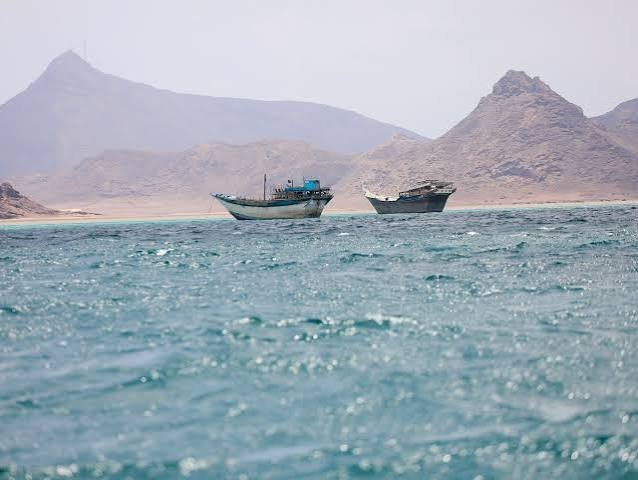
The escalation of military activity by the Houthi movement in Yemen represents a new development in the trajectory of regional tensions, particularly amid growing indications of attempts to move closer to the Bab Al-Mandab area. The development is especially significant given the strategic location of the strait, which constitutes one of the principal maritime routes linking the Red Sea, the Gulf of Aden, and the Indian Ocean.
Recent Houthi operations have raised questions about the nature of the group’s relationship with Iran, particularly in light of Tehran’s repeated assertions that the Houthis make their decisions independently and do not receive direct orders from Iran. At the same time, various assessments and reports point to different forms of Iranian military and logistical support for the group. This makes the relationship between the two sides an important factor in understanding the course of the escalation, although this does not necessarily mean that every Houthi military decision is directly ordered by Iran’s leadership.
The latest developments are unfolding within a broader regional context in which warfare and competition among regional and international powers intersect with the security of maritime routes and energy markets. From this perspective, Houthi activity in the Red Sea and around Bab Al-Mandab can be viewed as part of a wider network of indirect pressure mechanisms employed by the various parties involved in the regional conflict.
From Hormuz to Bab Al-Mandab
The Strait of Hormuz emerged early in the war as one of the most prominent pressure points associated with Iran, given its importance for oil exports from the Gulf region. The closure of the strait, or a major disruption to maritime traffic through it, was widely regarded as a potential source of significant disruption to global energy markets and a driver of higher oil prices.
However, the impact of the disruption to Hormuz appears, according to the considerations underlying this analysis, to have been more manageable than some of the initial scenarios anticipated. The decline in Chinese oil demand, together with the use of strategic energy reserves by countries such as the United States and Japan, helped limit pressure on energy markets.
Gulf states also played an important role in mitigating the consequences of disruptions to navigation through the strait. Existing infrastructure, particularly Saudi Arabia’s East-West Pipeline, enabled part of the oil originating in the eastern region to be transported to the Red Sea coast, providing a partial alternative to traditional export routes through the Strait of Hormuz. The pipeline has a capacity of up to 7 million barrels per day, part of which can be directed toward domestic refineries, while the remainder can be exported through the port of Yanbu.
These developments suggest that a party’s ability to use maritime routes as an economic instrument does not depend solely on its capacity to close a waterway. It also depends on the ability of affected countries to establish alternative routes and adapt to disruptions.
Within this context, Bab Al-Mandab assumes additional importance in Iran’s strategic calculations. As economic pressure and sanctions on Tehran intensify, the Red Sea and its surrounding waters could become another arena for indirect pressure on the United States and its allies, particularly because any major disruption to maritime traffic through Bab Al-Mandab could affect international trade, supply chains, transportation costs, and energy markets.
Pressure on the Trump Administration
The analysis also links regional escalation to domestic political calculations in the United States. A significant and sustained increase in energy prices could become a politically consequential factor affecting the popularity of the US administration and the governing party, particularly during periods preceding midterm elections.
If the Republican Party were to suffer substantial losses in both chambers of Congress, political pressure on the administration over the management and costs of the war could increase. Congress could also expand its oversight and investigative activities, potentially making the continuation of a large-scale military operation more politically complicated, even if the president retained certain executive powers in the areas of foreign policy and national security.
The potential impact of disruptions to maritime routes, therefore, is not limited to the economic sphere. It could also affect the political environment in which the US administration operates.
Saudi Arabia and Bab Al-Mandab as a National Security Issue
The developments involving the Houthis become particularly sensitive when they extend to Saudi territory and interests. In recent weeks, drone and ballistic-missile attacks have targeted Saudi cities and facilities, prompting regional reactions and meetings among the countries participating in the so-called Makkah Pact, which includes Saudi Arabia, Pakistan, and Türkiye.
The significance of this development lies partly in the fact that Saudi Arabia and its regional partners do not appear to be seeking a direct confrontation with Iran. De-escalation and restraint remain important elements of their regional calculations, accompanied by a clear message: the conflict should remain within Yemen and should not expand to Saudi territory.
Bab Al-Mandab is particularly sensitive for Saudi Arabia because of its direct connection to the Kingdom’s economic and geopolitical interests. The strait is not merely an international maritime passage; it is also linked to Saudi Arabia’s access to its Red Sea ports and to aspects of the Kingdom’s maritime trade and exports.
Consequently, any sustained attempt to close Bab Al-Mandab or transform it into a zone of maritime disruption could be perceived in Riyadh as a direct threat to its strategic interests rather than simply an extension of the Yemeni conflict.
The Makkah Pact and the Possibility of a Changing Equation
When examining the Makkah Pact, it is important to distinguish between its stated objectives and the scenarios that could be imposed by developments on the ground. The three countries emphasized when establishing the framework that it was not directed against Iran; Tehran was even invited to join it. It would therefore be inaccurate to assume that the pact, in its current form, represents a coalition directly aimed at Iran.
However, regional arrangements can change if one of the member states comes under direct or repeated attack. In such circumstances, political and security pressures could increase in favor of greater coordination among the three countries. Such a scenario would not necessarily serve Iran’s interests, particularly if the conflict evolved from an indirect confrontation into a broader, multi-party regional conflict.
Iran’s calculations are therefore becoming increasingly complex. Relying on allied groups as instruments of indirect pressure can provide Tehran with a degree of political flexibility, but it also carries the risk of losing control over the trajectory of escalation or encouraging regional actors that previously favored neutrality or de-escalation to adopt more assertive positions.
Between Pressure and Risk
Developments involving the Houthis and Bab Al-Mandab reveal a delicate strategic equation. On the one hand, Iran may view the group as one of its instruments for applying indirect pressure against the United States and its allies, particularly given the importance of the Red Sea to international trade.
On the other hand, expanding operations to include attacks on Saudi territory or attempts to disrupt navigation through Bab Al-Mandab could significantly increase the costs of escalation and create the possibility of regional responses whose trajectory would be difficult to control.
Iran’s ability to use maritime routes as a source of leverage is also linked to the global economy’s capacity to absorb supply disruptions, the willingness of affected countries to establish alternative routes, the level of strategic energy reserves, and producers’ ability to compensate for potential shortages.
The economic impact of any escalation around Bab Al-Mandab therefore cannot be measured simply by assuming that the strait would be closed. It would depend on several variables, including the duration of the disruption, the volume of maritime traffic affected, the availability of alternative routes, energy prices, the response of shipping and insurance companies, and the ability of international actors to protect maritime lanes.
De-escalation Remains a Possible Option
In light of these calculations, continued escalation carries risks for all parties. For Iran, expanding the confrontation could contribute to the formation of new regional alignments against it. For Saudi Arabia, continued Houthi attacks impose security and economic costs, while disruption to maritime traffic in the Red Sea could produce consequences extending well beyond the parties directly involved in the conflict.
For the United States, continued disruption to energy markets and maritime routes could increase the economic and political costs of the war, particularly if these pressures coincide with electoral cycles and growing domestic political constraints.
One of the more viable approaches, therefore, may be to separate the Yemeni issue from the broader regional confrontation and seek arrangements that reduce the ability of the various parties to use Yemeni territory or maritime routes as arenas for exchanging military messages.
In this context, Saudi-Iranian dialogue, alongside efforts to resolve the Yemeni crisis, could provide an avenue for reducing the prospects of escalation around Bab Al-Mandab. Given its geographical position, the strait is not a bargaining instrument belonging to any single party. Rather, it is an international maritime passage where the interests of Gulf states, international powers, and the countries bordering the Red Sea intersect.
Accordingly, treating Bab Al-Mandab primarily as an instrument of political pressure may produce limited tactical gains, but it also carries greater strategic risks if it transforms the strait from an arena of indirect pressure into a focal point of open regional confrontation. For all parties, managing this equation will ultimately depend on their ability to balance the use of pressure mechanisms with maintaining a ceiling on escalation that prevents the conflict from expanding beyond control.
Most read



Read also