Autumn of Sovereignty: Private Military Companies and Alternative Legitimacy in Africa
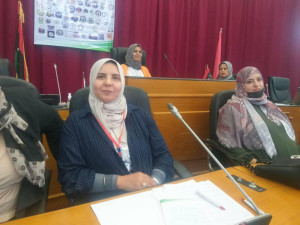
Byp Hamida Saleh Bouhqifa
Lybian Researcher in International Relations and African Affairs
Over the past decades, the nature of armed conflicts has undergone profound transformations. Wars are no longer fought exclusively by state armies and national military institutions. In Africa — particularly across the Sahel and Sahara region — a new era of “security privatization” has emerged, marked by the growing influence of private military companies and non-state armed actors, in a way that is reshaping the meaning of national sovereignty and redefining the traditional role of the state.
At the center of this transformation stands the Russian Wagner Group — later restructured under the name “Africa Corps” — as a striking model of external intervention that goes far beyond conventional security assistance. Its presence increasingly affects internal power balances and political decision-making processes within several African states, especially those that have experienced coups or military-led political transitions in recent years, such as Mali, Burkina Faso, and Niger.
From Blackwater to Africa Corps
A Structural Shift in the Security Market
The use of private security companies in Africa is not a new phenomenon. However, the current Russian model appears far more complex and politically consequential than earlier Western models. While Western private contractors traditionally operated in technical, logistical, or training capacities, Africa Corps has evolved into a direct military and political partner to ruling regimes, effectively transcending the notion of “security consultancy.”
Its role extends beyond combat operations or regime protection. It increasingly revolves around an “security-for-resources” formula, under which foreign actors receive privileged access to gold, uranium, and strategic mineral resources in exchange for military support. This dynamic creates a parallel war economy operating outside national oversight and accountability, ultimately weakening the state’s sovereign control over its own resources.
Over time, these arrangements risk creating a new pattern of political and security dependency, in which governments rely on external armed actors for regime survival, while national institutions gradually lose their monopoly over force and security management.
The Erosion of the Monopoly on Legitimate Violence
The Silent Threat to the Nation-State
Classical political science defines the state as the entity that monopolizes the “legitimate use of violence” within a defined territory. Yet the increasing reliance on private military companies fundamentally challenges this principle. Armed power becomes distributed between the state and foreign actors whose interests often transcend the national priorities of host governments.
The danger lies in the fact that the protection of ruling regimes and strategic facilities is no longer solely entrusted to national armed forces, but increasingly depends on foreign mercenary structures motivated by financial and geopolitical calculations. This gradually erodes institutional loyalty within national militaries and transforms certain African states into arenas for international geopolitical competition.
Moreover, these companies frequently operate in legal grey zones. They are not fully subject to domestic military laws, nor are they held to international human rights obligations with the same degree of accountability imposed on regular armed forces. As a result, abuses committed by such actors often become political and moral liabilities for host governments, deepening distrust between citizens and the state.
Africa and the Dilemma of Security Dependency
Africa’s current experience reveals a profound political paradox: states that outsource their sovereignty to non-state armed actors in the name of security may ultimately become more fragile and externally dependent.
Sustainable security cannot simply be purchased from international markets, nor can long-term stability be built upon actors driven primarily by profit and geopolitical interests rather than national responsibility.
In this context, the continent appears to face three possible scenarios:
1. Integration and Dependency
Under this scenario, these forces become a permanent component of state power structures, effectively tying the foreign and security policies of African states to the interests of the sponsoring powers — particularly Russia in the current context.
2. Withdrawal and Chaos
Should these forces suddenly withdraw due to shifting international priorities or internal crises, host states may face severe security vacuums that weak national armies would struggle to contain, creating fertile ground for extremist organizations and transnational armed groups.
3. Sovereign Recovery
This represents the more optimistic scenario, centered on strengthening African-led regional security cooperation, enhancing the capacities of the African Peace and Security Council, and rebuilding professional national armies capable of safeguarding state sovereignty without dependence on foreign armed actors.
Conclusion
National sovereignty in Africa can no longer be reduced to flags, borders, or symbolic independence. It is fundamentally tied to the state’s ability to control its security institutions and protect its citizens through national capacities.
In this regard, the expansion of private military companies constitutes one of the most serious challenges facing the African nation-state today. While these actors may initially appear as instruments of stability and security, they risk evolving into a form of “new security colonialism” — one that reproduces foreign influence through more flexible and less visible mechanisms.
Ultimately, the future of sovereignty in Africa will depend on the ability of African states to reclaim strategic initiative, rebuild strong national institutions, and establish professional military structures capable of preserving security without falling into the trap of militarized dependency.
Most read