Leaving the Two Niles: When Geopolitics Swallows the Human Stories of Sudan
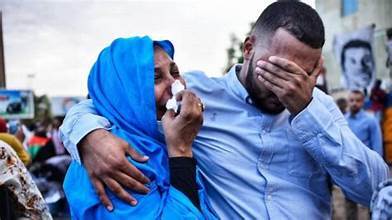
The blue Sudanese toub that Halima wears is more than a piece of cloth covering her slender frame as she crosses the border into Chad. It is the last remnant of an entire life she left behind in the Al-Sahafa neighborhood of Khartoum. She walks through clouds of dust stirred up by the feet of thousands of displaced people at the Adré border crossing, her eyes fixed on the horizon, where the smoke of battle merges with the haze of the earth.
“We wanted nothing more than to grow old peacefully in our homes,” Halima says wearily, trying to shield her child from the scorching morning sun. “Now, we are searching for a drink of clean water in a land that is not ours.”
This scene, in all its simple and painful detail, captures the essence of Sudan’s crisis. It is not merely a military struggle over territory and influence; it is a vast human tragedy quietly consuming an entire generation while weaving the threads of a complex international crisis that threatens to shake the foundations of the African continent as a whole.
A War of Hidden Agendas: How Did Sudan’s Suffering Become a Bargaining Chip?
Behind every bullet fired in Khartoum or Darfur lies a web of complex international calculations extending far beyond Sudan’s borders. A country once regarded as a gateway to Africa and a reservoir of its wealth has now become an open arena where larger powers pursue competing interests and settle geopolitical scores.
The struggle for a strategic coastline: Sudan’s Red Sea coast is a strategic prize for major international powers seeking to secure a military and commercial foothold along one of the world’s most vital maritime corridors.
Sudan’s gold and natural wealth: Gold mines and other precious mineral resources have been transformed from a potential blessing into fuel for the machinery of war. Money and weapons flow through intricate international smuggling networks that thrive in the absence of an effective state.
A fragile neighborhood: Sudan’s neighbors—including Egypt, Chad, South Sudan, and Ethiopia—face a range of deeply difficult choices. Waves of displaced people are placing additional pressure on economies already under severe strain, while the proliferation of uncontrolled weapons threatens their internal security.
When Numbers Lose Their Power to Shock—and Become a Silent Tragedy
Behind the impersonal figures released by international organizations each morning are stories of flesh and blood. When we speak of Sudan’s humanitarian crisis, we are not speaking merely of statistics, but of lives uprooted and erased.
More than 11 million people: They have been forced to leave behind their beds, their stories, and the family photographs hanging on their walls, becoming displaced within their own country or refugees beyond its borders.
Hunger pounding at the door: Nearly half of Sudan’s population—around 25 million people—live with acute uncertainty over where their next meal will come from. For many, even one meal a day has become a luxury beyond reach.
The silence of emergency rooms: With more than 80 percent of hospitals and medical facilities out of service, illnesses that were once easily treatable and even routine childbirth can now pose a genuine threat to life.
“The tragedy of Sudan lies not only in the scale of the destruction, but also in the world’s cold habituation to it. In the consciousness of the international community, Sudan’s war has become merely ‘another protracted crisis’ relegated to the margins. This is an act of moral and political shortsightedness for which the entire region will ultimately pay a heavy price.”
— From the memoirs of a former African diplomat
A Seismic Shock Across the Sahel: The Domino Effect Everyone Fears
The real danger, African affairs experts warn, is that the flames will not stop at Sudan’s borders. The African Sahel resembles a dry forest waiting for a single spark to ignite it.
Sudan’s descent into prolonged chaos would create a potential corridor for extremist groups and networks trafficking weapons and people, stretching from the Red Sea toward the shores of the Mediterranean.
Meanwhile, South Sudan’s economy, heavily dependent on oil exports that flow through infrastructure crossing Sudan, is already under severe strain. Further disruption threatens to reignite old conflicts and reopen wounds that have never fully healed.
Is There Still Room for Hope?
While politicians and generals trade accusations in the corridors of luxury hotels during faltering rounds of negotiations, it increasingly appears that no lasting solution will emerge without genuine international resolve—one that moves beyond official statements and verbal condemnations.
Sudan today needs more than trucks loaded with flour waiting at its borders. It needs a courageous moral and political stand capable of stemming the flow of weapons and compelling the warring parties to sit down and shape a future in which the gun no longer determines the fate of millions of innocent people.
Halima continues walking beneath the scorching sun of Adré. She does not look back—not because she has forgotten Khartoum, but because the burden of keeping her children alive is too heavy to waste on one sorrowful glance behind her.
And one question now hangs over Africa:
Will the world wait until Sudan has been emptied of its people before it finally understands the magnitude of the tragedy?
Most read