An Alliance Outside the Alliance and the Management of the Post-War Order

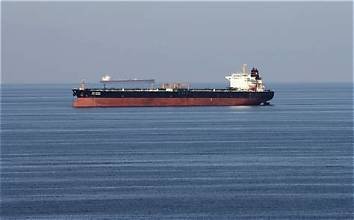
The political significance of the meeting of NATO defense leaders to discuss potential contributions to freedom of navigation in the Strait of Hormuz lies not simply in the military coordination itself, but in the formula the Alliance has chosen to manage the crisis: military coordination within the NATO framework without turning the mission into a formal NATO operation.
The Supreme Allied Commander Europe convened a meeting on August 19 with defense chiefs from concerned allied countries to discuss potential contributions to supporting freedom of navigation in the Strait. NATO subsequently stressed that such a mission is “not a NATO task.” At the same time, Britain and France have been leading efforts to build a multinational coalition to address maritime security once conditions permit.
That is precisely where the political significance of the development begins.
From a “NATO Operation” to “NATO as a Platform”
The West appears to be approaching the Hormuz crisis according to a carefully calibrated formula: use the Alliance's capabilities without formally using the Alliance itself.
NATO possesses a unique institutional structure for bringing together military capabilities, determining what each country can contribute, and coordinating communications, planning, and interoperability. Therefore, keeping the mission outside NATO's formal framework does not necessarily mean excluding the Alliance from the equation.
It may mean the opposite: transforming NATO from a direct military actor into an enabling and coordinating platform.
This is a more flexible model than launching a formal NATO operation. Official NATO involvement would raise highly sensitive political and legal questions: Does the war with Iran now fall within the Alliance's strategic agenda? Would NATO personnel become directly exposed to confrontation with Iranian forces? And could protecting freedom of navigation evolve into an open-ended naval war?
The “alliance outside the Alliance” formula allows willing countries to operate through an independent coalition while benefiting from NATO's expertise, infrastructure, and capabilities.
In other words, NATO would not lead the mission, but it would help make the mission possible.
Why Are Western Countries Reluctant to Turn Hormuz into a NATO Mission?
The first reason is the fear of widening the war.
The Strait of Hormuz is not merely a maritime passage; it is a direct point of contact between global economic interests and Iranian military power. Before the conflict, roughly one-fifth of global oil and LNG supplies passed through the strait, while maritime traffic has since fallen sharply amid continuing security uncertainty.
Any broad military intervention to secure navigation could quickly transform a commercial shipping protection mission into direct confrontation with Iran, particularly if Tehran resorts to naval mines, anti-ship missiles, drones, or attacks on participating warships.
The central Western dilemma is therefore:
How can Hormuz be reopened without turning the operation to reopen it into the cause of another war?
That is the core strategic problem.
Britain and France Are Trying to Build a “Coalition of Necessity”
It is significant that Britain and France have emerged as the most active advocates of a multinational framework for maritime security.
This is not incidental.
The two countries have been working for months to establish an international basis for a mission independent of direct combat operations. London, Paris, and their partners have supported the concept of a multinational military mission that would be defensive and independent, aimed at supporting civilian shipping, reassuring commercial operators, and contributing to mine clearance once security conditions permit.
Britain and France have subsequently reaffirmed their readiness to deploy such a multinational mission in coordination with Oman when security and political conditions allow.
The latest NATO meeting therefore appears less like the beginning of an entirely new initiative and more like another stage in a project that has been under construction for months.
The objective is to shift the question from:
Who will fight Iran?
to a more politically manageable one:
Who will secure maritime navigation once the war ends or tensions subside?
That is a fundamental change in how the problem is defined.
The “Post-War” Phase Begins Before the War Ends
Perhaps this is the most important strategic interpretation of the development.
Preparing to secure Hormuz is not simply about managing the current crisis. It is about managing the phase that follows it.
Even if hostilities ended tomorrow, commercial traffic would not automatically return to normal. Mines could remain, missile and drone threats could persist, armed vessels could continue to operate, insurance costs could remain elevated, and shipping companies could hesitate to resume transit.
Recent developments already indicate that reopening the strait is not simply a technical matter. Iran has granted passage to some Iraqi oil tankers, for example, while overall maritime traffic remains severely constrained.
The West is therefore preparing early for the day after.
But There Is One Actor the West Cannot Bypass: Iran
The reference to the need for Iranian approval for any long-term arrangement captures the essence of the problem.
Western powers can assemble warships, surveillance aircraft, mine-clearance vessels, intelligence assets, and maritime-security capabilities.
But they cannot easily create a sustainable political and legal framework for navigation in an area directly connected to Iran's sovereignty and national-security interests.
This places clear limits on the idea of “freedom of navigation by force.”
A temporary arrangement may be militarily enforceable, but a sustainable arrangement requires political accommodation.
This produces a central paradox:
Naval power can reopen the strait, but it cannot by itself guarantee that it will remain open.
Any long-term maritime-security regime will therefore require some form of understanding with Iran, whether directly or through intermediaries such as Oman, the Gulf states, or a broader international framework.
Whoever Controls Hormuz Holds a Powerful Bargaining Card
From Tehran's perspective, the Strait cannot simply be treated as an “international waterway” detached from the regional balance of power.
Iran views Hormuz as one of its most important strategic instruments for exerting pressure on the United States and its allies.
For that reason, an international naval force established to secure the strait could be interpreted in Tehran as an attempt to deprive Iran of one of its most important deterrent instruments.
This is why the prospect of a new military mission is so sensitive.
If Western warships enter the strait under the banner of “freedom of navigation,” Tehran could perceive them as an occupying or containment force rather than as a neutral maritime-protection mission.
This is precisely the scenario Britain, France, and NATO appear to be trying to avoid through three layers of separation:
separating the mission from the war, separating it from NATO, and separating it from the objective of targeting Iran.
NATO Faces a New Test of Its Strategic Role
The development also carries broader implications for NATO's future.
The Alliance is no longer confronted only with the traditional question: How should it defend the territory of its members?
It increasingly faces another question:
How can it use its global capabilities to protect the security and economic interests of its members without turning every international crisis into a NATO operation?
This is particularly important amid growing European debate over the need for greater European capacity to act independently in the military sphere.
If Britain and France succeed in building a multinational naval force outside NATO while drawing on NATO's planning and coordination infrastructure, a model could emerge that may be replicated in future crises:
flexible coalitions built on NATO capabilities without formally becoming NATO operations.
That could prove to be one of the most significant developments in the Euro-Atlantic security architecture in the years ahead.
The American Message: Do Not Turn Hormuz into a NATO Responsibility
There is another dimension that should not be overlooked.
Formally bringing NATO into the war with Iran would almost inevitably broaden the political and military commitments of the United States and its European allies, at a time when Washington appears intent on managing the conflict according to its own strategic calculations.
The United States does not necessarily need every maritime-security operation to become a NATO mission.
The formula of allied countries operating outside NATO therefore gives Washington considerable political flexibility.
European states can shoulder a greater share of the burden of maritime security, while Washington can benefit from allied capabilities without automatically turning every naval confrontation into an Alliance-wide issue.
The distinction between NATO as an institution and NATO member states acting as sovereign military powers thus becomes an instrument of risk management rather than merely an administrative technicality.
The Legitimacy Dilemma: International Law Is Not Enough
Western governments invoke freedom of navigation and international law, and previous statements have emphasized that restoring free passage through Hormuz is a matter of global interest.
But legal legitimacy alone does not resolve the question of the use of force.
There is a fundamental difference between:
- protecting civilian vessels in a relatively secure environment;
- clearing maritime mines;
- escorting commercial shipping;
- intercepting armed attacks;
- and using force to open a waterway that Iran refuses to reopen.
Each step moves the mission into a different level of political, legal, and military risk.
This explains the highly cautious Western formulation: a defensive and independent mission, operating only when conditions permit, while maintaining channels of communication and avoiding escalation.
Hormuz Could Become a Test of the International Security Order
Ultimately, the issue is larger than Iran and NATO.
The Strait of Hormuz is becoming a test of a broader proposition: Can the international community protect strategic maritime corridors without turning the protection of navigation into a struggle over sovereignty and geopolitical influence?
If the British-French initiative succeeds in establishing a multinational force capable of protecting maritime traffic in coordination with regional states, it could provide a new model for the security of strategic waterways.
But if reopening Hormuz requires direct military confrontation with Iran, the mission will have shifted from “protecting navigation” to forcibly reshaping the regional balance of power.
The difference between these two scenarios is enormous.
Three Possible Paths Ahead
Three principal trajectories can be envisaged.
First: Political settlement and an orderly reopening.
This would be the least costly scenario. A U.S.-Iranian understanding, perhaps facilitated by regional mediation, would allow maritime traffic to resume, while the multinational force would operate in a temporary defensive capacity to protect vessels, clear mines, and build confidence.
Second: A limited military reopening.
Iran might retreat from a full closure without granting complete political approval for an international military presence. The multinational force would then evolve into a maritime deterrence mechanism escorting commercial vessels, monitoring threats, and responding to mines or attacks.
This scenario would carry a persistent risk of confrontation.
Third: Hormuz becomes an open military front.
If Iran continues to reject Western arrangements and a larger naval force is deployed, an incident involving Iranian or foreign vessels could trigger direct confrontation. At that point, the boundary between a “maritime-security mission” and a war with Iran could disappear.
This is precisely the scenario NATO appears to be seeking to prevent by refusing to transform the mission into a formal NATO operation.
Conclusion: NATO Wants to Be an “Enabler,” Not a Combatant
The meeting convened by General Alexus Grynkewich does not mean that NATO has decided to enter the Hormuz war. Rather, it reveals something more complex: the Alliance wants to retain a role in shaping the Western response to the crisis while avoiding direct responsibility for a new military operation against Iran.
That is a highly significant political formula.
The West is not merely preparing to reopen the Strait of Hormuz; it is preparing to construct a new security architecture for the strait after the war.
Britain and France are seeking to position themselves at the center of that architecture. NATO provides the coordination and military infrastructure that can make the mission viable. The United States remains the dominant military power, while Oman, the Gulf states, and Iran remain indispensable actors in any sustainable arrangement.
But the fundamental paradox remains:
The West can build a force to protect Hormuz, but it cannot build a sustainable security regime for Hormuz without reaching an understanding with Iran.
The next struggle, therefore, may not ultimately be about who controls the strait, but about who establishes the rules governing passage, who has the authority to enforce those rules, and who retains the capacity to shut the strait down—or reopen it.
From this perspective, the NATO meeting is far more than a precautionary military consultation. It is an early indication that the struggle over Hormuz is beginning to move from a war over the strait toward a negotiation over the security order that will govern the strait after the war.
That is where its real strategic significance lies.
Most read


Read also