Houthi Escalation in Taiz and Hodeidah: An Attempt to Reshape the Balance of Power in Western Yemen

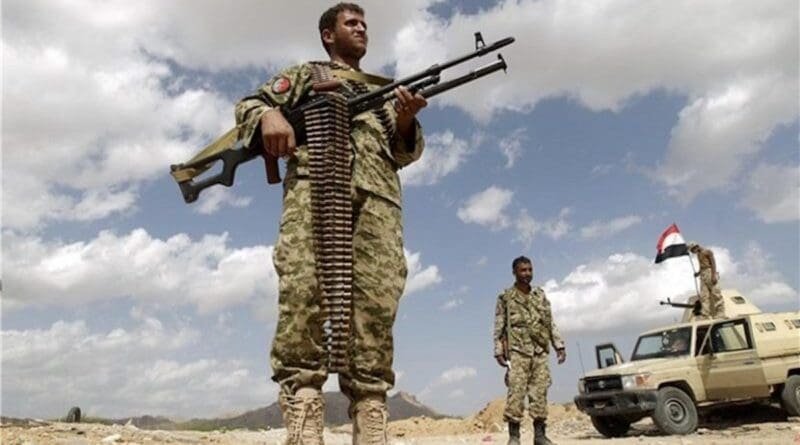
Yemen’s conflict appears to be entering a new phase of military escalation along the western coast and the Taiz front, reflecting an attempt by the Houthis to test the balance of power once again after years of relative decline in the intensity of major military operations. The Houthis launched a broad, simultaneous offensive against government forces in southern Hodeidah and several areas west of Taiz city, marking one of the most intense rounds of fighting on Yemen’s front lines since the UN-brokered truce of 2022.
The significance of the latest escalation, however, lies not only in the scale of the territorial gains achieved by the Houthis, but also in the nature of the areas they targeted and the military and political messages behind their choice. The attacks on western Taiz and southern Hodeidah appear to be part of a broader effort to reshape the lines of confrontation stretching from the western highlands to the Red Sea coast, potentially improving the Houthis’ position along routes leading toward Mokha and the approaches to the Bab Al-Mandab Strait.
Taiz: A Strategic Geographic Chokepoint
Taiz remains one of the most sensitive areas on Yemen’s conflict map. It lies at the intersection of the country’s western highlands and its Red Sea coast, while control over its western districts provides greater leverage over the lines of communication linking the interior to the western coastline.
Against this backdrop, the Houthis concentrated their latest offensive on mountainous areas west of Taiz, initially managing to seize several positions in Jabal Habashi district. Government forces, however, quickly recaptured one of the strategic hilltop positions, suggesting that the Houthi offensive had failed to develop into a broad and sustained breakthrough.
The clashes were accompanied by fierce fighting in Maqbanah and Al-Kadaha, areas whose importance stems from their position along a network of roads and mountain routes connecting the interior to the western coast. The battle for western Taiz, therefore, cannot be viewed simply as a localized confrontation. It is directly linked to control over the geographic corridor leading toward Mokha.
Mokha and Bab Al-Mandab in the Background
One of the most important implications of the Houthi escalation in Taiz is its potential connection to an effort to put pressure on the routes leading to the port of Mokha. Mokha is not merely a coastal port; it represents an important military and geographic foothold along Yemen’s western coast. Its proximity to the Bab Al-Mandab Strait gives it strategic significance extending far beyond the boundaries of Yemen’s internal conflict.
From this perspective, the Houthi focus on western Taiz can be interpreted as an attempt to strengthen their position along an axis extending from their areas of influence in the interior toward the Red Sea. If the group succeeds in fundamentally altering the balance of control in this area, it could move closer to Mokha and gain additional leverage over the forces opposing it along the western coast.
This possibility is particularly significant given that Mokha itself has been targeted by missile and drone attacks, suggesting that the western coastline remains one of the principal theaters of confrontation between the Houthis and their opponents.
Hodeidah: A Parallel Front and a Broader Military Message
The offensive was not confined to Taiz. It coincided with an escalation in southern Hodeidah, where government-aligned National Resistance forces engaged the Houthis in heavy fighting. Although no clear territorial gains were reported on this front, the simultaneous operations in Hodeidah and Taiz suggest an attempt to force anti-Houthi forces to distribute their defensive capabilities across multiple fronts.
The ground assault was preceded by intensive artillery fire against government positions in both provinces, accompanied by the launch of a number of missiles and drones. This preparatory bombardment appears to have been intended to weaken defensive positions and disrupt command-and-control structures before ground forces moved against their targets.
The offensive thus bore the characteristics of a coordinated military operation, combining preparatory fire, simultaneous attacks on multiple fronts, and attempts to secure tactical gains in mountainous terrain rather than merely engaging in the limited clashes that had characterized the front lines during periods of relative calm.
From Truce to a New Test of the Balance of Power
The timing of the offensive is also significant. It has been described as the largest Houthi military operation since April 2022, when a UN-brokered truce led to a marked reduction in hostilities between the Houthis and the Yemeni government.
Although the truce did not end the Yemeni conflict, it helped establish a degree of relative stability along the front lines. The return to military operations on this scale therefore suggests that the political and military stalemate of recent years has become increasingly fragile.
The Houthis appear to be seeking to reinforce the message that relative calm does not mean abandoning their capacity for military initiative, and that the group remains capable of shifting from containment to offensive operations whenever it believes that political and battlefield conditions are favorable.
The government’s response, meanwhile, came quickly. Rashad Al-Alimi, chairman of Yemen’s Presidential Leadership Council, pledged a “decisive” response to the Houthi escalation, stressing that the group had failed to achieve significant territorial gains and that government forces were now better prepared and more experienced in confronting Houthi attacks.
Is the Escalation an Attempt to Deflect from Internal Pressures?
Beyond the military calculations, the latest developments raise questions about the political and social environment within Houthi-controlled areas. Yemeni political figures have linked the escalation to an attempt to divert public attention away from mounting internal pressures, including deteriorating living conditions, hunger, unpaid public-sector salaries, and declining basic services.
Under this interpretation, opening new fronts or intensifying existing ones could serve a political function alongside its military purpose by shifting public discourse toward an external confrontation rather than the accumulated problems within areas under Houthi control.
Yet reducing the escalation to a single domestic factor would be insufficient. The Houthi move appears more complex, combining internal considerations with calculations related to the group’s position in the wider regional conflict and its ability to exert influence over one of the world’s most strategically important maritime corridors.
Bab Al-Mandab in the Regional Equation
The Houthi military moves along Yemen’s western coast cannot be separated from the strategic importance of Bab Al-Mandab. The strait is a vital maritime link between the Red Sea, the Gulf of Aden, and the Indian Ocean. The ability to influence its surrounding area therefore gives the Houthis a bargaining instrument extending well beyond Yemen’s geographic boundaries.
From this perspective, Taiz, Hodeidah, and Mokha form an interconnected strategic arc. Taiz provides geographic depth, Hodeidah offers a significant coastal position, while Mokha represents one of the most sensitive locations near the approaches to Bab Al-Mandab.
Any significant shift in the balance of power along this axis could therefore have implications for regional maritime security, particularly as the security of the Red Sea remains closely linked to broader regional tensions.
The Iranian Dimension: Influence and Regional Leverage
The escalation is also connected to the continuing debate over the nature of the relationship between the Houthis and Iran. Yaseen Saeed Noman, Yemen’s ambassador to the United Kingdom, described the Houthis as Iran’s last active instrument of influence in the region, against a backdrop of mounting pressure on other forces supported by Tehran.
This argument rests on the premise that the strategic importance of the Houthis to Iran extends beyond supporting a local ally in Yemen. It also lies in their ability to influence the Red Sea and Bab Al-Mandab, thereby providing Tehran with an additional source of strategic leverage in the region.
At the same time, this interpretation requires a balanced assessment. Houthi policy cannot be reduced entirely to an extension of Iranian policy, as the group has its own domestic calculations, political agenda, and interests rooted in the structure of Yemen’s conflict. Nevertheless, its strategic relationship with Iran provides military and technological capabilities that have helped expand its regional reach.
The Battle for Taiz: Beyond the Province’s Borders
The latest developments demonstrate that the battle for Taiz is no longer simply another chapter in the struggle over a Yemeni city that has endured years of siege and political and military contestation. It has become part of a broader struggle over the strategic geography of Yemen’s western coast.
If the Houthis’ immediate objective is to capture military positions and improve their lines of contact, the potential consequences extend to the security environment surrounding Mokha and Bab Al-Mandab. Conversely, the ability of government forces and their allies to prevent a major Houthi breakthrough will largely determine whether the escalation remains limited to tactical operations or develops into a new phase of reshaping the territorial balance in western Yemen.
Against this backdrop, the government forces’ recapture of the position in Jabal Habashi is significant beyond the intrinsic value of the position itself. It represents an effort to prevent the Houthi offensive from developing into a series of cumulative gains capable of altering the balance of power in western Taiz.
Toward a New Round of Conflict?
It is too early to conclude that the latest escalation marks the beginning of a full-scale war. It does, however, clearly demonstrate the fragility of the relative calm that emerged over the past several years. The renewed use of artillery, missiles, and drones alongside major ground assaults indicates that Yemen’s front lines remain highly vulnerable to rapid escalation.
More importantly, the current fighting is taking place in an area of exceptional strategic value, where local calculations intersect with regional and international considerations surrounding the Red Sea and Bab Al-Mandab.
The most consequential development, therefore, may not be whether the Houthis capture one position or lose another. The greater danger lies in the possibility that the western front could become a testing ground for a new set of rules of engagement after years of relative restraint.
If the fighting continues and expands, Yemen could enter a new phase of conflict in which the central objective is not merely control of territory, but control over the strategic corridors linking the country’s interior to its coastline and to one of the world’s most important maritime chokepoints.
Most read