America and Iran... A Moving Possibility

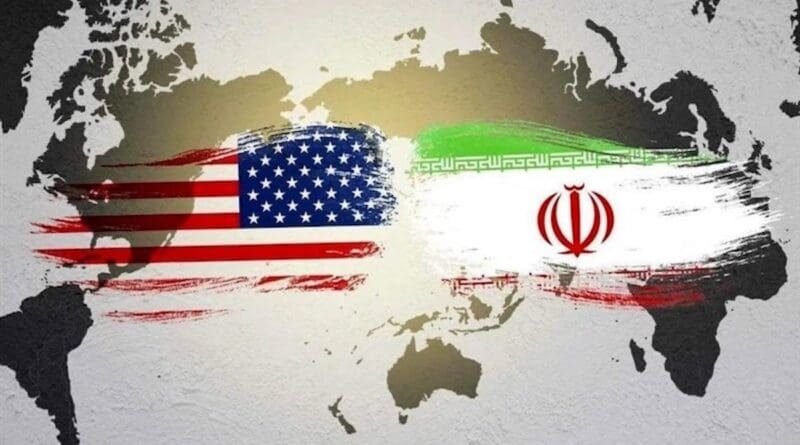
The US-Iranian confrontation is a long-running epic whose chapters continue to unfold between fire, threats, and promises. American aircraft carriers move through the waters of the Mediterranean and the Arabian Gulf. Following waves of airstrikes, missiles, and explosive drones—and the missiles Iran has launched toward the Arab Gulf states, Jordan, and Israel—political activity suddenly surges, while mediators from several Gulf states and Pakistan begin to move.
In the United States, there is a president accustomed to military, political, and financial confrontation. In Iran, there is a complex political formation bringing together armed revolutionaries, clerics carrying on their shoulders the heat of a sacred past, and a bazaar that remains deeply present in the rhythms of everyday life. The arena of confrontation is vast, producing its own timing and its own instruments of battle in the air, at sea, and on the ground.
Politics and diplomacy between the two sides may involve interpreters, but they are often absent, leaving the deaf to shout at one another. The world, meanwhile, holds its breath as it watches and listens. Across this vast, noisy, and bloody arena, the banners of war and peace are constantly shifting, while so too are the prices of the energy, food, medicine, and other necessities on which human life depends.
The roots of hostility between the United States and Iran were planted early, nurtured by history and politics. Confrontation and antagonism became the harvest that never withered and that no sickle could cut down. From the earliest days following the Islamic Revolution that ended the rule of Shah Mohammad Reza Pahlavi, hostility between the two countries burst into flames, and the passing years piled more fuel upon it.
The seizure by Iranian revolutionary students of dozens of American diplomats working at the US diplomatic mission in Tehran contributed to former President Jimmy Carter’s defeat in the presidential election against his challenger, Ronald Reagan.
Today, Iran is once again crossing the Atlantic, hovering around the American ballot boxes as the US-Iranian war becomes an issue in the American congressional midterm elections. Iran’s nuclear program was the spark that threatened to ignite war between the two sides.
During the first term of former President Barack Obama, the two countries succeeded in reaching an agreement that helped restrain the momentum toward confrontation after lengthy negotiations. President Donald Trump subsequently withdrew from the agreement because it was the signature achievement of his political rival, Obama—present even in his absence. Trump could have proposed amendments to the agreement, but instead chose to abolish it.
Any political crisis resembles an illness, whether domestic or international: it has symptoms that reveal its presence. The crisis between Iran and America has a fundamental cause, along with a number of symptoms. Iran’s nuclear program is at the heart of the crisis, while several political symptoms have emerged around it, including Iran’s external networks and allies in Lebanon, Yemen, Palestine, and Iraq, with the latest manifestation being the Strait of Hormuz.
The focus of discussion and treatment has now shifted toward the Strait of Hormuz, while attention to the original driver of the crisis—the Iranian nuclear program—has receded.
Last June, the two sides signed a memorandum of understanding concerning the Strait of Hormuz and the guarantee of freedom of international commercial navigation through it. Article Five of the memorandum states that, upon signing, Iran would make every possible effort to ensure the safe passage of commercial vessels through the Strait of Hormuz, from the Arabian Gulf to the Gulf of Oman and in the opposite direction. Passage would be free of charges for 60 days.
Iran is engaged in dialogue with Oman, with the participation of the Gulf states, to determine the future administration of the strait and the maritime services provided there, in accordance with international law and the rights of coastal states.
The dispute between the two sides, however, began with their differing interpretations of this provision of the memorandum. Iran has continued to raise the ceiling of its demands and expand its interpretation of what has been agreed upon, a development rooted in the complex composition of Iran’s political leadership.
Thus, the Strait of Hormuz has become the disease itself, after previously being merely one of its symptoms.
The United States has now moved toward a different option. Instead of waging war with iron and fire, Washington has declared a global economic war on Iran, imposing a suffocating blockade on its financial capabilities: no exports, no imports, and no banking transactions with countries around the world.
Iran has been suffering from severe financial distress for years. Its currency has collapsed against the dollar, while its oil exports—which account for roughly 80 percent of national income—have declined.
The American sanctions are expected to extend to any country, institution, or individual that deals with the government in Tehran. This devastating global economic war against Iran will have enormous repercussions inside the country, but it will also unleash powerful international shockwaves.
Several politically influential and economically powerful countries maintain extensive economic ties with Iran. China, for example, imports large quantities of Iranian oil at discounted prices and has declared that it will not comply with the punitive measures imposed by Washington on Iran or on those that continue to do business with it.
Beijing views Washington’s actions as extending beyond economic measures against Iran. In its assessment, they represent a broader project of American global political dominance carried out under an economic cover.
Inside Iran, political voices have begun to grow louder about the scale of hardship experienced by ordinary citizens. Following the announcement of the new American measures, however, the voices of hardliners have begun to lose some of their intensity.
Last Wednesday, a spokesman for Iran’s Islamic Revolutionary Guard Corps stated that a return to the memorandum of understanding could be possible. Before that, a proposal had emerged for coordination between Oman and Iran to organize navigation through the Strait of Hormuz.
Taken together, these indicators suggest that there may be room to move toward a pragmatic path aimed at avoiding direct confrontation between Iran and the United States.
The question now is whether the space for such a path will expand before the next escalation closes it again.
When will tomorrow finally reveal what it holds?
Most read



Read also