
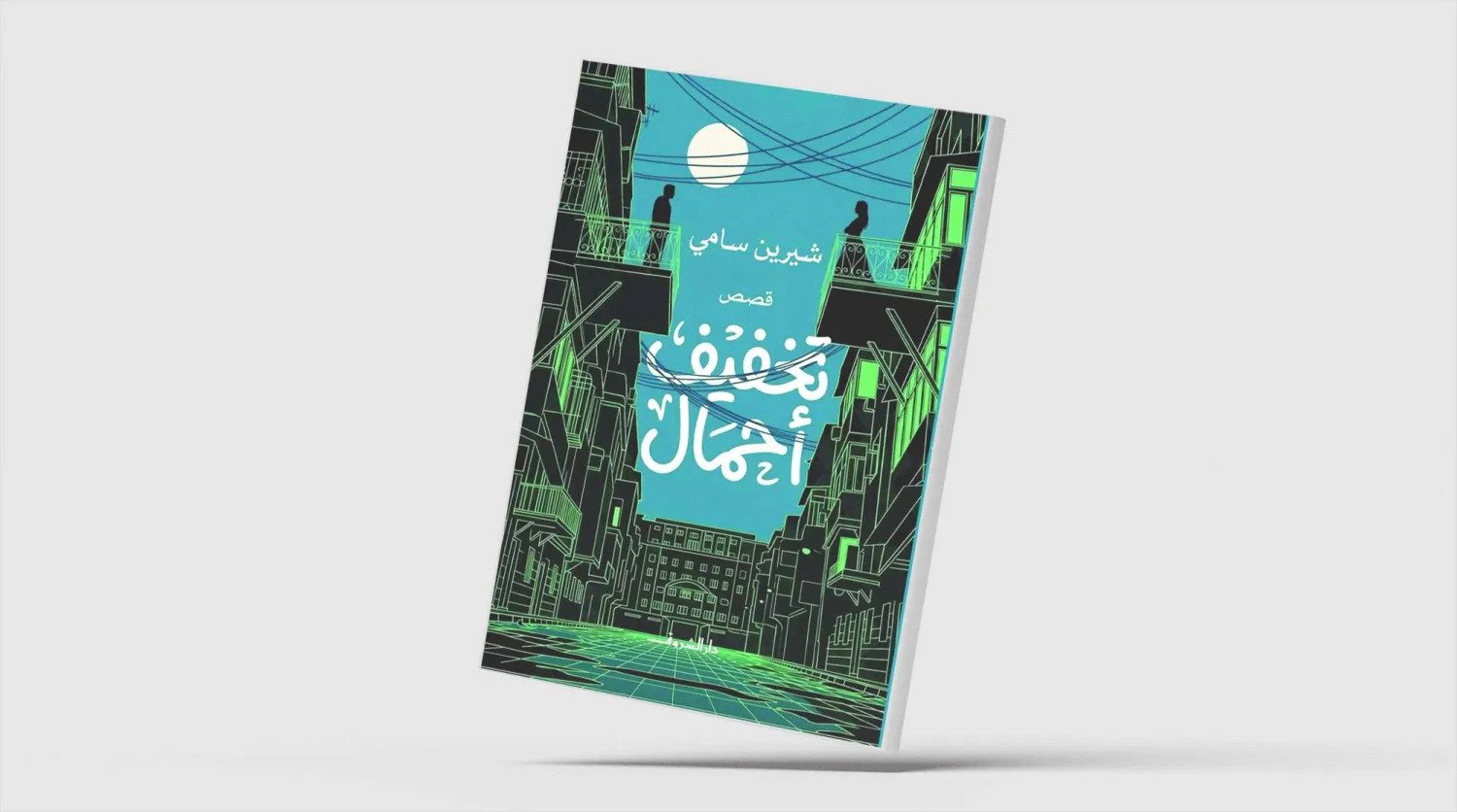
Published recently by Al-Shorouk in Cairo, Lightening the Load is a short-story collection by Egyptian novelist and short-story writer Sherine Sami. The collection consists of thirteen short stories that seek to dissect and deconstruct the philosophy of “half things,” exposing the quiet emotional deprivation that seeps into the everyday details of the protagonists’ lives—people who settle for half warmth, half love, and a half sense of security that is never quite complete. The stories become a mirror of profoundly fragile humanity, probing the bitterness of disappointment and the emptiness of the soul, until the protagonists discover, with the last light fading, that temporary darkness can sometimes become their only safe space for survival.
The stories intersect and diverge in their worlds, relying heavily on visual language. The story that gives the collection its title revolves around a young woman who revisits the mood of the 1990s, balcony letters, and old cassette tapes.
In Diary of a Woman Unworthy of Love, the protagonist revisits her long history of toxic relationships. Meanwhile, in Apartment Number Ten, people sit holding their breath in front of screens, waiting for a meteor that will bring the world to an end within twenty-four hours.
Sherine Sami has previously published eight books, including the novels The Butterfly’s Restraint, Henna, Whoever Has Tasted Knows, and The Rooms. Her most recent publications include the novel The Grand Lady, released in January 2025, and a young-adult novel titled Smile So That I Can Be Stronger, which was shortlisted for the Etisalat Award for Arabic Children’s Literature in the Young Adults category, as well as 154 Ways to Say I Miss You.
From the atmosphere of the collection, we read:
“She often walks through the streets. In the past, the purpose of walking had been to enjoy movement while observing nature, people, shops, and the world around her. Then she began doing it until she wore herself out, after he told her that she needed to lose some weight. It was not the first comment she had heard about her body, which was already approaching thinness. Her father had made a similar remark once, but with his sarcastic touch, and a former lover had said it too, with his destructive sense of cruelty.
“But he said it with a gentle touch, like a precise scalpel that some people believe is meant to heal. Yet during her most recent walks, things had begun to reveal themselves to her—a long list of things that hurt. This was a translucent kind of pain, one that did not allow her to scream, tear the world apart, and say because of it: ‘I have to leave,’ or ‘Stop!’ It was a pain with a gelatinous texture; she could neither grasp it, hate it, nor show it to others. And yet she could not ignore its movement in her hand.
“She sent him a message saying, ‘I really want to hold you.’ She sent it without thinking. Had she thought about it, perhaps she would have replaced ‘really’ with ‘so much.’ She remembered a similar message she had sent years ago, after which he had emerged from his absence to fulfill her wish. But she knew he would not come this time. He would not come every time.”
Most read