
Russia’s Interests in Syria Extend Far Beyond Air and Naval Bases

By Dr. Taha Ali Ahmed
Why Has Washington Backed Away from Regime Change in Iran? A New Approach to Middle Eastern Power Balances
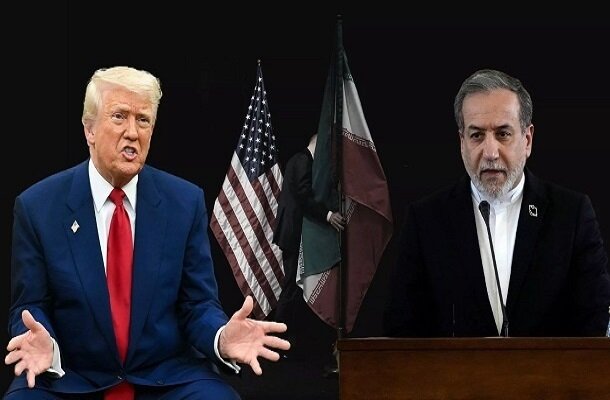
Recent statements by U.S. officials indicate a notable shift in Washington’s approach toward Iran, reflecting a growing awareness of the costs associated with forcibly changing regimes and a renewed consideration of regional experiences that have failed to produce stability. The U.S. ambassador to NATO, Matthew Whitaker, affirmed that Washington is not seeking to overthrow the Iranian regime, warning against a repeat of the “Libya scenario”—a clear reference to the catastrophic consequences that followed the fall of Muammar Gaddafi’s government in 2011. This shift reflects an emerging conviction within American decision-making circles that the chaos resulting from state collapse now poses a greater threat to Western interests than the continued existence of hostile but containable regimes.
At the same time, the administration of President Donald Trump appears increasingly inclined toward a negotiated track with Iran in an effort to avoid a costly and unpredictable military confrontation. Despite official rhetoric centered on preventing Tehran from acquiring nuclear weapons, the indicators discussed in this article suggest that any prospective agreement would likely resemble a symbolic political compromise rather than a strict regulatory framework. This is particularly evident given Iran’s anticipated rejection of expanded inspection powers for the International Atomic Energy Agency. The picture becomes even more complex with the potential involvement of Vladimir Putin as a mediator—granting Moscow added leverage in one of the Middle East’s most sensitive strategic files.
One of the most striking developments in this context is Washington’s apparent easing of pressure on Iran’s regional activities, whether regarding its ballistic missile program or its support for armed groups across the region. The United States no longer publicly emphasizes issues such as Hezbollah’s armament in Lebanon, Hamas, Iranian-aligned militias in Iraq and Syria, or the Houthis in Yemen. Practically speaking, this signals an implicit acceptance of Iran’s expanding regional influence in exchange for reducing the likelihood of direct confrontation.
The U.S. administration’s rationale for this shift may well draw on the Libyan experience, where regime change led to state fragmentation, the rise of extremist groups, and the transformation of the country into an arena of open international competition. Russia capitalized on this vacuum by backing the forces of Field Marshal Khalifa Haftar and expanding its military footprint under the supervision of prominent commanders such as Sergei Surovikin, while Western powers supported the internationally recognized government in Tripoli. For Washington, this outcome served as a cautionary example: toppling regimes without well-structured transitional plans tends to empower rivals rather than foster stability.
Even with the presence of high-profile opposition figures such as Reza Pahlavi, the Trump administration has shown no genuine willingness to support an internal political transition in Iran. Although some voices within the U.S. establishment—such as Marco Rubio—have expressed greater openness to this option, the core of decision-making remains firmly committed to negotiation and containment.
Overall, this new American approach reflects a clear transition from a policy of regime change toward one of managing and containing adversaries—even at the expense of human rights concerns, regional expansionism, or long-term nuclear ambitions. While this strategy reduces the immediate risk of war, it may carry a strategic cost in the form of entrenched Iranian influence in the Middle East, weakened traditional U.S. deterrence, and Iran’s continued proximity to the nuclear threshold.
In other words, Washington no longer views regime change in Iran as a solution but as a danger whose consequences outweigh those of the regime’s survival. This policy rests on “costly containment” rather than “expensive confrontation,” yet it may lay the groundwork for long-term regional imbalance.
In light of the U.S. shift from regime change to negotiated containment, the future of U.S.-Iran relations appears increasingly geared toward managing tensions rather than resolving them. The most likely near-term scenario involves a limited political understanding focused primarily on the nuclear file, without serious engagement on missile development or Iran’s regional role. Should such an agreement materialize, it may produce temporary de-escalation but remain fragile—particularly given the weakness of international monitoring mechanisms—granting Iran wide latitude to maneuver and gradually enhance its strategic capabilities. The central risk lies in the consolidation of growing Iranian influence alongside declining U.S. deterrence.
Alternatively, the failure of negotiations remains a plausible outcome, potentially ushering in a phase of limited escalation characterized by targeted strikes and indirect operations—whether through cyber tools or regional proxies. This form of confrontation would likely stop short of full-scale war, yet it would entrench chronic instability in the Middle East, intensify proxy conflicts, and generate direct repercussions for energy security and the global economy. While such a path allows both sides to avoid a major explosion, it carries the inherent risk of unintended escalation driven by miscalculation or sudden provocation.
The most dangerous scenario emerges within the framework of escalatory deterrence practiced by the U.S. president, wherein recent American military movements can be interpreted as calibrated pressure designed to prevent Tehran from crossing red lines while avoiding outright war. The deployment of advanced naval assets to the Middle East does not necessarily signal imminent confrontation as much as it conveys a multilayered strategic message: any Iranian escalation will be met with faster and broader retaliation. This form of deterrence does not rely on preemptive strikes but on gradually increasing the costs of hostile behavior, shaping a military environment that renders escalation less appealing to Tehran.
Yet despite its effectiveness in curbing rapid crises, escalatory deterrence carries inherent risks—most notably the intensification of military friction in sensitive theaters of operation, which raises the likelihood of misjudgment or unintended escalation. Each new military reinforcement aimed at deterrence may be interpreted by the opposing side as preparation for attack, prompting countermeasures in a spiraling dynamic that is difficult to control.
Consequently, while U.S. military moves are intended to prevent war, they may paradoxically increase strategic fragility unless accompanied by a clear political pathway for de-escalation.
In conclusion, American escalatory deterrence in the Middle East has thus far succeeded in postponing a major confrontation, but it does not address the root causes of conflict. Instead, it manages instability through a delicate balance between force and containment—a formula inherently vulnerable to disruption by miscalculation or sudden escalation, rendering regional stability temporary rather than sustainable.
Most read



Read also