
In major crises, outcomes are not always decided on the battlefield. More often than not, they are shaped around negotiating tables. In the long-running confrontation between the United States and Iran, this reality is more evident than ever. While Washington possesses overwhelming military, economic, and technological superiority, repeated rounds of diplomacy have shown that raw power does not automatically translate into leverage inside the negotiating room, where expertise, strategic patience, and a deep understanding of the adversary frequently matter more than conventional tools of pressure.
Developments surrounding the backchannel talks between the two sides in early 2026, as well as the events preceding the American strikes of February 28, revealed that the U.S. problem lies not only in Iranian rigidity, but also in the weakness of its own negotiating approach. When a team lacking deep nuclear expertise, detailed knowledge of Iran’s internal power structure, and command of the technical dimensions of the file faces negotiators who have spent decades managing the issue, the result becomes less a balanced contest than a case of professional asymmetry.
Power Does Not Equal Competence
Successive American administrations have often assumed that economic sanctions, diplomatic isolation, and military threats would eventually force Iran into major concessions. Yet the record of the nuclear dispute demonstrates that pressure alone is insufficient. The Iranian state has developed a significant capacity to absorb shocks and convert pressure into bargaining leverage.
The United States, despite its vast power, has frequently approached the Iran file with the mindset of short-cycle crisis management: maximalist demands, compressed timelines, repeated threats, and frustration when immediate compliance fails to materialize. Iran, by contrast, has treated negotiations as a long-term cumulative process rather than a single event.
This is the central paradox: the stronger state often enters talks with politically impatient tools, while the weaker state enters with a more disciplined strategic mindset.
Iran and the Advantage of Institutional Memory
One of Iran’s greatest assets in this arena is what may be called institutional memory. Since the early 2000s, Tehran has maintained a negotiating cadre with accumulated expertise in international law, nuclear technology, inspection regimes, sanctions architecture, and Western diplomatic behavior.
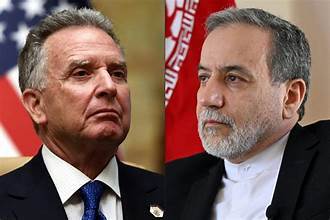
Figures such as Abbas Araghchi are not temporary diplomatic faces, but products of a negotiating school forged through multiple crises—from talks with the European troika, to the 2015 Joint Comprehensive Plan of Action, to subsequent revival efforts.
That kind of continuity gives Iran a rare regional advantage: a negotiating apparatus that knows the file in detail and understands its counterparts equally well. Washington, by contrast, often reshuffles teams with each administration, weakening continuity and making policy more responsive to electoral cycles than strategic coherence.
Poker Versus Chess
The difference between the two approaches can be summarized simply: Washington often negotiates as though seeking a deal, while Tehran negotiates as though playing a long strategic game.
The United States tends to seek rapid breakthroughs, clear political announcements, and outcomes that can be sold domestically as victories. Iran, meanwhile, seeks to gradually improve its position, dilute pressure, buy time, and turn each phase into leverage for the next.
When Washington withdrew from the Joint Comprehensive Plan of Action in 2018, Tehran did not respond with immediate rupture. Instead, it incrementally breached restrictions, raised enrichment levels, and expanded stockpiles. Each step was calibrated pressure rather than outright collapse.
This pattern shows that Iran does not view negotiation as surrender or zero-sum confrontation, but as the continuation of conflict through other means.
Misreading Iran’s Political Structure
A recurring American error has been treating Iran as a conventional centralized state whose decisions can be understood solely through the Foreign Ministry. In reality, Iran’s system is far more complex, with power distributed among the Supreme Leader, the presidency, the Foreign Ministry, the Islamic Revolutionary Guard Corps, security institutions, and economic networks tied to them.
Serious diplomacy therefore requires understanding who holds final authority, who can obstruct decisions, and who manages dual messaging between escalation and restraint. Ignoring this layered structure often leads to misreading Iranian signals or assuming that diplomatic statements automatically reflect final policy.
Tehran has skillfully used this institutional complexity to preserve flexibility: conciliatory diplomatic language on one track, deterrent field signals on another.
Why Maximalist Pressure Fails
American policy has frequently rested on the assumption that harsher sanctions and higher demands would eventually force capitulation. Yet the Iranian case often suggests the opposite. The more pressure rises without a realistic diplomatic off-ramp, the stronger hardline factions become inside the system.
Under such conditions, maximalist demands—such as a total halt to enrichment without credible reciprocal incentives—cease to function as negotiating tools and instead become formulas for deadlock. Tehran does not read them as offers, but as demands for political surrender.
The Domestic American Constraint
Diplomatic failure cannot be separated from U.S. domestic politics. Every administration negotiates under pressure from Congress, public opinion, electoral calculations, competing lobbies, and partisan polarization.
Any agreement with Iran can be attacked as appeasement or weakness. Any escalation can be condemned as recklessness. This contradiction often produces a wavering strategy caught between the desire for a deal and fear of its political cost.
Iran, despite its own internal divisions, tends to manage this file with greater central discipline and a sharper understanding of American domestic constraints.
What Does Iran Actually Want?
Iran’s objective does not necessarily appear to be the immediate acquisition of a nuclear weapon. Rather, it seeks an advanced nuclear threshold capability that creates strategic deterrence, strengthens bargaining power, and stops short of triggering full-scale war.
In other words, Tehran aims to remain in the gray zone of capability. That zone offers multiple advantages: influence, deterrence, and a permanent negotiating card.
Can Washington Still Succeed?
Yes—but not through the same methods. American success would require restoring professionalism to the file: seasoned diplomats, nuclear specialists, and genuine expertise in Iranian and regional affairs.
It would also require setting realistic, enforceable objectives instead of rhetorical maximalism. And it would require combining pressure with incentives, because sanctions without a credible exit path merely manage crises rather than resolve them.
In sum the struggle between Washington and Tehran is not simply a contest between a strong state and a weaker one. It is a clash between two different models of using power.
The United States possesses overwhelming hard power, yet often lacks patience, precision, and continuity. Iran, despite its more limited resources, has mastered the use of time, complexity, and phased diplomacy to convert relative weakness into strategic maneuverability.
Unless Washington recognizes that military superiority does not guarantee negotiating superiority, it will continue to enter talks from a position of strength—only to leave them with political and strategic losses.
Most read



Read also