Trump and Hormuz: From Securing Navigation to Imposing Hegemony

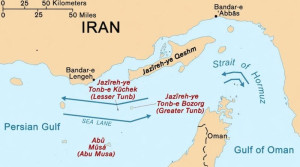
The Strait of Hormuz is no longer merely a strategic maritime corridor through which nearly one-fifth of the world's oil supplies pass. It has evolved into a testing ground for power politics in the emerging international order. The latest escalation between the United States and Iran—beginning with reciprocal attacks on commercial shipping and military assets and culminating in President Donald Trump's declaration that Washington would assume responsibility for securing the Strait while charging transit fees on passing vessels—demonstrates that the conflict has moved beyond freedom of navigation. It is now fundamentally about who has the authority to govern one of the world's most critical maritime chokepoints.
Trump's announcement that the United States would become the "Guardian of the Strait of Hormuz" and require vessels to contribute financially to the cost of protection carries implications that extend well beyond political rhetoric. It reflects an attempt to redefine America's role in the Gulf—not simply as a guarantor of maritime security operating within an international framework, but as the dominant power exercising direct authority over the Strait. In doing so, Washington appears to be shifting from the traditional concept of protecting international sea lanes to a new model of strategic guardianship, a transformation with profound legal, geopolitical, and economic consequences.
From Deterrence to Strategic Control
For decades, U.S. strategy in the Gulf has centered on safeguarding energy flows and preventing any regional actor from disrupting maritime traffic through the Strait of Hormuz. The latest developments, however, suggest a significant evolution in that doctrine. Rather than merely deterring Iranian attacks on commercial shipping, Washington is now signaling an ambition to exercise direct operational control over the waterway itself.
This shift reflects a growing American assessment that conventional deterrence has become insufficient against Iran's asymmetric maritime strategy, which relies on drones, fast attack craft, missile capabilities, and selective attacks on commercial vessels. By proposing direct oversight of the Strait, the United States seeks to move from reacting to threats toward proactively controlling the operational environment.
Yet such an approach raises fundamental questions. Declaring the United States the "guardian" of an international waterway effectively grants Washington unilateral authority over a passage governed by international maritime law. This challenges long-standing legal norms regarding international straits and raises concerns about whether other major powers would accept such a precedent.
Hormuz: More Than an Energy Corridor
The strategic value of the Strait extends far beyond oil exports. It represents the intersection of global energy security, international commerce, and geopolitical competition. Gulf producers depend on the Strait to export hydrocarbons, while Asian economies—particularly China, India, Japan, and South Korea—rely heavily on uninterrupted navigation through the waterway.
Consequently, any disruption affects not only oil prices but also shipping insurance premiums, global supply chains, financial markets, and broader economic stability. Washington's attempt to establish a new security framework therefore sends a message not only to Tehran but also to major global consumers whose economic security depends on uninterrupted Gulf exports.
In this context, controlling Hormuz is no longer simply about protecting maritime traffic. It also provides significant strategic leverage in the broader competition among major powers, particularly as the United States seeks to maintain its geopolitical influence amid China's expanding economic presence across the Gulf region.
Why Iran Rejects the Proposal
From Tehran's perspective, the issue extends far beyond navigation. The Strait of Hormuz remains one of Iran's most valuable strategic assets in confronting U.S. pressure. Its geographic position enables Iran to influence global energy markets without engaging in conventional military confrontation.
Accordingly, any American attempt to institutionalize security control over the Strait is viewed as a direct challenge to Iran's national security and an effort to neutralize one of its principal deterrence instruments. This explains the strong reaction from the Islamic Revolutionary Guard Corps and Iran's military leadership, both of which insisted that Washington has no authority to determine the future of the Strait while warning regional states against cooperating with American initiatives.
For Tehran, the Strait constitutes an integral component of its regional deterrence architecture. The possibility of disrupting maritime traffic has long served as an instrument for influencing strategic calculations in Washington and among Gulf states.
Security as a Commercial Service
Perhaps the most controversial aspect of Trump's proposal is not the promise to protect maritime traffic, but the suggestion that vessels should pay for American protection through transit fees.
Such a proposal fundamentally alters the concept of maritime security. Rather than treating freedom of navigation as a collective international responsibility governed by international law, it transforms security into a service provided by a military superpower in exchange for financial compensation.
Should such a model become operational, it could establish a precedent with far-reaching implications. Other powerful states might eventually claim similar authority over strategic waterways under their military influence, fundamentally reshaping the governance of global maritime trade.
Moreover, imposing additional transit costs would inevitably increase shipping expenses, insurance rates, and ultimately global energy prices, placing additional pressure on an international economy already struggling with geopolitical uncertainty.
Between Escalation and Negotiation
Despite the current military escalation, neither Washington nor Tehran appears to favor a full-scale regional war. The United States remains wary of becoming entangled in another prolonged Middle Eastern conflict, while Iran recognizes that a complete closure of the Strait could trigger broad international intervention against it.
The present escalation therefore appears less a prelude to all-out war than an effort by both sides to strengthen their negotiating positions. Washington seeks to redefine the security architecture governing maritime navigation, while Tehran is determined to preserve its strategic relevance in any future regional settlement.
Against this backdrop, Oman's mediation efforts assume renewed importance. Muscat remains one of the few actors capable of maintaining channels of communication despite the apparent collapse of previous understandings intended to reduce tensions.
Conclusion
The latest crisis in the Strait of Hormuz demonstrates that the U.S.-Iran confrontation has entered a fundamentally new phase. The dispute is no longer confined to military strikes or attacks on commercial shipping; it has evolved into a contest over the legitimacy of controlling one of the world's most strategically important maritime corridors.
While Washington argues that its military superiority entitles it to assume responsibility for securing the Strait, Tehran insists that any future security arrangement that ignores Iran's geographic and strategic position is inherently unsustainable.
Ultimately, the Strait of Hormuz is gradually becoming more than a vital artery of global energy trade. It is emerging as a central arena in the broader struggle over the future regional order in the Gulf. The defining question is no longer merely how to preserve freedom of navigation, but who possesses the authority to govern international maritime security in one of the world's most sensitive geopolitical regions. The answer to that question will shape not only Gulf stability but also the balance of power in the international system for years to come.
Most read



Read also