Reports of Iranian Threats to Close the Bab el-Mandeb Strait as Trump Warns of Strikes on Iranian Power Stations

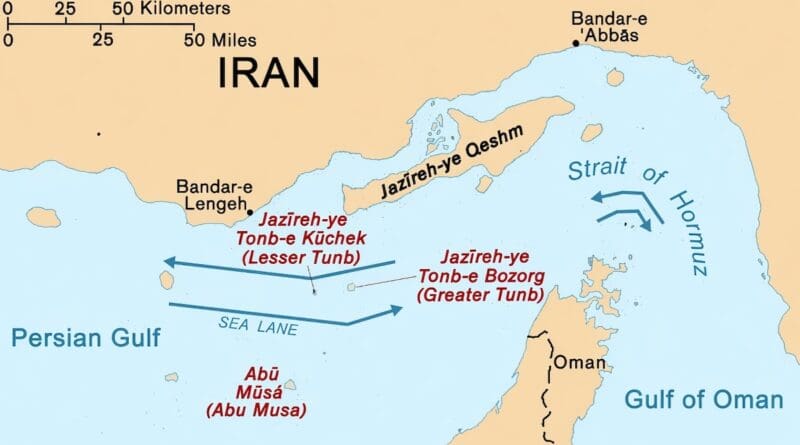
Iranian media reported that the Islamic Revolutionary Guard Corps (IRGC) has threatened to close "all other export routes that benefit the United States and its allies" after Iran shut the Strait of Hormuz and Washington reinstated a naval blockade on Iranian ports.
According to the Islamic Republic News Agency (IRNA), the IRGC said in a statement that the region's energy exports would be "either available to everyone or to no one."
The Bab el-Mandeb Strait links the Red Sea to the Gulf of Aden and serves as a critical maritime corridor for Saudi oil exports and a significant share of global shipping.
A senior Houthi official said on Monday that the group was prepared to close the Bab el-Mandeb Strait—a move that, he warned, could drive oil prices to $200 per barrel—if Saudi Arabia continues its military campaign in Yemen, according to a report published by Iran's Press TV.
Iran: Seven Soldiers Killed in U.S. Strikes
Iran's semi-official Tasnim News Agency reported on Wednesday that at least seven Iranian soldiers were killed in overnight U.S. airstrikes targeting a military base in Bampur.
The Iranian military said the strikes were intended to inflict the highest possible number of casualties, with 13 missiles hitting guest facilities, guard posts, and accommodation buildings at the base near the southeastern city of Iranshahr.
Trump: We May Strike Iranian Power Stations
Speaking to Fox News on Wednesday, U.S. President Donald Trump said he could order strikes on Iranian power stations next week if no agreement is reached with Tehran.
Trump added that the United States had urged Iran to conclude a deal, stressing that he would not accept any agreement that failed to guarantee Tehran would never acquire a nuclear weapon.
He further claimed that Iran had been only two weeks away from obtaining a nuclear weapon and that only the bombing of its nuclear facilities had prevented this outcome.
Clashes in the Strait of Hormuz
Iranian state television reported on Wednesday that clashes and exchanges of fire had erupted in the Strait of Hormuz as the U.S. blockade on Iranian ports officially came into effect at 8:00 p.m. GMT on Tuesday, following President Trump's announcement.
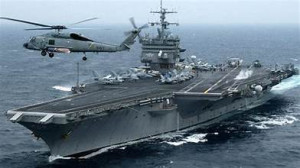
U.S. Central Command (CENTCOM) said in a statement posted on X that American forces had begun enforcing the naval blockade, noting that more than 20 U.S. Navy warships, along with hundreds of military aircraft, are currently deployed across the Middle East.
CENTCOM added that U.S. forces remain on full alert and possess the capability and readiness to carry out their missions as military tensions between Washington and Tehran continue to escalate.
Admiral Brad Cooper, commander of U.S. Central Command, said Iran had deliberately attacked seven commercial vessels over the past seven days, resulting in the deaths, injuries, or disappearance of approximately 12 civilian crew members.
Cooper also said Iranian forces had launched dozens of missiles and drones toward neighboring Gulf states.
Iran's semi-official Fars News Agency reported hearing several explosions overnight in the cities of Bampur and Chabahar, although their nature and cause remain unclear. Tasnim, citing local and security officials, denied that any explosion had occurred in Chabahar.
Tasnim also reported that "the American enemy targeted the islands of Qeshm and Hengam, as well as the city of Bandar Abbas in Hormozgan Province in southern Iran."
In a related development, the semi-official Mehr News Agency reported that Iranian air defenses had been activated around the Bushehr Nuclear Power Plant without providing further details.
New Attacks on Jordan, Bahrain, and Kuwait
Iranian state television reported on Wednesday that the Iranian military and the IRGC had launched attacks against U.S. targets in Jordan and Kuwait following U.S. strikes on the Islamic Republic.
According to state television, the Iranian military targeted Jordan's Azraq Air Base with drones, while the IRGC said it had launched cruise missiles at a U.S. military logistics center in the Mina Abdullah area of Kuwait, insisting that the Strait of Hormuz would remain closed "until the United States ends its acts of aggression."
A military source at the General Command of the Jordanian Armed Forces said Jordanian air defense systems intercepted and shot down three ballistic missiles that entered Jordanian airspace from Iran early Wednesday.
The source confirmed that the interception was carried out as part of operational and defensive measures to protect the Kingdom's borders, airspace, and citizens, adding that no casualties or material damage were reported.
Kuwait announced early Wednesday that its air defense systems were responding to an Iranian drone attack and were intercepting the incoming drones.
Earlier, the Kuwait Fire Force said it had contained a fire that broke out at one site following the Iranian attacks, confirming that no injuries had been recorded.
Meanwhile, the IRGC announced that it had targeted facilities it claimed housed command-and-control centers, logistics installations, fuel depots, and military equipment belonging to the U.S. Fifth Fleet in Bahrain.
The IRGC said the attack was in response to what it described as U.S. actions in the Indian Ocean and Washington's attempts to impose control over the Strait of Hormuz and restrict maritime navigation.
It warned that if the United States sought to obstruct regional oil and gas exports by controlling maritime routes, other export corridors serving American and allied interests could also be closed, reiterating that regional energy exports would be "either available to everyone or to no one."
Earlier on Wednesday, Bahrain's Ministry of Interior announced that air raid sirens had been activated and urged residents to remain calm and seek shelter.
Earlier, Trump wrote on his Truth Social platform that the Strait of Hormuz was "open to all shipping except Iran because of its lying, violent, and hateful leadership, which is leading the country down the road to total destruction," in his words.
For its part, the IRGC declared that as long as "American evil" remained in the region, "not a single drop of oil or gas" would be exported from it.
The IRGC also said that U.S. "aggression" would only delay the reopening of the Strait of Hormuz.
How Are Iranians Responding to the Blockade?
The new U.S. decision to reimpose a blockade on Iranian ports has revived concerns over sanctions and their impact on trade. BBC Arabic's Middle East Diaries program spoke with Iranian citizens about the expected consequences for commodity prices and essential goods.
One Iranian citizen told the BBC: "I believe the current situation points toward an escalation of the war rather than bringing the conflict under control or achieving a ceasefire. I think the Third World War has begun. Only Pakistan remains as a possible mediator, and I doubt it can do anything this time. My impression is that once the blockade on Iranian ports begins, the war will expand."
Another interviewee said the United States was using the blockade as a pressure tool against Iran, which could affect its oil exports, but argued that Iran's diversified trade routes would help mitigate the impact.
A third citizen warned that "the naval blockade on Iran will inflict severe structural damage, trigger a sharp depreciation of the currency, and disrupt the supply chain for essential goods. Since most of Iran's trade passes through its southern ports, blocking them would directly target the country's economic lifelines and reduce foreign currency earnings from oil sales, the government's primary source of revenue."
Source: BBC Arabic
Most read