The Strait of Hormuz and the Erosion of American Maritime Hegemony

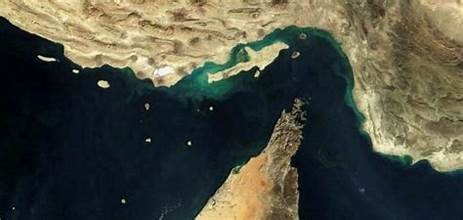
The crisis in the Strait of Hormuz is no longer a passing security event linked merely to tensions between the United States and Iran. It has instead become a highly significant indicator of the deep transformations affecting the global maritime order. The strait, which for decades served as a major artery for international energy flows, has now become a mirror reflecting the limits of traditional power, changing deterrence balances, and the declining ability of a single power to manage the global maritime domain alone.
Global economic stability has long been tied to freedom of navigation, whose protection Washington guaranteed since the end of the Second World War. Yet successive developments—from the Red Sea to the Black Sea, and from the Panama Canal to Hormuz—suggest that the international maritime environment has entered a new phase marked by heightened risks, multiple actors, and increasing competition over strategic chokepoints.
The Strait of Hormuz: From Energy Corridor to Strategic Leverage
The latest crisis has demonstrated that the Strait of Hormuz is no longer merely a passageway for oil and gas. It has become an effective instrument of geopolitical pressure. Iran, despite the military gap separating it from its rivals, has succeeded in using its geography to impose an indirect deterrence equation based more on threatening global trade disruption than on engaging in a broad conventional confrontation.
This shift shows that geography still has the capacity to balance military superiority. A state that controls a vital chokepoint can unsettle stronger adversaries by raising insurance costs, disrupting shipping, and generating anxiety in markets—without the need for direct military victory.
Limits of American Naval Power in the New Environment
Despite clear U.S. naval superiority, securing the Strait of Hormuz by force is no longer as easy as it was in previous decades. The maritime conflict environment has changed dramatically with the spread of precision missiles, drones, fast attack craft, and asymmetric warfare systems. This means that aircraft carriers and large destroyers, despite their symbolic and operational value, now face low-cost but high-impact threats.
As a result, using military force to secure navigation has become more complex, more costly in political and human terms, and less certain to produce rapid results. Washington therefore appears to be reassessing its traditional role as the absolute guarantor of maritime security.
From Maritime Hegemony to Selective Management
Recent U.S. policies reveal a gradual shift from the concept of providing maritime security as a global public good toward a more pragmatic approach based on burden-sharing and linking protection to direct national interests. This is reflected in calls for European allies to assume greater responsibilities and in hesitation toward costly long-term interventions.
This transformation reflects not only a change in strategic outlook, but also domestic American attitudes that no longer accept the previous costs of safeguarding global trade—especially when rising competitors benefit from the system without bearing its burdens. Thus, the United States appears to be moving from comprehensive hegemony toward selective management of vital maritime corridors.
China Between Benefiting from the System and Fearing Its Decline
China has been one of the greatest beneficiaries of the maritime stability provided by American power. It has built extensive networks of ports and logistics investments worldwide, while deepening reliance on maritime trade as a central engine of economic growth.
Yet the paradox is that China, despite its naval rise, still depends on strategic sea lanes it does not fully control. Disruption in Hormuz, the Panama Canal, or other chokepoints would not harm only the United States; it would also threaten the Chinese economy, which depends on the uninterrupted flow of global commerce.
For this reason, declining American hegemony does not necessarily represent a net gain for Beijing. It may instead impose upon China the costly and complex burden of securing trade routes—an undertaking that requires experience and global reach not yet fully developed.
Rise of Non-State Actors and the Decline of Monopoly Over Force
One of the defining features of the current era is that disruption of maritime traffic is no longer the exclusive domain of major states. Attacks by Houthis in the Red Sea, along with renewed piracy off the coast of Somalia, have shown that relatively resource-poor groups can disrupt global trade worth billions of dollars.
This development reflects a major shift in the nature of maritime power. Relatively inexpensive technologies—such as drones, basic missiles, and fast boats—are now capable of challenging traditional fleets of far greater scale and cost. Consequently, future maritime security will depend not only on heavy naval assets, but also on early warning systems, intelligence capabilities, and multilayered coordination.
Maritime Law Between Legal Texts and Power Politics
The Hormuz crisis has also shown that international maritime law remains fragile when confronted by the will of major powers. The refusal of some influential states to join the United Nations Convention on the Law of the Sea, combined with competing legal interpretations of transit rights and sovereignty, leaves many maritime disputes hostage to power balances rather than binding legal norms.
This presents a serious challenge to the international community, because vital maritime corridors require clear rules and credible enforcement mechanisms—not rival interpretations that shift with changing balances of power.
Economic Repercussions Beyond Conflict Zones
Any major maritime disruption immediately affects the global economy. Rising insurance costs, longer shipping routes, and interruptions in energy flows all fuel inflation and strain supply chains.
Thus, maritime crises are no longer purely security matters; they have become part of the broader equation of financial, food, and industrial stability worldwide. This is what enables a geographically narrow strait to generate wide repercussions across distant continents.
Overall, the Strait of Hormuz crisis reveals that the world is passing through a transitional phase in the structure of the international maritime order. American hegemony is no longer absolute, China has not yet become a full alternative, and regional powers as well as non-state actors have become increasingly influential.
In the absence of clear new international arrangements, global trade may enter a more turbulent era in which multiple powers compete across the seas while certainty and stability decline. The future of the international system, therefore, will be determined not only in major capitals, but also in the straits, ports, and shipping lanes that connect the world economy together.
Most read



Read also