Why Does the Conflict in Sudan Persist? An Analytical Reading of Its Roots and Implications

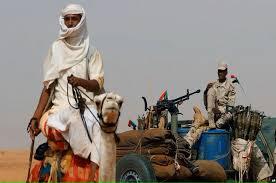
Despite entering its fourth year, the war in Sudan no longer commands the same level of international attention, having been overshadowed by other regional and global crises. Yet diminished visibility does not equate to reduced severity. Sudan today stands at the center of one of the most complex, multi-layered crises, where struggles for power intersect with social fragmentation and regional interventions—creating a volatile landscape with long-term risks of state disintegration.
Since the outbreak of fighting in April 2023, the conflict has not been merely a confrontation between two military institutions. Rather, it reflects a structural failure in managing the political transition following the سقوط of Omar al-Bashir’s regime. The temporary alliance between the Sudanese Armed Forces, led by Abdel Fattah al-Burhan, and the Rapid Support Forces, led by Mohamed Hamdan Dagalo, quickly devolved into a zero-sum struggle for power, driven by competing visions of authority and state control. In the absence of a credible civilian framework capable of balancing these forces, the country rapidly descended into open warfare.
What further complicates the conflict is its transformation into a theater of regional rivalries. External support—whether overt or indirect—has contributed to prolonging the war, as regional actors seek to safeguard their geopolitical and economic interests, including influence over the Red Sea and access to strategic resources. This external dimension has effectively turned the conflict from a domestic crisis into a proxy battleground, reducing the prospects for decisive resolution and complicating pathways toward peace.
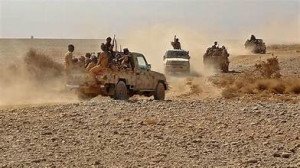
On the ground, the distribution of territorial control reflects a quasi-geographical fragmentation. While the army maintains control over eastern Sudan, the Rapid Support Forces have consolidated their presence in Darfur and begun establishing parallel governance structures—raising serious concerns about potential state fragmentation. Meanwhile, the expansion of hostilities into regions such as Kordofan and the opening of new fronts along the Ethiopian border indicate a widening, rather than containment, of the conflict.
A notable shift in the nature of military operations further underscores the evolving dynamics of the war. Whereas early phases relied on conventional ground combat and artillery strikes, drone warfare has increasingly become a primary tool, significantly amplifying civilian casualties. This tactical evolution reflects growing military sophistication but also exacerbates the humanitarian toll and complicates efforts to protect non-combatants.
Civilians, without question, bear the brunt of this war. Estimates suggest that nearly three-quarters of the population are in need of humanitarian assistance, amid widespread famine, disease outbreaks, and the collapse of healthcare systems. International reports have also documented patterns of ethnically motivated violence, raising alarming concerns about the risk of mass atrocities. Compounding this crisis is a severe shortfall in international funding, as global attention shifts elsewhere, widening the gap between urgent needs and available aid.
Politically, efforts to resolve the conflict remain largely ineffective. International mediation initiatives, including multilateral frameworks, have struggled against the backdrop of competing regional interests and a lack of decisive commitment from the warring parties. Moreover, shifting realities on the ground continue to reshape calculations, making the prospect of a comprehensive settlement increasingly elusive.
In sum, the conflict in Sudan cannot be understood merely as a struggle for power; it is, fundamentally, a crisis of the state itself—encompassing failures of legitimacy, institutional breakdown, and external interference. As internal exhaustion deepens, the greater danger lies in Sudan’s potential descent into protracted instability, with far-reaching implications for regional security in the Horn of Africa and the Red Sea.
Most read



Read also