The Polisario and Challenges of Institutional and Strategic Transformation: An Assessment of the Movement’s Future and the Sahrawi Cause

Introduction
More than five decades after its establishment in 1973, the Polisario Front is facing a set of interrelated institutional, political, and strategic challenges. These challenges are not limited to the continued difficulties surrounding the settlement of the Western Sahara conflict, but also extend to the Front’s ability to develop its institutions, renew its political elite, and maintain its capacity to represent different segments of Sahrawi society amid rapidly changing regional and international conditions.
The significance of these challenges is heightened by the protracted nature of the conflict and the resulting generational, political, and geopolitical transformations. The Front emerged in a regional and international context that differs fundamentally from that of the present day, while it is now required to operate within a more complex environment shaped by international law, multilateral diplomacy, regional power dynamics, security and economic considerations, as well as changes in patterns of political and social participation.
From this perspective, assessing the Front’s current position requires distinguishing between the Sahrawi issue as a prolonged political and legal dispute and the performance of the institutions that represent one of its parties. Institutional or performance-related challenges within the Front do not necessarily determine the trajectory of the Sahrawi issue itself, just as the persistence of the issue does not automatically establish the ability of its current institutions to manage the next phase.
From a Liberation Movement to a Long-Term Political Actor
The Polisario Front emerged in a regional context characterized by the rise of national liberation movements and the decline of traditional colonial rule. During its early years, armed struggle and popular mobilization constituted the principal pillars of its political activity.
The 1991 ceasefire, however, brought about a fundamental transformation in the environment in which the Front operates. The center of gravity gradually shifted from direct military activity toward political and diplomatic engagement, while the conflict became increasingly linked to a UN-sponsored political process and to the positions of regional and international powers.
This transformation meant that the movement’s sustainability became dependent not only on its capacity for military mobilization, but also on its ability to develop political institutions capable of responding to the requirements of diplomatic engagement, resource management, policymaking, and adaptation to social change.
One of the principal challenges facing the Front, therefore, is completing the transition from a movement operating under conditions of armed conflict to a political organization capable of managing a prolonged and multidimensional dispute.
Leadership Continuity and the Challenge of Institutional Renewal
Leadership continuity is one of the notable characteristics of the Polisario Front’s history. Such continuity contributed to maintaining a degree of organizational and political coherence, particularly during the early stages of the conflict.
However, the prolonged continuity of political elites can become an institutional challenge when it is not accompanied by effective mechanisms for leadership renewal and broader political participation. This issue becomes increasingly significant as new generations emerge that did not participate in the movement’s formative stages and may not necessarily share the same political perceptions as the founding generation.
The issue, therefore, is not age as such, but rather the relationship between accumulated experience and institutional renewal. The continued presence of historical leaders can constitute a valuable source of experience and political memory, but it may also become a source of institutional inertia if it is not accompanied by a gradual transfer of responsibilities and greater opportunities for new cadres.
The challenge consequently lies in developing an institutional framework capable of balancing the preservation of accumulated experience with political and organizational renewal.
Political Participation and Representation Mechanisms
The structure of the Front’s congresses and the mechanisms through which delegates are selected raise questions concerning the degree of political representation within the organization. If a significant proportion of participants attend by virtue of their organizational or administrative positions, this may contribute to reproducing the existing institutional structure rather than subjecting it to periodic scrutiny through broader political competition.
From an institutional perspective, mechanisms for selecting representatives are particularly important because they affect the legitimacy of representative bodies and their ability to reflect the diversity of views within society.
This does not necessarily imply that the existing system lacks representation altogether. Rather, it suggests scope for reconsidering participation mechanisms in ways that broaden the representative base, increase the involvement of young people and specialized professionals, and strengthen institutions’ capacity to reflect social changes within Sahrawi society.
The 16th Congress as a Test of Reform
The 16th Congress of the Polisario Front, held in January 2023, took place amid heightened tensions with Morocco and the continued stalemate in the political process sponsored by the United Nations.
The congress was particularly significant because it provided an opportunity to reassess institutional and policy performance during the preceding period and to formulate orientations more consistent with the changing environment of the conflict.
Assessing the outcome of a political congress, however, should not be limited to examining changes in officeholders or the number of new figures introduced. It should also consider the extent to which decisions adopted at the congress affect decision-making mechanisms, public policies, and the relationship between political leadership and social constituencies.
From this perspective, the significance of the 16th Congress lies in its role as a test of the Front’s capacity to move beyond limited organizational adjustments toward broader institutional reform and to translate political decisions into implementable programs and clear mechanisms for evaluation and accountability.
The Generational Gap and the Future of Political Participation
Demographic and social transformations constitute an important factor in determining the Front’s future. Younger generations who grew up after the 1991 ceasefire belong to a social and political context that differs significantly from that of the founding generation.
The expansion of education, modern communication technologies, and social media has transformed patterns of political participation, providing younger people with greater access to information and enabling them to compare different political experiences.
These developments should not necessarily be interpreted as indicating a decline in young people’s attachment to the Sahrawi cause. Rather, they suggest that the forms through which such attachment is expressed may have changed. The Front’s ability to incorporate younger generations into its institutions may therefore become a key factor in sustaining its political mobilization capacity.
This raises the importance of moving beyond symbolic youth participation toward substantive involvement in decision-making processes, thereby allowing new skills and expertise to enter political and organizational institutions.
The Ceasefire and the Transformation of the Nature of the Conflict
The 1991 ceasefire represents a central turning point in the history of the conflict. It brought an end to large-scale military operations and opened the way for a political and international process aimed at reaching a settlement.
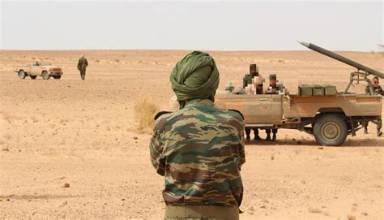
The prolonged difficulties surrounding the political process, however, contributed to the persistence of a state of stalemate. With the resumption of hostilities in 2020, the military dimension returned to the conflict, albeit within an environment significantly different from that which existed before 1991.
From a strategic perspective, these developments demonstrate the limitations of relying on a single instrument to manage the conflict. Military action, even when present, operates within a broader political and international environment, while legal and diplomatic approaches cannot be separated from regional power balances.
The challenge facing the Front, therefore, is to develop a multidimensional strategy combining political, diplomatic, and legal instruments while managing the security dimension within the constraints imposed by the regional and international environment.
Political Legitimacy between Historical Standing and Institutional Performance
The legitimacy of political movements generally derives from multiple sources, including historical standing, popular representation, policy effectiveness, and institutional performance.
The Polisario Front’s historical role in the conflict has constituted an important source of its political legitimacy. However, the prolonged nature of the dispute presents an additional challenge: maintaining that legitimacy through institutional performance.
As a conflict persists over an extended period, the ability of institutions to produce tangible outcomes, sustain political participation, and provide mechanisms of accountability becomes increasingly important for maintaining public confidence.
Historical legitimacy and institutional renewal should therefore not be viewed as contradictory. Rather, institutional renewal can be understood as one mechanism through which political legitimacy is reproduced under changing historical circumstances.
Erosion of Trust and Institutional Risks
Several risks may confront the Front if institutional stagnation continues without effective responses.
The first is institutional fragility, which emerges when institutions become less capable of making, implementing, or evaluating decisions.
The second is the erosion of political trust, particularly when reform commitments are repeatedly made without being followed by tangible measures, or when effective channels for expressing political disagreement are lacking.
The third is the generational gap, which may widen if political participation remains concentrated within traditional leadership structures and mechanisms for incorporating new expertise are not developed.
The fourth is the possibility that disagreements may shift from the institutional level toward elite fragmentation, potentially affecting the movement’s cohesion and its capacity to manage the external dimensions of the conflict.
These risks do not imply that internal fragmentation or declining influence is inevitable. Rather, they represent potential scenarios whose likelihood may increase as institutional stagnation persists and mechanisms for managing political disagreements remain weak.
Changes in the Regional and International Environment
The Front currently operates in a regional environment that differs substantially from that in which it was established. Alliance patterns in North Africa have evolved, Morocco has strengthened its diplomatic and economic presence across Africa, and issues such as security, energy, migration, and counterterrorism have become increasingly relevant to states’ calculations regarding the region.
In this context, political and diplomatic competition has become more complex. Possessing a historical or legal narrative is no longer sufficient by itself to secure political influence. Effective actors increasingly require institutional, diplomatic, and communication capacities that enable them to present their positions, build alliances, and maintain visibility within international institutions.
Consequently, internal institutional reform is not merely an organizational matter. It can have direct implications for the Front’s political and diplomatic capacity.
Scenarios for the Front’s Future
Three broad scenarios can be envisaged for the future of the Polisario Front.
Scenario One: Continuation of the Status Quo.
This scenario assumes the continuation of the existing institutional and leadership structure, accompanied by limited adjustments. While this option may provide a degree of organizational stability in the short term, it could gradually contribute to widening generational gaps and reducing the organization’s ability to respond to political and social changes.
Scenario Two: Limited Gradual Reform.
Under this scenario, new cadres would be introduced and some areas of political participation expanded while the core of the existing institutional framework remains intact. This could generate a degree of adaptation, but its impact would remain limited unless accompanied by reforms to representation, accountability, and decision-making mechanisms.
Scenario Three: Broader Institutional Restructuring.
This scenario would involve a more comprehensive reconsideration of leadership, representation, and accountability mechanisms, alongside greater participation by younger generations and professional expertise. It would also entail developing an integrated strategy for managing the conflict.
Although this scenario would impose greater political costs on the existing leadership, it could provide an opportunity to rebuild trust, renew political legitimacy, and strengthen the Front’s capacity to operate within the evolving regional and international environment.
Conclusion
The experience of the Polisario Front over more than five decades reveals a fundamental paradox: the movement’s continuity depends not only on the persistence of the issue around which it was established, but also on its ability to develop institutions capable of adapting to changes within society and the broader regional and international environment.
The challenges confronting the Front today cannot be reduced to the performance of individual leaders. They are more closely associated with the nature of the institutional model itself, mechanisms for leadership renewal, political participation, accountability, and the organization’s capacity to adapt to a changing strategic environment.
From this perspective, institutional reform does not necessarily constitute a threat to the Front’s cohesion or to the cause it represents. It may instead serve as a means of strengthening its long-term capacity. The success of such reform would depend on its ability to balance the preservation of historical experience with the inclusion of younger generations, while maintaining political principles and developing tools suited to changing circumstances.
The central question facing the Polisario Front in the coming period, therefore, is not simply who will lead the organization, but what institutional model can provide it with the capacity to generate new leadership and policies, maintain internal cohesion, and strengthen its political and diplomatic position in a conflict that appears likely to persist in the absence of a final political settlement.
The more effectively the Front develops institutions capable of representation, accountability, and renewal, the better positioned it will be to address the challenges of the next phase. Conversely, continued institutional stagnation could contribute to a widening gap between leadership and constituencies and make adaptation to external changes increasingly difficult.
Most read


Read also