The Future of Regional Security in the Middle East: Lessons from the Past and Challenges Ahead

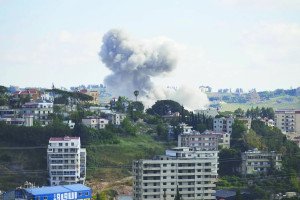
Over the past several years, the Middle East has witnessed a series of developments that have once again brought the future of regional security to the forefront of strategic debate. Some of these developments stem directly from regional dynamics—most notably the Gaza War of October 2023 and the Twelve-Day War between Iran and Israel—while others reflect the regional repercussions of broader international events, particularly the ongoing Russia–Ukraine war.
Taken together, these developments suggest that the Middle East is undergoing a profound transformation whose full implications are likely to unfold during the second quarter of the twenty-first century. Understanding the future trajectory of regional security, however, requires more than an assessment of current events. It also necessitates revisiting the historical evolution of collective security interactions in the Middle East and examining why previous attempts to establish effective regional security arrangements have consistently fallen short.
What Does History Tell Us About Collective Security in the Middle East?
Barry Buzan's Regional Security Complex Theory provides a useful analytical framework for understanding the evolution—or, more accurately, the absence—of collective security in the Middle East. The theory argues that states belonging to a particular region can establish an effective collective security mechanism only when they share a minimum level of common perceptions regarding both the nature of the threats they face and the forms of collective action they are willing to undertake in response.
These shared perceptions are largely shaped by what Buzan describes as a region's security culture, which seeks to answer three fundamental questions:
-
What is being threatened?
-
Who constitutes the primary threat to regional security?
-
Who defines the region's collective security perceptions?
Viewed through this theoretical lens, the history of security interactions in the Middle East demonstrates that the region has never fully developed the shared strategic outlook necessary to sustain a genuine collective security framework.
Indeed, unlike many other regions that have successfully established regional security organizations capable of managing common threats through long-term institutional commitments, the Middle East continues to suffer from what several scholars describe as a security deficit.
The Middle East's Security Deficit
For decades, the Middle East has lacked an effective regional security architecture. This absence stands in sharp contrast to developments in Europe, Southeast Asia, and other parts of the world, where states have gradually institutionalized mechanisms for addressing common security challenges.
One of the principal reasons for this persistent gap lies in the region's prevailing security culture, which has gradually taken shape since the middle of the twentieth century.
Rather than encouraging cooperation, this security culture has often hindered efforts to establish durable regional security arrangements.
Three defining characteristics illustrate this reality.
First: The Absence of Shared Threat Perceptions
Perhaps the most significant obstacle has been the absence—or inconsistency—of common perceptions regarding threats to regional security.
This fragmentation weakens what Buzan calls the Regional Security Complex, defined as a group of states whose principal security concerns are so closely interconnected that the national security of one cannot be analyzed independently of the others.
In practice, however, Middle Eastern states increasingly diverge in their assessment of regional threats.
Whenever Arab states achieve greater political independence or higher levels of economic development, their strategic priorities tend to become more individualized, reducing incentives for collective action.
The changing perception of Israel following the Abraham Accords illustrates this transformation. Before normalization agreements, Israel occupied a central position in the Arab security agenda. Today, however, security priorities differ significantly across the region, reflecting the inherently dynamic nature of security itself.
As concepts of threat evolve, so too do regional security perceptions.
Second: The Primacy of Military Power
A second defining feature of the region's security culture is the continued centrality of military power as the primary instrument for achieving or restoring security.
Across the Middle East, governments continue investing heavily in expanding military capabilities—not merely through large-scale arms purchases but increasingly through the development of indigenous defense industries, often in partnership with Western countries.
At the same time, regional governments have broadened their understanding of security to include non-military dimensions.
Energy security, food security, cyber resilience, and mastery of artificial intelligence technologies have all emerged as strategic priorities alongside conventional defense capabilities.
This expansion reflects an evolving security agenda without fundamentally diminishing the importance of military power.
Third: Limited Confidence in Arab Collective Security Institutions
The third defining characteristic concerns the limited confidence that Arab states place in existing regional security institutions.
Political rivalries, competing national interests, and persistent imbalances in regional power have prevented Arab governments from agreeing on a common hierarchy of threats or committing sufficient resources to collective defense mechanisms.
As a result, security institutions established under the framework of the League of Arab States have remained largely ineffective.
Repeated attempts to revitalize these institutions have failed to produce meaningful progress because member states continue to hold divergent strategic priorities.
Consequently, the prevailing regional security culture offers multiple—and often conflicting—answers to the three fundamental questions identified by Buzan: What is under threat? Who constitutes the principal threat? And who has the authority to define collective security?
The Key Issues Shaping the Future of Regional Security
Understanding the historical shortcomings of collective security in the Middle East also highlights the critical issues likely to determine its future.
Several strategic questions deserve particular attention.
Among them are the changing regional perceptions of friendship and hostility; the continuing centrality of military power within regional politics; the growing strategic importance of energy resources and artificial intelligence technologies; the influence of non-Arab regional powers—including Iran, Turkey, and Israel—on the future regional security order; and the increasingly significant role of the Gulf states in shaping emerging security arrangements.
Each of these variables is expected to play a decisive role in determining whether the Middle East can eventually move beyond its longstanding security deficit toward a more institutionalized regional security framework.
Looking Ahead
These issues formed the basis of a specialized workshop entitled "The Future of Regional Security in the Middle East," organized by the Security and Military Studies Unit at the Al-Ahram Center for Political and Strategic Studies on December 1, 2025.
Bringing together leading regional security experts, the workshop examined the principal strategic variables likely to shape the Middle East during the second quarter of the twenty-first century.
The studies emerging from that initiative seek not only to analyze the region's current security challenges but also to explore the possible trajectories through which regional security arrangements may evolve in the years ahead.
Ultimately, whether the Middle East succeeds in developing an effective regional security architecture will depend on its ability to overcome the structural divisions that have historically prevented collective action. Until regional states begin sharing common threat perceptions, strengthening institutional trust, and balancing military capabilities with broader cooperative security mechanisms, the region's security deficit is likely to remain one of its defining strategic characteristics.
Most read



Read also