The French Decision and the Structure of European Security

On December 21, French President Emmanuel Macron announced—during a speech delivered to French forces in the United Arab Emirates—Paris’s commitment to developing a new nuclear-powered aircraft carrier. This decision reflects a long-term strategic choice to entrench France’s reliance on an independent sovereign capability for naval power projection, whose operational impact will extend for more than five decades. The carrier is expected to remain in service until 2080, making the project France’s largest defense investment in scale and strategic consequence in a generation.
At the same time, the move exposes a structural gap in Europe’s collective military capacity. While debates within the European Union continue to focus on resource-sharing and capability coordination, the advanced maritime power-projection system that joint European frameworks have failed to produce is being realized through a unilateral French national decision.
Macron’s choice aligns with his assessment of today’s international security environment—one he has described as an “age of predators,” signaling the return of intense state competition and the renewed centrality of hard power, particularly at sea. Within this framework, the carrier enables France to conduct long-range operations stretching from the Suez Canal to the Pacific Ocean without relying on allied military infrastructure or political permissions. His July 2025 statement linking freedom to credible deterrence reflects a vision of security rooted in sovereign, independently deployable capabilities.
This long-term investment spans industrial infrastructure, shipyards, and sustained operational readiness—transforming strategic intent into tangible military commitment. It also underscores the inability of European collective mechanisms to generate a comparable autonomous power-projection capability.
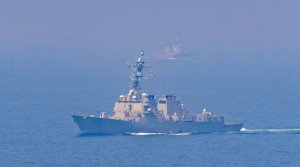
France’s current aircraft carrier, Charles de Gaulle, which entered service in 2001, remains the navy’s only operational carrier. The new nuclear carrier is scheduled to enter service in 2038, with Charles de Gaulle expected to retire around 2040—ensuring continuity of French carrier capability with a brief operational overlap.
This continuity is particularly critical for a country with extensive overseas territories spread across the Caribbean, South America, and the Indian and Pacific Oceans—regions that impose security demands far beyond continental Europe. With a displacement of roughly 78,000 tons, the new carrier will be twice the size of Charles de Gaulle and the largest warship ever built in Europe.
Aircraft carriers represent among the most complex and costly military systems in existence, requiring advanced industrial bases and decades-long financial commitments. France’s decision reflects the Gaullist tradition of strategic autonomy—where national defense choices are made according to sovereign priorities rather than external authorization.
The French Navy already maintains a continuous operational presence across contested maritime zones. In the Red Sea and the Gulf region, French frigates conduct independent patrols to protect shipping lanes and counter emerging threats. Following escalated Houthi attacks, France reinforced its naval deployments without relying on alliance coordination mechanisms.
Similarly, during heightened Gulf tensions in June 2025, France strengthened its military posture in Abu Dhabi through bilateral decisions. French permanent military facilities there function as rapid-response assets, driven by national strategic assessments.
As Macron has emphasized, strategic credibility is built through action and tested in crises. Across these operations, French priorities—securing maritime trade, safeguarding energy routes, and supporting regional stability—remain the guiding framework. While these objectives strongly overlap with broader European security interests, they are pursued outside collective EU command structures.
A single nuclear-powered carrier, supported by advanced combat aircraft, grants France cross-theater operational reach independent of allied bases or political constraints. This allows sustained presence in regions Paris deems strategically vital: Mediterranean security, Indian Ocean shipping lanes, protection of Pacific territories, and energy flows from the Gulf.
While these deployments primarily serve French sovereign interests, they simultaneously reinforce European trade security, energy stability, and the wider strategic environment—albeit under exclusively French operational control.
For years, the EU has sought to build collective defense mechanisms such as Permanent Structured Cooperation (PESCO), the European Defence Fund, and joint procurement programs. These initiatives aimed to pool resources and reduce reliance on national military programs. Though they have improved coordination in limited areas, they have failed to produce large-scale power-projection systems—most notably aircraft carriers.
Structural constraints explain this failure: political complexity of shared high-cost investments, persistent budgetary pressures, and diverging threat perceptions among member states. As a result, while no European collective framework could generate a comparable capability, France committed roughly €10.25 billion through a national decision to build Europe’s largest warship.
What collective Europe could not achieve is now being delivered under French national leadership.
This leaves other European states facing a strategic choice: either undertake similarly massive national investments to replicate such capabilities, or accept growing reliance on French military power that increasingly performs functions critical to wider European security—while remaining firmly under French sovereignty.
Diverging priorities make collective power projection even less likely. Eastern NATO members such as Poland, Romania, and the Baltic states prioritize land forces and air defense against Russia. Germany faces structural budgetary constraints and domestic resistance to major expeditionary investments. Spain and Italy possess respectable naval forces but lack the scale and autonomy of France’s model. The United Kingdom operates carriers, yet increasingly aligns their use with U.S. strategic priorities rather than a European framework.
Consequently, it is highly unlikely that other European states will pursue nuclear-powered carriers in the coming decades.
At the same time, U.S. commitment to European defense has become less certain than during the Cold War era. Since 1949, European security planning relied heavily on American guarantees through North Atlantic Treaty Organization. Shifts in U.S. domestic politics have injected growing uncertainty into the durability of that commitment.
Europe now faces a stark dilemma: either dramatically expand defense spending to build credible independent capabilities, or continue relying on U.S. protection that may not be assured long term. In this context, France’s investment stands out as one of the few concrete responses already in motion.
Macron’s strategic worldview reflects realism: security today depends on demonstrable power and the ability to impose tangible costs on adversaries. With great-power competition returning after a brief unipolar period, long-term material commitments—such as major weapons programs—have become key indicators of strategic seriousness.
Despite decades of European efforts toward collective defense coordination, what is emerging instead is a security architecture increasingly anchored in French military leadership. What joint frameworks cannot produce collectively is now being achieved through sovereign French action.
Where European strategic interests are at stake, operations are conducted and security is delivered—yet operational authority remains firmly in Paris.
Over the next half-century, European security is likely to depend significantly on France’s independent power-projection capability. Other European states face three realistic paths: attempting costly national replication, accepting French operational leadership, or acknowledging that France’s strategic autonomy—rooted in its nuclear and military tradition—has made it Europe’s dominant military power, succeeding where collective mechanisms have fallen short.
Most read



Read also