The Election of Ismail Ould Cheikh Ahmed: Repositioning African Diplomacy within the Organization of Islamic Cooperation

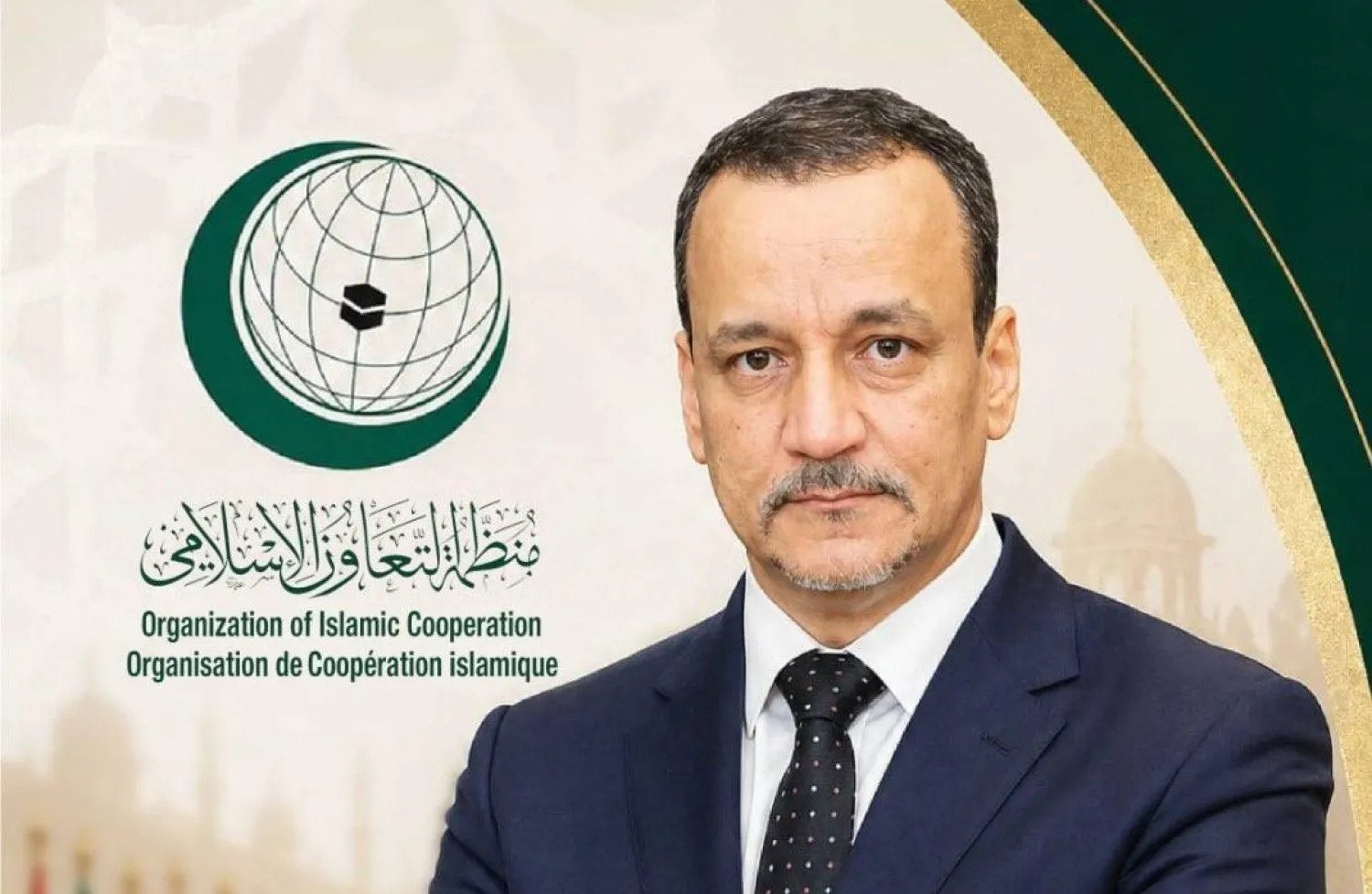
he election of Mauritanian diplomat Ismail Ould Cheikh Ahmed as the new Secretary-General of the Organization of Islamic Cooperation (OIC) appears to be more than a routine rotation of the position. It carries political implications related to the redistribution of influence within the organization and the balance among its three main regional groupings: Arab, African, and Asian. On the one hand, the choice of a Mauritanian figure with extensive UN experience reflects an interest in leveraging diplomatic expertise capable of dealing with conflict and crisis-related issues. On the other, it underscores the growing importance of African representation within Islamic multilateral institutions.
The significance of the election is further enhanced by Mauritania's position at the intersection of several geopolitical spheres. It is an Arab state and a member of the OIC, while also being geographically and politically part of the African continent. Ould Cheikh Ahmed's appointment could therefore provide the organization with greater capacity to bridge the priorities of its different regional groupings, rather than treating the Arab, African, and Asian blocs as separate entities in the decision-making process.
UN Experience as a Source of Strength
Ould Cheikh Ahmed brings a professional record that distinguishes him from some previous secretaries-general whose careers were more closely associated with national or regional diplomacy. He has spent more than three decades in diplomatic and UN-related work and has held positions in environments characterized by conflict and crisis. This experience has provided him with practical knowledge of multilateral negotiations, crisis management, and engagement with international and regional actors.
Such experience is particularly relevant given the political and security environment in which the OIC operates. The organization addresses a broad range of issues, from the Palestinian cause and conflicts in the Middle East to crises in Africa, Islamophobia, food security, development, and economic cooperation. The central value of Ould Cheikh Ahmed's UN experience may therefore lie in his ability to transform the organization from primarily a framework for political coordination and the issuance of statements into a more effective platform for mediation and consensus-building.
The African Dimension of the Election
The African Union's formal endorsement, in February 2026, of Ould Cheikh Ahmed's candidacy for the 2027–2032 term is an important element in understanding the broader context of his election. Although the African Union is not a direct participant in the OIC's internal electoral process, its support provides the candidacy with regional backing and signals a degree of African consensus around a figure capable of representing the continent's interests within one of the world's major international organizations, which includes numerous African member states.
From this perspective, the election can be interpreted as an attempt to strengthen the balance within the OIC, particularly given the significant numerical and political weight of African countries within the organization. African member states face a range of issues of direct relevance to the Islamic agenda, from crises in the Sahel and the Horn of Africa to development, poverty, security, migration, and countering violent extremism.
The new Secretary-General will therefore face the challenge of translating the African group's substantial numerical presence into greater political and institutional influence, without undermining the traditional balance with Arab and Asian member states.
Balancing Rotation and Competence
The selection mechanism established by the OIC Charter reveals a delicate balance between geographical representation and individual competence. The position is not governed by a fixed sequence through which the secretary-generalship automatically rotates among the Arab, African, and Asian groupings. Instead, it is based on principles of equitable geographical distribution, rotation, and equal opportunity, while taking competence, integrity, and experience into consideration.
Ould Cheikh Ahmed's election is significant in this regard because it appears to combine both considerations. On the one hand, his candidacy gives the African grouping greater geographical and political representation. On the other, it offers a candidate with diplomatic and UN experience suited to the organization's current challenges.
The election can therefore be understood as a compromise between the demand for equitable geographical representation and the need to select an individual capable of managing an organization comprising 57 states with widely divergent interests and political priorities.
Challenges Facing the New Secretary-General
Although his election represents a diplomatic success for Mauritania and the African member states, it does not necessarily mean that the new Secretary-General will have independent authority to reshape the organization's overall direction. The Secretary-General operates within an institutional environment in which the interests of member states remain decisive, particularly those of major Arab, Asian, and African powers. Moreover, the organization has limited executive instruments that would enable its Secretary-General to pursue an agenda independent of the will of member states.
Ould Cheikh Ahmed's greatest challenge will be to move from managing political balances to strengthening the organization's effectiveness. The issue is not simply maintaining consensus, but determining whether the OIC can translate its declarations and political positions into effective diplomatic initiatives, particularly regarding armed conflicts, humanitarian crises, and the Palestinian issue.
His UN background will also generate high expectations. He may be viewed as a figure capable of strengthening the organization's mediation role and establishing more effective links with the United Nations, the African Union, and other regional and international frameworks.
Broader Implications for Mauritania's Position
The election of a Mauritanian diplomat to the position also carries implications beyond the organization itself. Mauritania has sought in recent years to strengthen its presence across Arab, African, and Islamic diplomatic circles. Holding one of the most prominent positions within an organization comprising 57 states provides Nouakchott with an opportunity to expand its diplomatic influence beyond its national borders.
This is particularly significant for a country located at the intersection of the Sahel and the Maghreb. The position enables Mauritania to present itself as a potential bridge between the Arab and African spheres. Nouakchott is likely to benefit from the position by expanding its diplomatic networks, although the extent of this benefit will depend on the Secretary-General's ability to distinguish his institutional role within the OIC from the priorities of Mauritanian foreign policy.
Conclusion
The election of Ismail Ould Cheikh Ahmed as Secretary-General of the Organization of Islamic Cooperation can be viewed as an indicator of three interconnected developments: the strengthening of African representation within the organization, the growing importance of diplomatic and UN experience as a leadership criterion, and an attempt to equip the OIC with greater capacity to navigate an increasingly complex regional and international environment.
However, the true political significance of the election will not be determined simply by the new Secretary-General's nationality or professional background, but by what he is able to accomplish during his term. If he succeeds in using his UN experience to build consensus among member states, strengthen mediation mechanisms, and establish more effective links between the OIC and regional and international institutions, his election could evolve from a mere application of geographical rotation into an opportunity to revitalize the organization's political role. If divisions among member states continue to constrain its institutional room for maneuver, however, the impact of the change may remain largely confined to a redistribution of the leadership position without producing a fundamental transformation in the organization's performance.
Most read

Read also