The 60-Day Deadline Expires: Trump Says He Is “Not in a Hurry” as Iran Threatens Escalation

The 60-day deadline associated with the U.S.-Iranian memorandum of understanding expired today without mediation efforts and diplomatic contacts producing a clear breakthrough capable of ending the war or establishing a stable framework for negotiations. With the deadline now passed, the crisis appears to be entering a new phase defined more by a test of wills than by the end of the diplomatic track.
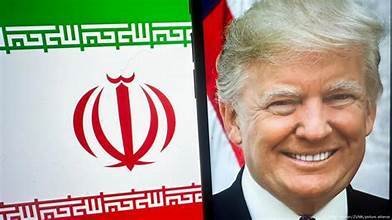
U.S. President Donald Trump reiterated in a post on Truth Social that Washington’s primary objective remains preventing Iran from acquiring a nuclear weapon, stressing that this goal “will always” remain unchanged. In an interview with Fox News, however, Trump appeared more inclined to keep his options open, saying that he had no timetable for ending the war and adding: “I have no timeline. I’m in no hurry.”
The statement carries an important political implication: Washington does not appear willing to give Tehran another negotiating deadline under time pressure. Instead, it seeks to preserve freedom of action, whether negotiations continue or military operations resume and escalate. At the same time, the absence of a clear timetable could increase pressure on Iran, but it also carries the risk of prolonging the conflict and turning it into an open-ended confrontation whose trajectory becomes increasingly difficult to control.
Iran Rejects the Logic of a Deadline
In Tehran, the response came quickly. Iranian Foreign Ministry spokesman Esmail Baghaei denied that there was an official 60-day deadline in the memorandum, stressing that Iran “is not a party that arranges its policies under pressure, threats, or deadlines.”
Iran is thus attempting to remove the time factor from the negotiating equation and prevent Washington from turning the expiration of the deadline into a political or military test that would force Tehran to make concessions.
More importantly, a senior Iranian official told Reuters that failure of diplomatic efforts could prompt Tehran to escalate tensions in the Strait of Hormuz and across the region, pointing to a shift in Iranian policy toward relying on offensive rather than defensive action.
This is where one of the most dangerous turning points in the crisis lies. The previous equation was largely based on Iran responding to American strikes. A shift toward taking the initiative would mean that Tehran is seeking to reshape the rules of engagement so that the United States is no longer the only party capable of determining the level, location, and timing of escalation.
Hormuz Becomes a Bargaining Chip
If Iran does indeed move from a strategy of retaliation to one of offensive initiative, the Strait of Hormuz will likely become one of its most important tools.
The Strait is not merely a regional waterway; it is a critical chokepoint for global energy trade. Any major disruption to shipping there would have consequences extending far beyond the United States, Iran, and the Gulf states to global oil markets and the wider economy.
But using Hormuz as a bargaining tool also carries significant risks for Tehran. The higher the threat to maritime navigation, the greater the likelihood of U.S. and international military intervention to protect shipping. This could transform Iran’s leverage from a means of applying pressure into a direct trigger for expanding the conflict.
Iran therefore faces a difficult equation: raise the cost of American pressure without reaching a level of escalation that forces Washington to widen the war.
The Diplomatic Track Is Not Yet Closed
Despite the increasingly confrontational rhetoric, diplomatic channels remain open. Baghaei confirmed that talks with Oman are continuing, attributing their slow pace to the complexity of the issues and the number of parties involved, as well as what he described as attempts by some countries to undermine the process.
Pakistan’s mediation efforts are also continuing, as regional actors seek to prevent the diplomatic track from collapsing altogether.
This means that the expiration of the 60-day deadline should not necessarily be interpreted as an announcement of the failure of negotiations. Rather, it represents a transition from negotiations conducted under a fixed timetable to an open-ended negotiating phase in which pressure and escalation are increasingly intertwined.
Trump Has Time—But Time Comes at a Cost
Trump appears to believe that time can work in Washington’s favor, particularly if economic and military pressure on Iran continues without the United States becoming embroiled in a large-scale ground war.
But this strategy faces a serious test. Prolonging the conflict could give Iran time to reorganize its position and rebuild its leverage. It could also increase pressure on energy markets and on Washington’s regional allies, while expanding the scope of indirect confrontation through Iran-aligned groups.
Iran, meanwhile, also has limited room for maneuver. Moving from defense to offense could give Tehran the initiative, but it could also invite a larger American response—particularly if U.S. forces are targeted or international energy flows are significantly disrupted.
A New Phase of Strategic “Chicken”
The current situation increasingly resembles a strategic game of chicken. Washington is betting on pressure and time to force Tehran into making concessions, while Iran is seeking to demonstrate that continued pressure will impose an increasingly heavy cost on the United States and its allies.
For this reason, the most important question after the expiration of the 60-day deadline is no longer: Will negotiations continue?
It is: Who will succeed in setting the terms of the next phase?
If Omani and Pakistani mediation succeeds in bringing the two sides back to serious negotiations, the expired deadline may ultimately prove to be little more than another stage in the diplomatic process. But if diplomacy fails, Iran’s shift toward an offensive posture—combined with Trump’s determination not to rush—could push the crisis into its most dangerous phase yet, particularly if the Strait of Hormuz becomes the main arena for testing the limits of both sides.
In that scenario, the confrontation will no longer be solely about Iran’s nuclear program. It will also be about who has the ability to set the rules of the game: Washington, through military superiority and economic pressure, or Tehran, through its ability to raise the cost of conflict in the Gulf and along global energy routes.
The real danger is that both sides may continue testing the other’s limits until controlled escalation turns into a confrontation that neither side can fully control.
Most read



Read also