Sudan Between Humanitarian Collapse and the Risk of Fragmentation: Is Darfur Approaching the Point of No Return?

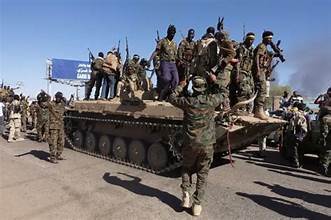
The ongoing war in Sudan, which erupted in April 2023, has evolved far beyond a military confrontation between the Sudanese Armed Forces (SAF) and the Rapid Support Forces (RSF). It has gradually transformed into a comprehensive state crisis in which humanitarian, political, security, and demographic dimensions intersect in unprecedented ways. As the conflict enters its fourth year, developments on the ground reveal an accelerating erosion of state institutions and governance structures, while concerns grow that some regions—most notably Darfur—may be moving toward de facto autonomy under the realities imposed by the conflict.
Recent warnings issued by United Nations agencies underscore the gravity of the situation. Sudan is no longer facing a conventional humanitarian emergency caused by war; rather, it is approaching what may be described as a crisis of national survival. Reports from the World Food Programme (WFP), the United Nations Population Fund (UNFPA), and the United Nations High Commissioner for Refugees (UNHCR) paint a bleak picture of a country in which the foundations of daily life are collapsing alongside the expansion of armed conflict. In this context, the humanitarian catastrophe is not merely a consequence of war—it has become an active force reshaping Sudan’s political, security, and social landscape.
Hunger as an Indirect Weapon of War
Food security indicators reveal the magnitude of Sudan’s socio-economic collapse. With approximately 19.5 million people facing acute food insecurity and more than 135,000 people experiencing catastrophic conditions bordering on famine, the crisis extends far beyond questions of livelihood. It reflects the breakdown of production networks, supply chains, and local markets that constitute essential pillars of state stability.
Historical experiences from protracted conflicts demonstrate that hunger often becomes a political and security factor no less dangerous than military operations themselves. Communities deprived of basic means of survival become increasingly vulnerable to displacement, recruitment by armed groups, and dependence on war economies. Their capacity to resist fragmentation and political disintegration also diminishes significantly.
From this perspective, Sudan’s food crisis represents not merely a humanitarian challenge but a direct threat to the country’s long-term stability and territorial cohesion.
The situation is further aggravated by the approaching rainy season, which threatens to isolate vast areas of Darfur and Kordofan from humanitarian supply routes. Such isolation could create inaccessible pockets of severe deprivation, increasing the likelihood of new waves of displacement and social unrest.
State Collapse Through the Erosion of Basic Services
The crisis extends beyond food insecurity to encompass the very foundations upon which modern states are built. When nearly 40 percent of healthcare facilities cease functioning and millions are deprived of access to clean water, sanitation, and medical care, the issue transcends humanitarian distress and becomes a crisis of political legitimacy.
The ability of a state to provide public services constitutes one of the principal sources of its legitimacy. As this capacity declines and humanitarian organizations, local actors, or armed groups begin filling the gap, citizens inevitably reassess their relationship with the state and seek alternative providers of security and essential services.
In this sense, the spread of epidemics and communicable diseases across Sudan is not merely a public health concern. It is also a symptom of the gradual erosion of the state’s core functions. As the conflict persists, public institutions become increasingly incapable of fulfilling their responsibilities, while local, tribal, and regional identities gain greater prominence as alternative frameworks of protection and governance.
Darfur: From a Battlefield to a Potential Geopolitical Project
If the humanitarian crisis represents the most visible face of the war, developments in Darfur constitute its most consequential dimension for the future of Sudan as a unified state. Current developments suggest that the region is undergoing transformations that extend beyond conventional military calculations and touch upon the restructuring of demographic and political realities on the ground.
Reports concerning population resettlement initiatives, the emergence of parallel governing structures, and the consolidation of military control over extensive territories have raised serious questions regarding whether certain actors are attempting to establish a new political reality that could eventually serve as the foundation for a separate political entity.
These developments cannot be separated from Darfur’s political history, which has long been marked by demands for greater representation, development, and regional autonomy. However, the current conflict has created fundamentally different circumstances, where military control over territory has become a decisive factor in shaping the region’s future political trajectory.
In this regard, many observers argue that some of the ongoing developments resemble patterns observed in other conflict zones around the world, where demographic transformations and the creation of parallel institutions preceded attempts to redraw political boundaries or establish de facto separatist entities.
The Parallel Government and the Crisis of Legitimacy
The prospect of establishing a parallel government carries significance far beyond administrative considerations. At its core, it raises fundamental questions of sovereignty and legitimacy. The emergence of a competing political authority effectively creates an alternative center of power, one of the classic indicators of a conflict evolving into a broader crisis of statehood.
Although the United Nations, the African Union, and the United States have publicly rejected any attempts to partition Sudan or establish parallel governing structures, the effectiveness of these positions remains uncertain given the limited practical mechanisms employed to prevent new realities from becoming entrenched on the ground.
International experience demonstrates that many separatist projects did not initially emerge through formal recognition but rather through the gradual consolidation of territorial control, the construction of local institutions, and the establishment of alternative governance systems before eventually becoming international political issues.
The International Community: Managing the Crisis Rather Than Resolving It
International responses to Sudan reveal a broader dilemma that frequently characterizes approaches to protracted conflicts. On one hand, major international actors continue to emphasize their commitment to Sudan’s territorial integrity and political unity. On the other hand, the measures implemented thus far appear more focused on managing the crisis than addressing its root causes.
Humanitarian assistance, while indispensable, cannot by itself resolve the structural drivers of conflict or halt trajectories of political fragmentation. Likewise, diplomatic statements alone are unlikely to alter realities that continue to take shape on the battlefield.
Consequently, many Sudanese political and social actors argue that the absence of more decisive international action regarding ongoing violations and demographic changes has effectively created additional space for armed groups to consolidate their influence and advance their own agendas. This dynamic may significantly increase the future cost of preserving Sudan’s unity.
Sudan at a Historic Crossroads
The Sudanese crisis today reflects an unprecedented convergence of humanitarian collapse and political fragmentation. Hunger, displacement, and the breakdown of public services are no longer merely consequences of war; they have become forces actively reshaping the country’s political and social geography. Simultaneously, developments in Darfur raise profound questions regarding the future of the Sudanese state and its capacity to preserve its territorial integrity.
The challenge facing Sudan therefore extends far beyond achieving a ceasefire or managing humanitarian relief operations. It concerns the reconstruction of the state itself. Sustainable stability requires a new national project capable of addressing the roots of historical marginalization, reintegrating peripheral regions into a shared political framework, and preventing temporary military realities from solidifying into permanent political arrangements.
As the war continues and the gap between humanitarian needs and available resources widens, Sudan stands at a historic crossroads. Either national actors succeed in forging a new political compact that preserves the country’s unity, or the dynamics of fragmentation continue to accelerate, making the prospect of a unified Sudan increasingly fragile and uncertain.
Most read



Read also