Russia–Iran Intelligence Cooperation Allegations: Strategic Motives and Implications for the Middle East War

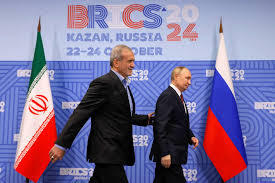
Recent media reports have raised concerns about possible Russian involvement in the ongoing war between the United States, Israel, and Iran. According to reports published by major international outlets, including The Washington Post and the Associated Press, Russia may be providing Iran with intelligence that could help Tehran target U.S. military assets in the Middle East, including the locations of American warships and aircraft.
Although no publicly verified evidence has yet been released, the reports have triggered debate among analysts about Russia’s strategic motives and the potential consequences for regional stability and global geopolitical dynamics.
This analysis examines the credibility of these claims, Russia’s possible motivations, and the potential implications for the war in the Middle East as well as the broader international balance of power.
The Credibility of the Allegations
The reports suggest that Russia may be sharing intelligence with Iran to assist in identifying U.S. military positions in the region. While the information has not been officially confirmed, analysts argue that the scenario remains plausible within the context of the evolving geopolitical rivalry between Russia and the United States.
Some observers note that the disclosure of such information could also serve political objectives, including rallying domestic or international support for the ongoing war against Iran. Another possible objective may be to undermine Russian President Vladimir Putin’s credibility as a potential mediator in the conflict, particularly after his recent diplomatic contacts with several Gulf leaders regarding possible pathways to de-escalation.
In this sense, the reports may reflect both real intelligence concerns and elements of information warfare within a broader geopolitical confrontation.
Russia’s Strategic Motives
Russia has long maintained a complex relationship with Iran. Although the two countries are not bound by a formal mutual defense treaty, they share strategic interests in counterbalancing Western influence in the Middle East.
From Moscow’s perspective, assisting Iran indirectly could also be interpreted as a form of retaliation against the United States for its role in supporting Ukraine during the ongoing Russia–Ukraine war.
This perspective became particularly relevant following Ukraine’s Operation Spiderweb, during which Ukrainian forces reportedly targeted elements of Russia’s nuclear triad. Many analysts believe that such sophisticated operations were unlikely to occur without some level of U.S. intelligence support.
Within this framework, Russian strategists often view the Ukraine war as a proxy conflict in which the United States uses Ukraine to weaken Russia without becoming directly involved in the fighting.
Applying the same logic, Moscow could theoretically view Iran as a comparable proxy actor capable of challenging U.S. power in the Middle East without triggering a direct confrontation between Russia and the United States.
Risks for Russia’s Regional Strategy
If the allegations prove accurate, they could carry significant diplomatic risks for Moscow.
Russia has invested considerable effort in maintaining a balanced regional policy in the Middle East, cultivating relationships with Iran, Israel, and the Gulf states simultaneously. This strategy has allowed Moscow to expand its diplomatic influence while avoiding direct alignment with any single regional bloc.
However, if it were confirmed that Russia had provided intelligence used to target U.S. bases located in Gulf countries, the revelation could undermine Moscow’s carefully constructed regional balancing strategy.
Even so, Gulf states may be reluctant to distance themselves significantly from Russia unless concrete evidence is presented. Economic ties, energy coordination, and broader geopolitical considerations may encourage them to maintain pragmatic relations with Moscow despite lingering suspicions.
The Trump Factor
The potential impact of these allegations may depend heavily on how U.S. President Donald Trump chooses to respond.
When asked about the reports by a Fox News journalist, Trump dismissed the question as “stupid,” suggesting that the administration has not yet adopted a clear public stance on the issue.
Several possible scenarios could emerge. Trump might dismiss the reports as misinformation or minimize their significance, potentially pointing to U.S. intelligence support for Ukraine as a comparable precedent.
Alternatively, he could respond more aggressively if political pressure from hawkish allies—such as Senator Lindsey Graham or U.S. security agencies—pushes the administration toward a tougher stance on Russia.
Such pressure could lead to several policy responses, including suspending U.S. mediation efforts between Russia and Ukraine, imposing stricter secondary sanctions, or expanding military support for Ukraine.
In a more escalatory scenario, the United States could consider transferring advanced weapon systems—such as Tomahawk missiles—to Kyiv.
Implications for the Russia–Ukraine War
The controversy surrounding the alleged intelligence sharing could also affect the fragile diplomatic dynamics surrounding the Russia–Ukraine conflict.
Since Trump’s return to office, Russia has attempted to entice the United States with the prospect of a resource-focused strategic partnership, hoping that Washington might pressure Ukraine to accept some or all of Moscow’s proposed concessions for a peace settlement.
However, if the allegations about Russian assistance to Iran gain traction within Washington’s political establishment, this strategy could collapse. Anti-Russian policymakers might use the reports to argue for abandoning diplomatic engagement with Moscow altogether.
Conclusion
While no definitive evidence has yet been made public confirming that Russia is providing Iran with intelligence to target U.S. forces, the allegations reflect broader geopolitical anxieties surrounding the intensifying rivalry between Washington and Moscow.
Whether the reports ultimately prove accurate or not, their strategic implications are significant. They highlight the growing interconnectedness of global conflicts—from Ukraine to the Middle East—and the increasing likelihood that major powers may engage in indirect confrontations through regional partners.
The ultimate impact of these allegations will depend largely on how Washington chooses to interpret and respond to them. A restrained response could prevent further escalation, while a more confrontational reaction risks widening an already volatile geopolitical landscape.
Most read