World Environment Day: The Earth’s Climate Alarms Are Growing Louder


World Environment Day, observed annually on June 5, has become one of the most significant international occasions dedicated to raising environmental awareness and mobilizing collective action to address the challenges threatening the future of the planet. Yet this year’s observance carries a significance that extends beyond symbolic commemoration. It comes at a critical juncture when scientific evidence increasingly confirms that climate change is no longer a distant possibility but a tangible reality whose consequences are being felt across societies, economies, and ecosystems worldwide.
The Azerbaijani capital, Baku, is hosting the 2026 World Environment Day celebrations under the theme “Inspired by Nature: For Climate and Our Future.” The theme reflects the urgent need to accelerate climate action and strengthen sustainable development pathways in response to the escalating environmental challenges confronting humanity.
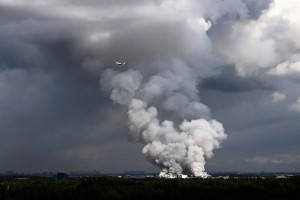
As global calls for action intensify, the Earth continues to send increasingly alarming warning signals. Rising temperatures, expanding wildfires, accelerating glacier melt, and rising sea levels are no longer abstract scientific indicators confined to specialized reports. Rather, they have become visible realities affecting the lives of millions of people, disrupting national economies, and challenging the resilience of communities around the world.
Scientific assessments issued by leading international climate institutions indicate that the period between 2015 and 2025 constituted the warmest decade since modern climate records began. Global mean surface temperatures in 2025 reached approximately 1.43 degrees Celsius above pre-industrial levels, placing the year among the hottest ever recorded.
The outlook for the coming years is equally concerning. Climate projections suggest that average global temperatures during the period from 2026 to 2030 may exceed the critical 1.5-degree Celsius threshold established under the Paris Agreement in at least some years. Such a development would signal a growing risk of crossing climatic tipping points that could trigger increasingly severe and potentially irreversible environmental consequences.
The climate crisis extends far beyond rising temperatures. It is producing structural transformations across the Earth’s environmental systems. Global mean sea level has risen by approximately 21 to 24 centimeters since the late nineteenth century, with the rate of increase accelerating due to thermal expansion of seawater and the rapid loss of glaciers and polar ice sheets. This trend poses a direct threat to low-lying coastal regions and small island states, many of which face existential risks in the coming decades.
At the same time, polar regions are undergoing unprecedented changes. Arctic sea ice reached historically low levels during 2026, while ice loss in Greenland and Antarctica continues to accelerate, contributing significantly to global sea-level rise and further destabilizing climate systems.
In parallel, extreme weather events have become more frequent, intense, and prolonged. Heat waves, droughts, floods, tropical cyclones, and wildfires increasingly characterize the global climate landscape, resulting in mounting human and economic losses.
Recent experiences across multiple continents illustrate the scale of the challenge. Europe, which is warming at nearly twice the global average rate, witnessed severe heat waves during 2025 that resulted in thousands of excess deaths. Portugal and Spain experienced extensive wildfires that devastated hundreds of thousands of hectares of land.
North America likewise endured major climate-related disasters. The Los Angeles wildfires of 2025 ranked among the most destructive and costly in modern history, causing extensive infrastructure damage, mass displacement, and substantial economic losses. Other regions of the United States experienced severe floods and storms with significant humanitarian and financial consequences.
Across Asia, Pakistan suffered catastrophic flooding that claimed more than a thousand lives, while India and several East Asian countries faced extreme heat waves and powerful cyclones. China also experienced extensive flooding that generated substantial economic losses and exposed vulnerabilities in critical infrastructure.
Africa and Latin America were similarly affected by a combination of prolonged droughts and devastating floods. Large portions of Southern Africa and the Amazon Basin experienced severe drought conditions that intensified wildfire risks, while extensive burning across the Amazon threatened biodiversity hotspots and weakened one of the world's most important natural carbon sinks.
In Australia and the Pacific region, recurring heat waves and wildfires continued into early 2026, accompanied by mounting threats to coral reef ecosystems resulting from marine heat waves and increasing ocean acidification.
These developments should not be viewed as isolated anomalies. Rather, they represent manifestations of a broader structural transformation in the global climate system. Consequently, addressing climate change is no longer a policy option that can be postponed; it has become an imperative directly linked to the future of global food security, water security, public health, economic stability, and sustainable development.
Despite the gravity of these challenges, there are encouraging signs of progress. The global energy transition has accelerated considerably in recent years. For the first time in modern history, renewable energy sources—including solar, wind, and hydropower—surpassed coal in global electricity generation during 2025. Investments in clean energy technologies and low-carbon infrastructure have also reached record levels, reflecting growing international commitment to sustainable energy systems.
Major economies such as China and India are leading large-scale renewable energy deployment, while European countries continue implementing policies aimed at reducing dependence on fossil fuels and accelerating the transition toward low-carbon economies. Nevertheless, climate experts maintain that current efforts remain insufficient to achieve the targets established under the Paris Agreement and to maintain global warming within safe limits.
The climate crisis once again underscores the reality that its solutions cannot be achieved through isolated national policies. Effective responses require robust international cooperation grounded in the principle of common but differentiated responsibilities. Industrialized nations, whose economic development historically depended on carbon-intensive growth models, bear a greater responsibility to finance adaptation efforts, facilitate technology transfer, and support developing countries that are disproportionately affected despite contributing relatively little to the crisis.
In this context, supporting small island developing states threatened by sea-level rise, strengthening agricultural resilience across Sub-Saharan Africa, and protecting tropical forests should not merely be viewed as acts of international solidarity. They represent investments in the stability of a shared planetary system upon which all nations ultimately depend.
On World Environment Day, the central message is clearer than ever: the Earth's climate warnings are becoming increasingly urgent, while the window of opportunity for meaningful action continues to narrow. As scientific institutions repeatedly warn of the escalating consequences of climate change, the true test for the international community lies in its ability to move beyond declarations and commitments toward effective implementation. Humanity shares one planet, and its future will ultimately be determined by our collective capacity to protect the climate and ensure environmental sustainability for future generations.
Most read