RSF Defections: Is Sudan’s Civil War Approaching a Strategic Turning Point?

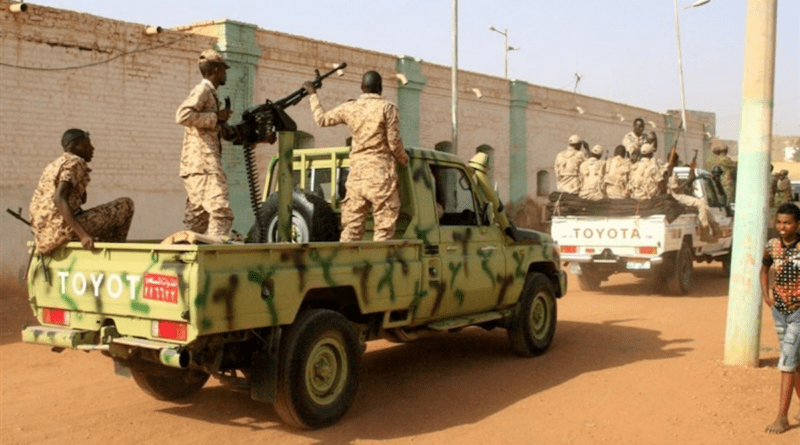
Sudan’s civil war is entering what could become a decisive new phase, as a growing wave of defections from the paramilitary Rapid Support Forces (RSF) begins to reshape the military balance between the RSF and the Sudanese Armed Forces (SAF). What initially appeared to be isolated cases has evolved into a broader trend involving senior battlefield commanders who are not only changing sides but bringing with them trained fighters, armored vehicles, tactical intelligence, and years of combat experience.
Although the conflict remains far from over, these developments point to a structural crisis within the RSF that may prove more consequential than conventional battlefield losses. If the current pattern continues alongside sustained military pressure from the SAF and widening internal divisions, the RSF could face its most serious challenge since the war erupted in April 2023.
Defections Strike at the Core of the RSF Leadership
The defection of Major General Al-Nour Ahmed Adam, widely known as "Al-Qubba," represented a significant turning point in the conflict. His move to the Sudanese Armed Forces carried exceptional strategic value, as he reportedly transferred more than 130 combat vehicles, a sizable contingent of loyal fighters, and valuable intelligence regarding RSF deployments, operational planning, and command structures.
Only weeks later, Brigadier General Ali Rizqallah, better known as "Al-Safna," followed suit. Having played prominent roles in the battles of Kordofan and El-Fasher, his departure reinforced growing perceptions that the RSF's internal problems had evolved beyond isolated personal disputes into a broader leadership crisis.
These defections are particularly significant because the departing officers are not merely symbolic figures or political personalities. They belong to the military elite that helped build the RSF into one of Sudan's most formidable fighting forces. Losing such commanders directly undermines operational effectiveness, battlefield coordination, and command continuity.
Beyond Personnel Losses: Eroding Combat Effectiveness
The strategic consequences of these defections extend far beyond the loss of individual commanders or military equipment. Reports indicate that many defectors brought with them professionally trained units that had formed the backbone of several RSF offensive campaigns during the past two years.
Consequently, the SAF is not simply increasing its manpower; it is simultaneously depriving its opponent of its most experienced combat elements. This dynamic helps explain the Sudanese military's increasingly aggressive operations in recent weeks, during which it claimed to have destroyed dozens of RSF vehicles, ammunition depots, fuel facilities, and drone storage sites.
The broader lesson is one commonly observed in prolonged civil wars: victory is rarely determined by numerical superiority alone. Instead, the ability to retain experienced commanders, cohesive units, and institutional expertise often proves decisive. These are precisely the assets that the RSF appears to be losing.
Tribal Politics and Internal Rivalries
Understanding the recent wave of defections requires examining the RSF's unique organizational structure. Unlike a conventional national army, the RSF has historically relied heavily on tribal alliances and personal networks alongside military hierarchy.
Notably, many of the senior defectors—including Al-Qubba and Al-Safna—belong to the Mahariya clan, one of the principal Arab tribal components within the RSF. Their departure suggests that the organization's internal crisis is increasingly driven by tribal competition, leadership disputes, and struggles over political influence.
Several developments appear to have accelerated these tensions. Among the most significant was the RSF's attack on the Mustaraha pastoral area in North Darfur earlier this year, which many Mahariya leaders reportedly viewed as a direct assault on their traditional sphere of influence. Longstanding grievances over medical services, delayed salaries, and allegations of favoritism toward rival tribal factions further deepened internal resentment.
The appointment of another figure as governor of North Darfur, instead of Al-Qubba—a founding member of the RSF—reportedly became another catalyst that accelerated his decision to defect.
An Alliance Beginning to Fragment
The signs of fragmentation extend beyond the RSF's Arab leadership. Increasing evidence suggests that its alliances with several non-Arab armed movements have also begun to deteriorate.
Reports indicate growing clashes among factions associated with the Sudan Founding Alliance operating in Blue Nile and South Kordofan since late 2025. Such internal disputes threaten one of the RSF's most important strategic advantages: its ability to project influence beyond its traditional power base in Darfur.
If these fractures continue to widen, the RSF may find it increasingly difficult to sustain multiple operational fronts simultaneously, limiting both its military flexibility and political leverage.
The Sudanese Army Exploits the Momentum
The SAF appears fully aware that these defections represent more than tactical victories—they offer a unique opportunity to weaken the RSF psychologically while strengthening its own military capabilities.
The earlier defection of Abu Aqla Keikal in late 2024 illustrates this strategy. After joining the SAF, Keikal became instrumental in military operations that ultimately enabled government forces to retake Gezira State, reinforcing confidence within the military establishment that former RSF commanders can play decisive operational roles.
This experience is likely to encourage the Sudanese military to intensify efforts to attract additional RSF commanders, particularly as dissatisfaction within the organization continues to grow.
External Support Remains the RSF's Strategic Lifeline
Despite mounting internal challenges, the RSF has managed to sustain its military campaign largely because of continued external assistance—a factor many analysts consider central to prolonging the conflict.
The United Arab Emirates continues to face allegations of supplying military assistance to the RSF, including drones, armored vehicles, heavy weapons, and logistical support. Reports have also alleged that hundreds of Colombian contractors were recruited to fight alongside RSF forces.
The UAE has consistently denied providing military support to the RSF. Nevertheless, investigations by international human rights organizations, together with intelligence assessments published by major Western media outlets, have pointed to recruitment networks and logistical channels that allegedly facilitated support for the paramilitary force.
Whether or not these allegations are ultimately verified in full, there is broad agreement among many observers that sustained external assistance has significantly enhanced the RSF's ability to compensate for battlefield losses in equipment and ammunition. However, external aid cannot easily replace experienced commanders or restore organizational cohesion once internal trust begins to erode.
Civilians Continue to Pay the Highest Price
While both military camps seek to improve their strategic positions, Sudanese civilians remain the principal victims of the conflict.
International organizations continue to document widespread arbitrary detention, torture, and serious violations of international humanitarian law. Drone strikes have increasingly targeted schools, hospitals, and marketplaces, resulting in hundreds of civilian casualties in recent months.
Both the SAF and the RSF continue to face allegations of committing war crimes and serious human rights abuses, underscoring the immense humanitarian cost of a conflict that shows few signs of imminent political resolution.
A Decisive Turning Point—or Another Phase of a Protracted War?
The recent defections undoubtedly represent the most significant internal challenge the RSF has faced since the outbreak of the war. Yet declaring them the beginning of the organization's collapse would remain premature.
Modern civil wars are rarely determined by battlefield dynamics alone. External sponsorship, recruitment capacity, financial resources, and political legitimacy often prove equally decisive in shaping long-term outcomes.
Nevertheless, current developments clearly indicate that the RSF has entered a fundamentally different phase of the conflict. It is no longer confronting only the Sudanese Armed Forces; it is increasingly struggling with internal distrust, tribal fragmentation, leadership disputes, and weakening alliances.
Should the current pace of defections continue while military pressure intensifies and internal cohesion deteriorates further, the RSF may soon face an existential challenge unprecedented in its history. Conversely, if its leadership succeeds in containing internal divisions while external military support remains available, Sudan's devastating civil war is likely to continue—with civilians remaining its greatest victims.
Most read


Read also