Mauritania’s National Dialogue: A Gateway to Political Reform or a Battleground Over a Third Presidential Term?

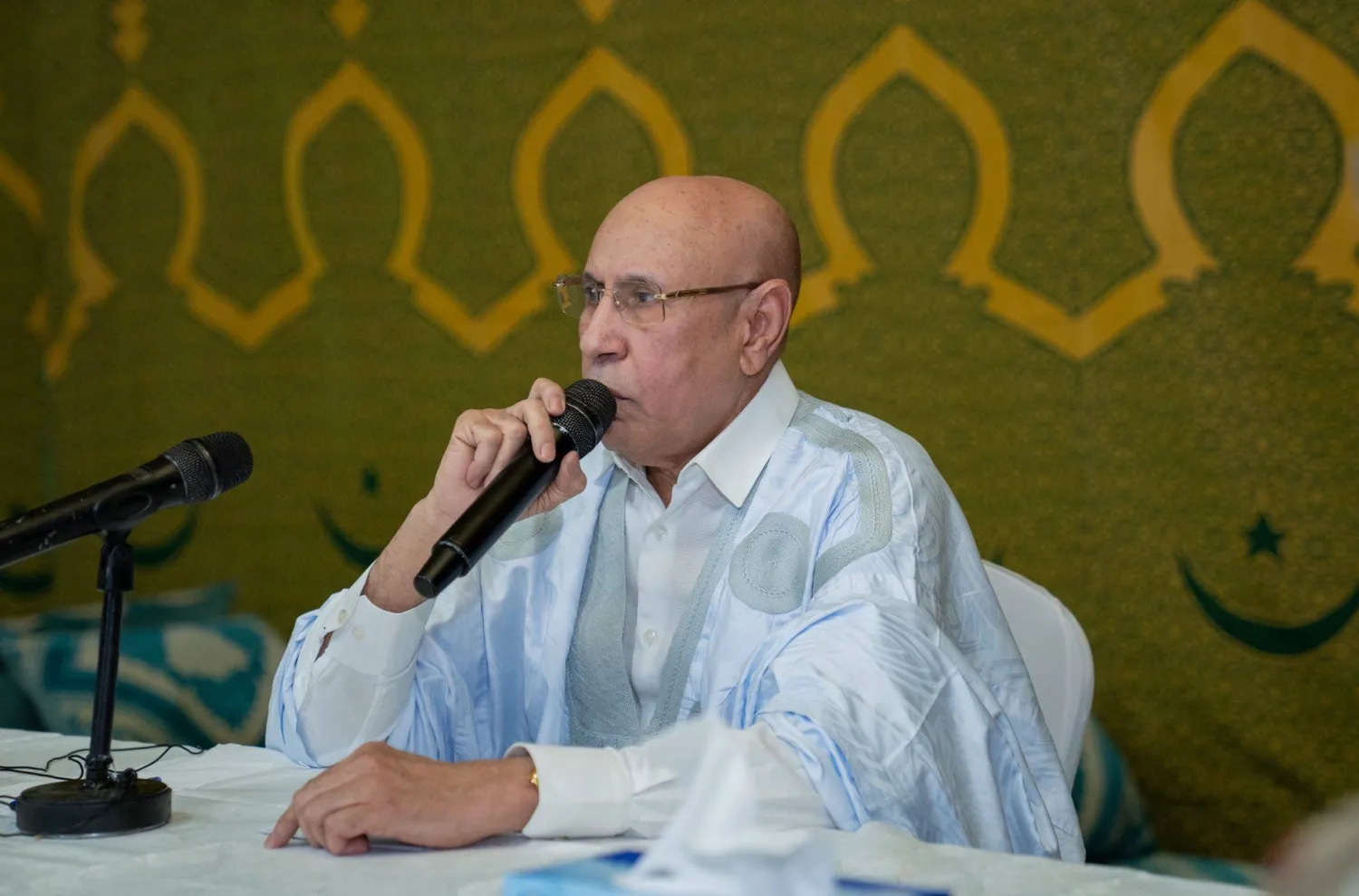
Mauritania’s long-awaited national dialogue has evolved far beyond its original purpose as a platform for discussing political and institutional reforms. Instead, it has become a defining test of the country’s constitutional order and the future of its political system. The dispute over whether presidential term limits should be included on the dialogue’s agenda is no longer a procedural disagreement between the government and the opposition; it reflects a deeper struggle over the limits of executive power, the durability of constitutional safeguards, and the balance between political stability and democratic alternation of power.
Against this backdrop, the ruling presidential coalition's insistence that the dialogue remain "open to all issues without exception" has been widely interpreted as a clear political signal that constitutional amendments remain on the table, even if they were excluded from the dialogue’s initial reference document. For the opposition, this position represents an indirect attempt to revive debate over a possible third presidential term for President Mohamed Ould Cheikh El Ghazouani.
From Political Reform to Constitutional Controversy
When President Mohamed Ould Cheikh El Ghazouani pledged during his 2024 re-election campaign to launch a comprehensive national dialogue, the stated objective was to strengthen political consensus, improve democratic institutions, and establish a common framework for addressing the country’s political, economic, and social challenges. However, as preparations advanced, it became increasingly evident that the dialogue's most sensitive issue was not institutional reform but the future of the presidency itself.
Under Mauritania’s current constitution, a president may serve only two terms, making El Ghazouani’s current mandate his final one. Nevertheless, voices within the ruling coalition have begun advocating constitutional revisions, arguing that entrenched constitutional provisions limiting presidential terms do not necessarily reflect the will of the Mauritanian people. This argument has shifted the national debate away from institutional reform toward a broader reconsideration of the constitutional rules governing political succession.
Consequently, the central question is no longer what the dialogue will discuss, but whether it will serve as a vehicle for reshaping the constitutional framework governing presidential succession.
The Ruling Coalition’s Strategy: Keeping Every Issue on the Table
The ruling coalition has anchored its position in a principle that appears democratic on its face: a genuine national dialogue should exclude no issue of national importance, regardless of its political sensitivity. According to this view, removing topics before discussions even begin contradicts the very purpose of an inclusive dialogue and limits its capacity to generate meaningful political consensus.
For this reason, the coalition insists that participants should retain the right to introduce additional issues during the course of negotiations, including constitutional matters. It argues that consensus should emerge from dialogue rather than serve as a precondition for launching it.
Yet this position carries unmistakable political implications. By insisting that no subject should be considered off-limits, the ruling coalition preserves the possibility of reopening debate over presidential term limits even if the issue is initially omitted from the official agenda. This explains its strong defense of the principle that there should be "no forbidden topics."
The Opposition: Protecting the Constitution Before Negotiating Politics
The opposition views the ruling coalition’s approach from a fundamentally different perspective. It argues that the dialogue should focus on strengthening governance, improving democratic performance, and advancing institutional reform—not on reopening constitutional provisions specifically designed to safeguard the peaceful transfer of power.
For opposition parties, presidential term limits constitute one of the constitution’s protected clauses precisely because they are intended to remain insulated from shifting political majorities or temporary balances of power. Simply placing the issue on the dialogue's agenda, they argue, risks transforming the constitutional framework into a political bargaining tool capable of extending the tenure of the current ruling elite.
This explains why earlier attempts to introduce the issue led to the suspension of preparatory dialogue sessions, highlighting the depth of political polarization surrounding constitutional reform.
Presidential Silence: A Strategy of Calculated Ambiguity
Perhaps the most striking feature of the current debate is President El Ghazouani’s continued refusal to clarify his personal position regarding a possible third term. When opposition leaders raised the issue directly, he merely stated that he had neither instructed organizers to include presidential terms on the dialogue agenda nor ordered their removal.
Although this response appears politically neutral, it has fueled widespread speculation. The president has neither reaffirmed his commitment to the existing constitutional limit nor ruled out the possibility of future constitutional amendments. Many observers therefore interpret this ambiguity as a deliberate political strategy designed to preserve flexibility while avoiding direct confrontation with either the opposition or influential supporters within his own political camp who favor constitutional revision.
From a strategic standpoint, this measured silence allows the president to avoid alienating competing constituencies while keeping all political options available as negotiations unfold.
National Dialogue as a Contest for Political Influence
The controversy surrounding presidential term limits ultimately extends beyond the constitutional question itself. The dialogue has become an arena in which competing political forces seek to reposition themselves ahead of the post-El Ghazouani era.
Should the ruling coalition succeed in reopening constitutional discussions, it could pave the way for multiple political scenarios, including extending the president’s tenure or undertaking broader constitutional restructuring. Conversely, if the opposition succeeds in preserving the existing constitutional safeguards, it would reinforce the principle of democratic alternation and establish a clearer roadmap for political transition following the conclusion of the president’s second and final term.
In this sense, the dialogue represents not merely a consultation process but an emerging struggle over Mauritania’s future political architecture.
Implications for Political Stability
The significance of this constitutional debate is amplified by Mauritania’s unique position within the Sahel. Unlike several neighboring states that have experienced military coups and constitutional crises, Mauritania has sought to project itself as one of the region’s more politically stable countries.
Consequently, any attempt to revisit constitutional provisions governing presidential tenure could affect both domestic and international perceptions of Mauritania as a relatively successful example of constitutional continuity and peaceful political succession.
At the same time, continued polarization between the government and the opposition risks undermining the dialogue itself, making it more difficult to achieve consensus on broader reforms concerning governance, economic development, and public administration—issues that remain critical to the country's long-term stability.
The Future of the Dialogue: National Consensus or Constitutional Crisis?
Current developments suggest that the success of Mauritania’s national dialogue will not ultimately be measured by the number of issues discussed, but by its ability to manage profound constitutional disagreements without triggering a broader political crisis.
If participants succeed in separating institutional reform from the contentious debate over presidential succession, the dialogue could become an important opportunity to strengthen democratic governance and reinforce political stability. However, if the debate over a potential third presidential term comes to dominate the proceedings, the dialogue risks transforming from an instrument of national consensus into a platform for intensified political polarization.
Mauritania therefore stands at a pivotal crossroads. The national dialogue could either reinforce constitutional norms and deepen the country's democratic trajectory, or mark the beginning of a new phase of constitutional uncertainty centered on the rules governing political succession. The outcome will shape not only the future of President Mohamed Ould Cheikh El Ghazouani, but also the long-term evolution of Mauritania’s democratic experiment.
Most read

Read also