
Preemption or Prevention? The Legal Fault Lines in the Strikes on Iran

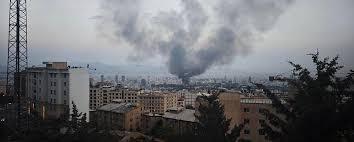
The recent joint United States–Israeli military strikes against Iran mark a significant inflection point in the continuing erosion of the international legal order. Assessed against established principles of international law, the attacks cannot be credibly characterized as either preemptive self-defense or lawful uses of force. Rather, they raise profound concerns regarding the integrity of the UN Charter framework and the broader “rules-based” system that Western states frequently invoke.
The Legal Framework: Use of Force and the Limits of Self-Defense
Under Article 2(4) of the UN Charter, states are prohibited from using force against the territorial integrity or political independence of any state. The only recognized exceptions are authorization by the UN Security Council or the inherent right of self-defense under Article 51 in response to an armed attack.
In this case, the Security Council did not authorize military action. Accordingly, the only potentially lawful justification would have been self-defense. Yet the threshold for anticipatory or preemptive self-defense under customary international law—often associated with the Caroline doctrine—is exceptionally high. It requires a threat that is “instant, overwhelming, leaving no choice of means, and no moment for deliberation.”
Available public evidence does not indicate that such conditions were present. Intelligence assessments previously cited by U.S. officials suggested that Iran was not actively pursuing a nuclear weapon and, even if it chose to do so, would require years to develop one. Moreover, recent strikes had reportedly already set back Iran’s nuclear program. In the absence of an imminent armed attack, characterizing the February 28 strikes as preemptive stretches the doctrine beyond recognition.
Preventive war—intended to neutralize a potential future capability—has no standing under international law. The distinction between preemption and prevention is not semantic; it is foundational. Accepting preventive logic would effectively dismantle the Charter system by allowing states to unilaterally determine when another state’s capabilities constitute a future threat.
Diplomacy Undermined
The legal concerns are compounded by timing. The strikes occurred while diplomatic negotiations between Washington and Tehran over Iran’s nuclear program were ongoing. Just days earlier, both sides had agreed to continue talks. Launching military action in the midst of active negotiations raises serious questions under Article 2(2) of the UN Charter, which obliges member states to fulfill their commitments in good faith.
Military escalation during negotiations risks transforming diplomacy into a tactical instrument rather than a genuine conflict-resolution mechanism. Such practice undermines trust not only between the immediate parties but across the international system, particularly in non-proliferation regimes where verification and reciprocal restraint depend on sustained engagement.
Regime Change and Sovereignty
Statements by U.S. and Israeli leaders further complicate the legal picture. Public declarations framing the strikes as part of a broader effort to end Iran’s nuclear ambitions and facilitate regime change introduce an additional layer of illegality. The forcible removal of a government contravenes the principles of sovereignty and non-intervention that anchor the UN Charter system.
Targeting senior political and military leadership—including heads of state—crosses a normative threshold separating conventional hostilities from acts that resemble aggression aimed at political decapitation. Beyond legal considerations, such actions generate acute risks of state collapse and power vacuums, with unpredictable regional consequences.
Historical precedents—from Libya after the fall of Muammar Qaddafi to Iraq following the removal of Saddam Hussein—illustrate the destabilizing effects of regime change absent a coherent post-conflict strategy. In each case, the collapse of centralized authority facilitated protracted instability and, in some instances, the rise of extremist actors. There is little publicly available evidence that comparable contingency planning exists for Iran.
Humanitarian and Systemic Implications
Reports of civilian casualties, including strikes affecting non-military targets, underscore the humanitarian costs of rapid escalation. Even if such incidents remain contested, they highlight the heightened risks inherent in campaigns that aim simultaneously at strategic infrastructure and political leadership.
More broadly, the normalization of preventive force risks accelerating a systemic unraveling. When powerful states invoke self-defined security imperatives to justify unilateral military action, the distinction between lawful self-defense and strategic opportunism blurs. Smaller states, observing such precedents, may either seek asymmetric deterrence or abandon faith in multilateral norms.
International Reactions and the Fragmentation of Consensus
The international response has been uneven. While some Western governments have justified the strikes as necessary to prevent nuclear proliferation, others have refrained from explicitly endorsing the legal rationale. Russia and China have criticized the action and called for an immediate return to diplomacy.
This divergence reflects a broader fragmentation of consensus around the interpretation and enforcement of international law. The credibility of the “rules-based order” depends not only on rhetorical commitment but on consistent application—even when inconvenient.
Conclusion
The strikes on Iran represent more than a bilateral military episode; they test the durability of the post-1945 legal architecture governing the use of force. In the absence of Security Council authorization or evidence of an imminent armed attack, the legal justification remains deeply contested. Coupled with overt references to regime change and the undermining of ongoing diplomatic processes, the operation signals a troubling willingness to bypass established constraints.
If preventive war, instrumentalized diplomacy, and coerced political transformation become normalized tools of statecraft, the international legal order will not merely be strained—it will be fundamentally compromised.
Most read



Read also