“Nobody’s Gatekeeper”: How Libya’s Migration File Evolved from a Transit Crisis into a Sovereignty Battle
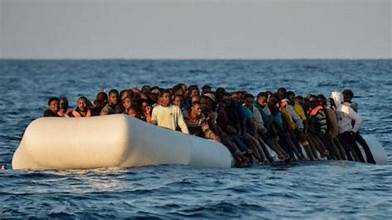
Along Libya’s western coastline, coast guard searchlights pierce the darkness as patrol boats pursue fragile rubber dinghies carrying men, women, and children fleeing poverty, conflict, and instability. This recurring scene is more than a snapshot of a prolonged humanitarian crisis; it is the visible manifestation of an unwritten arrangement unfolding behind the scenes—one in which European capitals spend millions to keep the “migration challenge” away from their shores, effectively turning politically fragmented Libya into a permanent buffer zone.
Today, however, the equation is changing. Across Libya, from Tobruk to Tripoli, migration is no longer viewed solely as a security or economic concern. It has increasingly become a question of sovereignty, identity, and national survival, encapsulated in a slogan that resonates throughout the country: “Libya is nobody’s gatekeeper.”
The Trap of Forward Containment: How Europe Shifted Its Borders Southward
Political and security indicators suggest that the European Union—particularly Italy—has embraced what may be described as a strategy of forward migration containment. The logic is straightforward: rather than intercepting migrants upon their arrival at the shores of Sicily or Lampedusa, efforts are concentrated on stopping them before they ever leave Libyan waters.
Under this approach, European support has flowed into Libya in the form of patrol vessels, surveillance systems, radar technology, and coast guard training programs. Yet many Libyans argue that the implicit expectation behind this assistance is the containment of migrants within Libyan territory, often through detention facilities and migration management mechanisms that primarily serve European security priorities.
The “Safe Third Country” Dilemma
One of the most contentious aspects of the migration debate concerns what some Libyan observers perceive as a gradual attempt to normalize Libya’s role as a temporary host country for migrants and asylum seekers. Although no formal international framework explicitly designates Libya as a “safe third country,” concerns persist that legal and political arrangements could eventually create a de facto reality in which migrants remain in Libya for prolonged or indefinite periods.
From a Libyan perspective, this raises fundamental questions about burden-sharing and responsibility. Critics argue that Europe seeks stronger protection for its northern borders while paying insufficient attention to Libya’s vast and porous southern frontiers, through which thousands of migrants enter the country each year.
From Resettlement Fears to Demographic Anxiety
The issue of migrant settlement is no longer viewed by many Libyans as a speculative concern. Instead, it has evolved into a demographic debate fueled by the scale of migration flows. With estimates suggesting that the number of migrants and refugees in Libya is approaching one million, in a country whose native population numbers roughly seven million, concerns over demographic balance have become increasingly prominent.
These concerns are reflected in several tangible challenges:
Pressure on Public Services: Growing demand for electricity, fuel, healthcare, and subsidized goods has intensified pressure on already strained public infrastructure.
Expansion of Informal Economies: Parallel economic networks have emerged in some areas, operating largely outside formal labor regulations, taxation systems, and state oversight.
Social and Urban Transformation: Reports of property acquisitions through local intermediaries and the formation of densely populated migrant communities around major urban centers have contributed to broader debates regarding social cohesion and long-term demographic trends.
Libya’s Vulnerable Flank: The South and the Transnational Smuggling Nexus
Understanding the migration challenge requires looking southward, toward Libya’s extensive borders with Niger, Chad, and Sudan. Here, migration intersects with organized crime, regional instability, and transnational smuggling networks.
Human trafficking organizations operating across the Sahara are no longer merely local criminal groups. They are sophisticated transnational networks equipped with logistical capabilities that, in some cases, rival those of local security actors struggling with limited resources and difficult terrain.
Many Libyans point to what they perceive as an imbalance in international priorities. While substantial resources have been allocated to securing the Mediterranean Sea—the northern border of Libya and the southern border of Europe—far less attention has been devoted to strengthening security along Libya’s southern desert frontiers, where the migration routes originate. For many within Libya, this disparity reinforces the belief that the objective is to manage migration flows rather than address their root causes.
A Red Line: Legislative and Popular Resistance
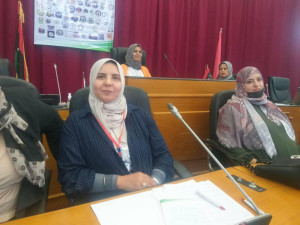
In response to mounting external pressures, a broad domestic consensus has begun to emerge across Libya’s political landscape. Despite enduring divisions between eastern and western institutions, migration has become one of the few issues capable of generating significant convergence among political actors.
Recent positions adopted by legislative bodies, alongside growing public and professional mobilization, have emphasized several key principles: opposition to any arrangements that could facilitate permanent settlement, rejection of citizenship or open-ended residency schemes under humanitarian frameworks, and calls for stronger measures to deport individuals lacking a legal basis for residence.
Libya’s Difficult Choice
Libya today stands at a critical crossroads. It can either continue functioning as a recipient of externally driven migration policies in exchange for fragile political understandings, or it can seek to redefine its role as a sovereign state whose interests and security concerns must be taken into account.
For many Libyan policymakers and analysts, the solution will not emerge solely from diplomatic discussions in Brussels or New York. Rather, it will depend on the ability of Libyan institutions to formulate a unified national strategy—one that prioritizes the security of the country’s southern borders and treats migration as a core national security issue rather than a negotiable component of international political bargaining.
The migration debate in Libya has therefore moved far beyond the question of transit routes to Europe. It has become a broader struggle over sovereignty, state authority, demographic stability, and Libya’s place within the evolving architecture of Mediterranean and regional security.
Most read