
Libya Between Competing Initiatives and the State-Building Dilemma

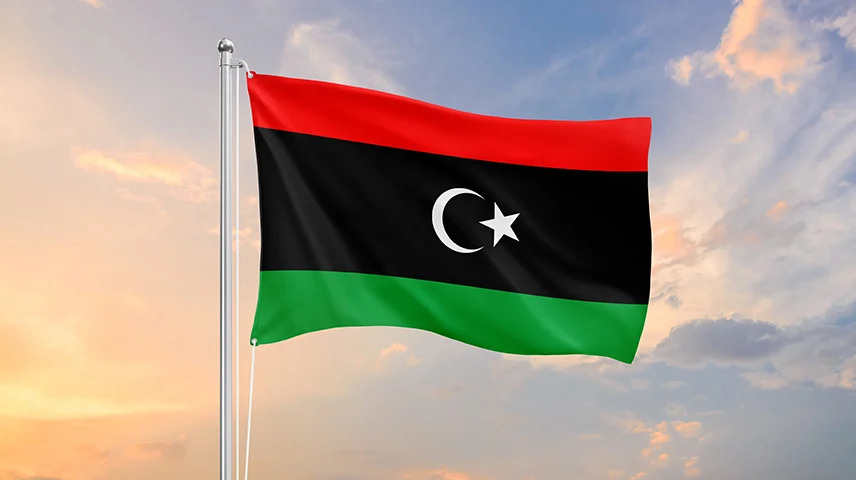
As the Libyan city of Sirte hosts the first conference of Libyan political parties under the theme “Political Parties’ Visions for Addressing the Libyan Crisis,” the country faces a striking political paradox. After years of stalemate, failed elections, and persistent institutional division, Libya no longer suffers from a shortage of initiatives. Rather, it is confronted with multiple, overlapping pathways toward a settlement, each reflecting a different understanding of priorities and of how the country should move from its current fragmented reality toward a unified and stable state.
There is a U.S.-led effort that, according to circulating proposals, seeks to restructure the executive authority and reunify state institutions by incorporating the most influential actors in eastern and western Libya. Alongside it is a United Nations-led process aimed at rebuilding consensus around elections and institutional unification, as well as understandings among Libyan institutions seeking to advance a “Libyan-Libyan” track. At the same time, political parties and civilian actors are attempting to reclaim a greater role in shaping the debate over the country’s future.
This renewed activity may suggest that the crisis has entered a new phase, potentially opening a window for breaking the deadlock that has persisted since the failure to hold elections in December 2021. Yet it also raises a more complicated question: Will the proliferation of initiatives generate complementary pressure toward a settlement, or will it merely create multiple frameworks for managing the crisis?
More importantly, the debate is no longer confined to who will lead the next government or how senior positions will be divided between eastern and western Libya. It increasingly concerns the nature of the state that any new settlement might produce: Will it be a state capable of containing existing centers of power and subjecting them to unified institutional rules, or a new political framework that merely redistributes influence among them?
Sirte and the Attempt to Bring Politics Back to the Center
The conference of Libyan political parties in Sirte carries significance beyond that of an ordinary partisan gathering.
Sirte itself has particular political and geographic symbolism. Situated between eastern and western Libya, it occupies a central position in a country where geographic and political divisions have long shaped the trajectory of the conflict. The conference also comes at a moment of intensified political activity concerning the future of the executive authority, elections, and the reunification of state institutions.
According to its declared objectives, the conference seeks to provide a platform for dialogue and the exchange of views among political parties and forces, while supporting consensus on national issues. Its deeper significance, however, may lie in an attempt to restore civilian and party politics to a political landscape in which major decisions have, for years, been shaped largely by competing institutions, armed actors, and external powers.
The Libyan crisis has gradually evolved from a dispute over the structure of the political system into a complex web of struggles over power, legitimacy, resources, and military and security influence.
Bringing political parties back into the debate could therefore broaden the range of actors involved in shaping the country’s future. Yet this will depend on whether these parties can move beyond general appeals for reconciliation and national unity and develop practical positions on the most sensitive issues: the structure of the state, relations among branches of government, resource distribution, decentralization, the military establishment, the constitutional framework, and elections.
Libya does not lack dialogue. What it lacks, to a much greater extent, is the ability to translate consensus into binding and enforceable rules.
From a Crisis of Governments to a Crisis of the State
Since the failure to hold the presidential and parliamentary elections scheduled for December 2021, Libya has entered a new phase of division.
The Government of National Unity, headed by Abdul Hamid Dbeibah, has remained in office in Tripoli, while a parallel executive authority headed by Osama Hammad has operated in the east, reinforcing the duality of political authority and state institutions.
Yet viewing the crisis simply as a struggle between two governments fails to capture its full complexity.
The division now extends across multiple levels: political institutions, security and military structures, parts of the administrative and economic system, as well as armed groups and networks of interests with varying degrees of influence over political decision-making.
For this reason, forming a unified government, while important, may not in itself be sufficient to end the crisis.
In theory, the executive authority could be reunified while real power remains distributed among multiple actors. Indeed, there is a risk that the division could shift from two separate governments to a single government containing competing centers of influence, each retaining its own political, military, and economic leverage.
This highlights the distinction between two concepts that are often treated as synonymous: unifying political authority and building the state.
The first can potentially be achieved through a political agreement that redistributes positions. The second requires institutions and rules capable of imposing their authority on all actors.
The U.S. Initiative: Political Realism and the Test of Power Centers
Against this backdrop, the U.S.-linked initiative has emerged as one of the most significant efforts to break the political deadlock.
According to the available material, the broad concept involves reunifying the executive authority through an arrangement that balances eastern and western Libya, while simultaneously working toward institutional unification and preparing the country for elections.
The logic underlying this approach appears to reflect a pragmatic reading of realities on the ground: no durable settlement can be built by ignoring actors that wield substantial actual power.
This argument has considerable merit.
The experience of previous years has demonstrated that agreements excluding actors capable of obstructing their implementation are unlikely to endure. Incorporating the most influential forces into a settlement could therefore reduce the risk of confrontation and create shared interests in preserving a new political arrangement.
Yet this realism also carries one of the initiative’s greatest risks.
Bringing centers of power into the state does not automatically mean subjecting them to the authority of the state.
If influential political or military actors obtain new official positions without a genuine restructuring of security, military, and economic institutions, the settlement could shift from a project aimed at ending division to one that institutionalizes it within a single formal structure.
The decisive question, therefore, is not whether the initiative can bring eastern and western Libya into one government. It is whether it can transform centers of influence from actors possessing autonomous instruments of power into actors operating under the rules of a unified state.
Egypt and Saudi Arabia: Reservations Over Mechanisms Rather Than Objectives
It is within this dilemma that the reservations attributed in the available material to Egypt and Saudi Arabia regarding certain aspects of the U.S. approach can be understood.
According to the diplomatic sources and assessments cited, the disagreement does not concern the principle of ending the division or establishing a unified executive authority. Rather, it concerns the sequencing of steps and the guarantees that should govern the process.
One of the central issues is therefore the question of sequencing: Should the most influential actors first be brought together under a single authority, with institutional unification pursued gradually afterward? Or should clear institutional and security safeguards be established in parallel with the formation of the new authority, ensuring that the settlement does not simply legitimize the existing balance of power?
The first approach assumes that agreement among major power centers can provide an entry point for institution-building.
The second fears that politically incorporating these centers before constraining their independent sources of influence could turn state institutions themselves into reflections of the existing power balance.
This disagreement is not merely theoretical, particularly from Egypt’s perspective.
For Cairo, Libya is not simply a foreign policy issue. It is a geographic space directly connected to the security of Egypt’s western border, a concern that has become more acute amid the continuing war in Sudan and the associated risks of arms trafficking, fighter movements, and smuggling networks across the vast desert regions linking Libya, Sudan, and Chad.
Consequently, the viability of any settlement will be judged not only by its political legitimacy or international recognition, but also by whether it produces an authority capable of exercising effective control on the ground.
Southern Libya: The Most Complex Test
Security developments in southern Libya expose one of the weaknesses that has characterized many previous approaches to the crisis.
Most political discussions focus on the east-west divide, while the south represents a strategic arena that may ultimately determine whether a future Libyan state can exercise meaningful sovereignty.
Libya’s borders with Sudan, Chad, and Niger, combined with vast desert territories and the activities of smuggling networks, organized crime, and armed groups, make the south part of a regional security system extending far beyond Libya itself.
The war in Sudan has added another layer of complexity, particularly given the growing importance of border areas and movement corridors connecting Darfur with southeastern Libya.
Any settlement focused solely on ending the division between Tripoli and Benghazi may therefore remain incomplete.
The real test of state authority is not simply whether ministries or budgets can be unified, but whether the state can control its borders, regulate the movement of weapons, combat smuggling networks, and administer areas far removed from the country’s principal political centers.
If these issues remain outside effective institutional control, political authority may be unified in the north while a significant part of the country remains governed by a different set of security dynamics.
The Tripartite Libyan Initiative: Reclaiming National Agency or Redistributing Legitimacy?
Alongside the U.S. effort, an announced understanding among the House of Representatives, the High Council of State, and the Presidential Council has emerged around a process aimed at holding elections and unifying institutions.
The significance of this track lies in its attempt to demonstrate that the solution should not remain entirely dependent on external initiatives and that Libyan institutions themselves are capable of generating domestic understandings.
Setting a timeframe for elections and linking the electoral process to institutional unification and an end to divided authority also gives the initiative a more concrete character than broad calls for dialogue.
Yet it faces a fundamental dilemma of its own: whether the existing institutions, themselves products of an extended transitional period, can agree on rules that may ultimately restructure them or bring their mandates to an end.
This reveals one of the structural paradoxes of the Libyan crisis.
The institutions negotiating the end of the transitional period are themselves institutions whose positions and influence were acquired within that very transition. The success of any roadmap therefore requires guarantees that political deadlines will be binding and that agreements cannot simply be reopened whenever the moment for an actual transfer of power approaches.
The United Nations and the Problem of Open-Ended Transitions
The UN-led process remains essential because of the international legitimacy it provides and its ability to bring together actors who might otherwise be difficult to convene within a single framework.
Yet the United Nations faces a cumulative challenge.
Over the years, successive mediation efforts have produced agreements, institutions, and transitional arrangements, but they have not achieved the ultimate objective of creating stable institutions deriving their legitimacy from nationally accepted elections.
With each new transitional phase, new institutions, elites, and interests emerge, making the next transition increasingly difficult.
The greatest risk facing any new roadmap, therefore, is that it could become yet another transitional phase without a clearly defined endpoint.
If a new transition is expected to last several years, it should be tied to specific deadlines and benchmarks: What must be achieved in the first months? When will the constitutional framework be finalized? How will institutions be unified? What guarantees will ensure that elections take place on schedule? And what mechanisms will apply if one party obstructs implementation?
Without clear answers, time itself becomes an instrument for reproducing the crisis.
Elections Are Neither a Sufficient Starting Point nor an End in Themselves
Most initiatives agree that elections should represent the ultimate objective. Yet the experience since 2021 has shown that agreement on the need for elections does not amount to agreement on the conditions under which they should take place.
Disputes remain over the constitutional basis, candidate eligibility, the sequencing of presidential and parliamentary elections, the electoral authority, the security environment, and guarantees that the results will be accepted.
This raises a central issue that is often overshadowed by legal and procedural debates: Are Libya’s competing actors genuinely prepared to participate in elections they might lose?
Democratic elections depend not only on the right to compete but also on acceptance of political alternation and electoral defeat.
If parties enter elections while retaining military or institutional tools that allow them to reject unfavorable results, voting may not resolve the crisis. Instead, it could generate a new crisis of legitimacy.
Elections should therefore be viewed as part of a broader process of institution-building and confidence-building, rather than as a substitute for it.
This does not mean postponing elections indefinitely, since repeated delays have themselves become a major factor in prolonging the crisis. Rather, elections need to be linked to a clear and parallel process that establishes the minimum political and security conditions necessary to make their results enforceable.
Multiple Initiatives: Complementarity or Competition?
On the surface, there are few fundamental differences among the various initiatives regarding their ultimate objectives.
Nearly all emphasize institutional unification, ending political division, establishing a unified authority, and holding elections.
The differences emerge in the details: Who should lead the next phase? How should senior positions be distributed? What should be the sequence of steps? Who guarantees implementation? How should the military establishment be managed? And when should elections take place?
These details are, in fact, the essence of the crisis.
If the United States, the United Nations, regional states, and Libyan institutions can transform their separate efforts into a complementary framework, the multiplicity of initiatives could become an advantage, allowing each actor to exert influence in areas where it possesses greater leverage.
If, however, these initiatives develop into competing tracks, Libyan actors may use them to maneuver among different sponsors—supporting whichever initiative offers them a more favorable position while obstructing those requiring greater concessions.
This is a pattern Libya has experienced before, when the multiplicity of mediators became part of the problem rather than part of the solution.
What Can the Sirte Conference Contribute?
Against this background, the conference of political parties in Sirte can be viewed as an opportunity to test whether a political space can be created beyond traditional negotiations among established centers of power.
If participating parties can formulate a common vision containing specific principles on the transitional period, elections, institutional unification, the relationship between the military and civilian authority, and resource management, the conference could contribute an element often missing from previous initiatives: a broader civilian political foundation for a settlement.
If, however, it remains confined to general statements about unity and reconciliation without translating them into practical proposals, its impact will remain largely symbolic.
What Libya needs is not simply another initiative added to an already long list. It needs common ground on which the existing tracks can converge.
This is precisely where political parties could play a different role: not by competing with state institutions or international initiatives, but by helping define a minimum national consensus on issues that should not be subject to political bargaining in any future state.
Three Scenarios for the Next Phase
Three broad scenarios can be envisaged for the evolution of the political landscape.
The first is a gradual breakthrough leading to an institutional settlement. This would require U.S., UN, regional, and Libyan initiatives to converge around a single roadmap involving a unified executive authority, clear arrangements for institutional reunification, a binding electoral timetable, and parallel security and economic measures. This scenario offers the strongest prospect for ending the division, but it would require meaningful concessions from the principal actors and enforceable guarantees.
The second is formal unification of political authority while multiple centers of power persist. This may be more achievable in the short term. An agreement could be reached on the distribution of senior positions and the creation of a unified government, reducing tensions and allowing some institutions to reunify. Yet without a gradual transfer of actual power to state institutions, such a settlement would remain fragile and vulnerable to collapse when major disputes emerge over resources, authority, or security.
The third is continued stalemate accompanied by competing initiatives. This could occur if negotiations over the new authority fail, regional and international interests diverge, or domestic actors refuse to surrender their existing positions. In that case, current institutions may persist with limited modifications while Libya enters another cycle of dialogues, committees, and roadmaps without a decisive political transition.
Libya’s Fundamental Dilemma: Who Governs Whom?
After more than a decade of transitional arrangements, the most important question may no longer be who becomes prime minister or head of the Presidential Council, nor which diplomatic initiative ultimately prevails.
The more important question is: What relationship will emerge between the state and existing centers of power after a settlement?
There is a fundamental difference between bringing influential actors into state institutions and making those actors subject to institutional rules.
In the first case, the state risks becoming an umbrella for power-sharing among competing centers of influence.
In the second, the settlement can become the beginning of a genuine transition from the logic of power to the logic of institutions.
This cannot be achieved through a single decree or a rapid political agreement. Unifying the military establishment, reorganizing security institutions, managing sovereign resources, securing borders, and establishing stable constitutional rules are all processes that require time.
The decisive factor, however, is the direction of movement: Is power gradually being transferred from individual actors and armed groups to institutions, or are state institutions themselves being transferred into the control of those actors?
Conclusion: From Crisis Management to State-Building
Libya is entering a period of greater political activity than it has witnessed in recent years, but increased activity does not automatically mean that a solution is closer.
The multiplicity of initiatives could represent an opportunity if it unifies domestic and international pressure behind a single political process. It could equally become a burden if it provides competing actors with multiple avenues for maneuvering and delaying difficult decisions.
Likewise, the formation of a unified government could be an important step, but it would not in itself prove that the division has ended. Elections could provide institutions with renewed legitimacy, but they would not guarantee stability unless mechanisms exist to ensure acceptance of their results. Administrative and economic reunification could ease the crisis, but it would not amount to state-building if armed power remained fragmented outside unified political authority.
The real value of the current political momentum—including the conference of political parties in Sirte—therefore depends on whether it can change the nature of Libya’s political debate.
Instead of remaining confined to questions such as who receives which position, who represents the east or west, and who leads the next transitional phase, the discussion needs to move toward a more fundamental question: How can institutions be built that endure regardless of who happens to lead them?
The ultimate test of the U.S. initiative, the UN process, and Libyan-led understandings is not merely whether they can produce a new authority. It is whether they can break the cycle that has defined Libya’s previous transitions: a political agreement, followed by temporary institutions, followed by disputes over legitimacy, renewed division, and eventually another initiative.
If the next settlement succeeds in breaking this cycle and gradually shifting the center of gravity from individuals, armed groups, and competing power centers toward institutions and constitutional rules, Libya may finally be witnessing the beginning of a genuine exit from its prolonged crisis.
If, however, the current efforts result merely in a redistribution of authority among existing forces without changing their relationship with the state, the names of institutions and officeholders may change while the underlying structure of the crisis remains intact.
In that case, Libya will not have ended its transitional period.
It will simply have entered another one.
Most read


Read also