Joint Probe with Iran and Security Measures to Contain Fallout

Iraq has entered a new and potentially delicate phase in its relations with Saudi Arabia after Riyadh confirmed that the strategic East-West oil pipeline had been targeted by drones launched from Iraqi territory. Baghdad responded by opening extensive security investigations and taking action against military and security officials in Maysan province, while also agreeing to an Iranian request for a joint investigation into drone-launch platforms discovered near the Iraqi-Iranian border.
The developments come at a highly sensitive moment for Saudi Arabia, whose energy security increasingly depends on routes that allow it to bypass the Strait of Hormuz, where shipping has faced severe disruption amid the regional war. The targeting of the East-West pipeline is therefore more than an isolated security incident. It strikes at one of the most important components of the infrastructure Riyadh relies upon to reduce its exposure to risks associated with maritime routes in the Gulf.
Baghdad Opens Investigation After Attacks Traced to Maysan
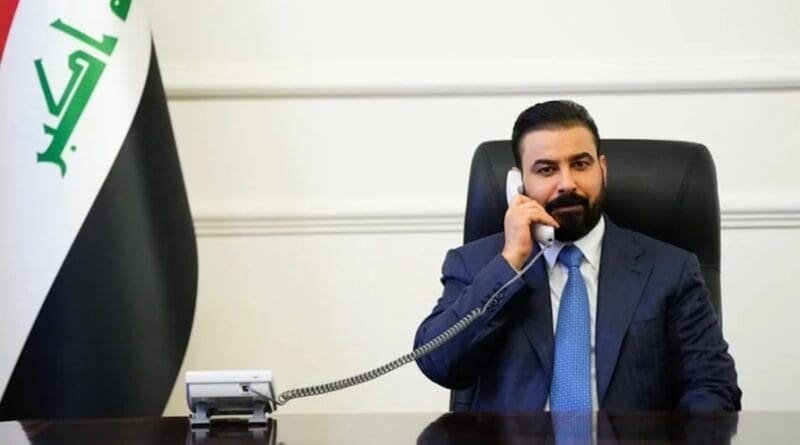
Iraqi Prime Minister Ali Faleh al-Zaidi, in his capacity as commander-in-chief of the armed forces, ordered a series of measures after evidence emerged indicating that the attacks targeting the Saudi oil pipeline had been launched from a location inside Maysan province.
Al-Zaidi ordered the dismissal of the commander of Maysan Operations Command and established an investigative committee to examine the security breach and determine the circumstances surrounding the incident. Further measures were subsequently taken against security officials in the province, reflecting Baghdad’s attempt to demonstrate that the use of Iraqi territory to launch attacks against neighboring states would not go without accountability.
The Iraqi government also reaffirmed its rejection of the use of Iraqi territory as a launching ground for attacks against neighboring countries, stressing that protecting Iraq’s sovereignty and preventing its territory from being turned into an arena for regional conflicts are direct responsibilities of the state and its security institutions.
The position is particularly significant for Baghdad, which has sought in recent years to strengthen its relations with the Gulf states, especially Saudi Arabia, while maintaining its longstanding political, economic, and security ties with Iran.
Joint Iraqi-Iranian Investigation into Drone Platforms
In a notable development, the Iraqi prime minister agreed to an Iranian request for a joint investigation into drone-launch platforms discovered near the border between the two countries.
According to the spokesman for the Iraqi commander-in-chief of the armed forces, the joint investigation will examine the circumstances surrounding the discovery of the platforms following the attacks on Saudi energy infrastructure.
The decision carries both political and security implications. On the one hand, Baghdad wants to demonstrate that it has the authority to investigate military activity originating from its territory. On the other, involving Iran in the investigation appears designed to contain tensions between the two countries, particularly amid suspicions of links between the attacks and armed groups operating in Iraq that maintain close ties with Tehran.
A joint investigation, however, does not in itself mean that either Baghdad or Tehran has acknowledged Iranian responsibility for the attacks. The identity of those who carried out the operation, as well as the party that ordered it, remains subject to investigation.
Border Crossings with Iran Closed
Iraq’s response has not been limited to internal investigations.
Iraqi authorities have also closed several border crossings with Iran, including the Shalamcheh crossing, as part of security measures linked to the latest developments and investigations into the security breach. Other crossings, including al-Sheeb and Mandali, have also reportedly been closed.
According to Iraqi security sources cited by Reuters, the closure of Shalamcheh was a precautionary measure following the attacks on Saudi Arabia, while Iraqi security forces launched a broader operation to track those responsible.
The move is sensitive because these crossings play an important role in trade and passenger traffic between Iraq and Iran.
Its primary significance at this stage, however, is security rather than economic. Baghdad appears determined to tighten control over border facilities and prevent them from being used to transport or launch military equipment, while also restricting the space for operations that could further escalate the crisis with Saudi Arabia.
Riyadh: Attacks Were Launched from Iraqi Territory
Saudi Arabia, for its part, said several drones had targeted the East-West oil pipeline in the Riyadh and Medina regions and that the drones had been launched from Iraqi territory.
The Saudi Foreign Ministry said the attacks caused injuries and material damage and that repair operations were under way. Riyadh also said it had decided not to launch a military response against Iraq at this stage, following a request from the Iraqi prime minister to give his government an opportunity to take the necessary steps to prevent further attacks originating from Iraqi territory.
At the same time, Saudi Arabia emphasized that it reserves the right to take all necessary measures to protect its sovereignty, security, infrastructure, citizens, and residents.
The formulation reflects an attempt by Riyadh to strike a delicate balance between restraint toward Baghdad and preserving its right to respond if the attacks continue.
Why the East-West Pipeline Is So Important to Saudi Arabia
The significance of the attack lies largely in the pipeline’s role within Saudi Arabia’s energy infrastructure.
The East-West pipeline, also known as Petroline, extends for roughly 1,200 kilometers and transports crude oil from the oil-rich Eastern Province to Yanbu on the Red Sea coast. It has a design capacity of approximately seven million barrels per day, making it one of the most important alternatives available to Saudi Arabia for exporting crude without passing through the Strait of Hormuz.
Its strategic role has become even more important as shipping through Hormuz has been disrupted.
The strait is a major global oil chokepoint, and any significant disruption raises a fundamental question for Gulf producers: how can oil exports continue if tankers are unable to move freely through the Persian Gulf?
For Saudi Arabia, the East-West pipeline provides part of the answer. It transports crude from the kingdom’s eastern fields to the Red Sea, where it can be loaded onto tankers bound for global markets without requiring passage through Hormuz.
The pipeline is therefore not simply an isolated piece of oil infrastructure. It is one of the strategic alternatives Saudi Arabia relies upon amid the Hormuz crisis.
Pipeline Shutdown Expands the Risk to Global Oil Markets
Saudi Arabia suspended operation of the pipeline following the attacks while repair work began.
The incident comes as global oil markets are already facing simultaneous disruptions across several energy corridors. Alongside the crisis in the Strait of Hormuz, risks have increased in the Red Sea and around Bab el-Mandeb, where the Houthis have made military advances along Yemen’s western coast and in areas close to the strategic maritime corridor.
Saudi Arabia is consequently facing pressure on several potential oil-export routes:
- The Strait of Hormuz: the principal maritime chokepoint for Gulf energy exports.
- Bab el-Mandeb: the southern gateway to the Red Sea and an alternative maritime route.
- The East-West pipeline: the overland route transporting Saudi crude to the Red Sea.
The crisis therefore does not appear to be centered on a single chokepoint. Rather, several strategic routes are becoming interconnected.
That is the aspect most likely to concern global markets. A disruption to one route can be partially offset through alternatives, but simultaneous disruptions across several routes are considerably more difficult and expensive to absorb.
Washington Points to Iran
The issue has taken on an even more sensitive dimension following Washington’s involvement.
U.S. President Donald Trump said on Saturday that Iran was “probably” responsible for the air attack targeting the Saudi East-West pipeline, marking the first direct American assessment linking Tehran to the operation.
The statement, however, does not yet amount to judicial proof or the public presentation of conclusive evidence that the Iranian government directly ordered the attack.
This makes the Iraqi-Iranian investigation particularly important.
If the investigation establishes that the drone-launch platforms discovered on Iraqi territory were in fact used in the attacks, the next questions will concern who operated them, who supplied the drones or intelligence, who provided logistical support, and whether the perpetrators belonged to an Iraqi armed group or a broader regional network.
If evidence eventually emerges of direct involvement by Iranian state agencies, the crisis would enter a fundamentally different phase, placing Baghdad under intense pressure from Riyadh and Washington to take stronger action against Iran-aligned armed groups operating in Iraq.
Baghdad Between Riyadh and Tehran
The Iraqi government faces a highly complicated political equation.
Iraq maintains close relations with Iran, while Iran-aligned armed factions possess significant political and security influence inside the country. At the same time, Baghdad has spent years strengthening its economic and political ties with Saudi Arabia and the Gulf states.
The attack on the East-West pipeline therefore represents a genuine test of the Iraqi government’s ability to exercise state authority across its territory.
Riyadh is not merely asking Baghdad to condemn the attack. It wants practical guarantees that Iraqi territory will not again be used to target Saudi infrastructure.
The dismissals, investigations, and border measures are consequently intended to send a message both domestically and internationally that the Iraqi government is seeking to regain the initiative on security.
Yet the government’s ability to do so will ultimately depend on its willingness and capacity to confront armed factions that possess military capabilities and resources independent of the state’s formal institutions.
The Saudi Message: Restraint Has Limits
Saudi Arabia’s decision not to respond militarily immediately is a calculated move.
Striking targets inside Iraq could broaden the conflict and place Baghdad in an even more difficult position. It could also trigger retaliation by Iraqi armed groups against Saudi or U.S. interests in the region.
At the same time, Riyadh cannot maintain restraint indefinitely if attacks continue.
That is why Saudi Arabia emphasized in its statement that it reserves the right to take “all necessary measures” to protect its security and sovereignty.
The message is therefore twofold: Baghdad is being given an opportunity to act, but that opportunity is not unlimited.
Dismissing Maysan Officials Sends a Domestic Message Too
The dismissal of the Maysan Operations commander, followed by measures against other security officials in the province, carries implications beyond the immediate incident.
Maysan is located in southern Iraq near the Iranian border and is strategically important because of its border crossings and transportation links with Iran.
Once Iraqi authorities confirmed that the attack had originated from a site within the province, the issue was no longer simply about the activities of armed groups. It also raised questions about security gaps that allowed Iraqi territory to be used in a military operation against another country.
The dismissals therefore appear intended to hold state security institutions accountable for failing to prevent the operation while investigators con
Most read