
Is Iraq Entering a New Era in the Fight Against Corruption? Between Domestic Reform and International Pressure

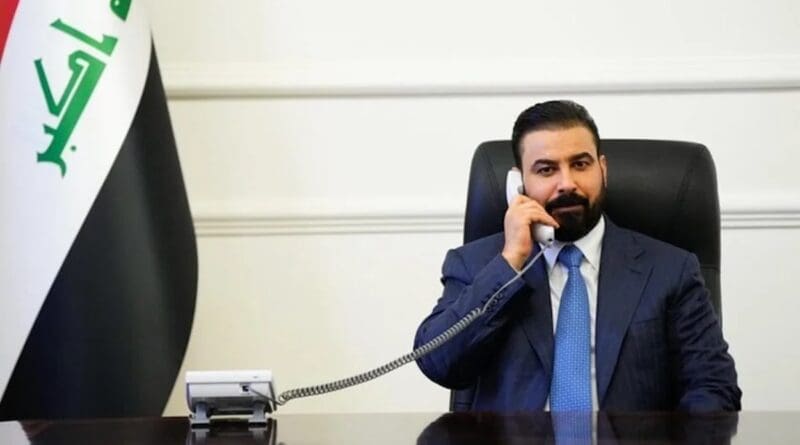
Recent developments in Iraq suggest that the fight against corruption has evolved beyond a purely domestic political issue shaped by electoral competition or partisan rivalries. Instead, it is increasingly emerging as a strategic priority intertwined with broader regional and international interests. A recent report by the International Center for Development Studies (ICDS) in London portrays Iraq’s anti-corruption campaign not as another temporary political initiative targeting specific individuals, but as part of a broader effort to rebuild state institutions and restore international confidence in the country.
According to the report, this shift is largely driven by growing Western recognition that Iraqi corruption networks no longer pose a threat solely to Iraq’s economy. Rather, illicit financial flows, money laundering, and transnational patronage networks have become significant sources of regional instability. Consequently, combating corruption is no longer viewed merely as an internal governance issue but as an essential component of regional security and international economic stability.
Domestically, Iraqi authorities appear to be pursuing a different model of anti-corruption governance—one based on close coordination between the judiciary and the executive branch. This approach marks a departure from previous campaigns that were frequently criticized for being politically selective or constrained by sectarian and partisan calculations. The emerging strategy seeks to establish institutional mechanisms capable of dismantling corruption networks independently of Iraq’s deeply entrenched political divisions.
The Tax Deposits Scandal, widely known as the "Heist of the Century," has become the first major test of this new approach. Judicial rulings clearing former Prime Minister Mustafa Al-Kadhimi and his administration of responsibility—despite persistent political attempts to implicate him—suggest an effort, if consistently applied, to reinforce the separation between judicial proceedings and political disputes. This distinction is particularly significant given that the case represents one of the largest financial corruption scandals in Iraq’s history, involving the embezzlement of approximately US$2.5 billion from the General Commission for Taxes through an elaborate network of shell companies.
The report further argues that the judicial strategy pursued by Faeq Zaidan, President of Iraq’s Supreme Judicial Council, draws inspiration from Italy’s historic campaign against organized crime during the 1990s. Such a comparison underscores the magnitude of the challenge facing Iraqi institutions. The objective is no longer limited to prosecuting individual officials accused of corruption but extends to dismantling deeply entrenched political and financial networks that have accumulated influence over two decades by exploiting institutional weakness and political fragmentation.
Running parallel to the judicial campaign is the government's executive initiative known as "Dawn Raids" (Sawlat Al-Fajr), which represents the operational arm of Iraq’s anti-corruption strategy. The campaign has targeted sectors traditionally considered the epicenters of corruption—including border crossings, customs administration, the energy sector, and tax authorities—areas that have long served as major sources of illicit revenue for competing political factions and patronage networks. Initial operations reportedly resulted in the recovery and freezing of assets worth hundreds of millions of dollars, strengthening the government's reform credentials and enhancing the credibility of its anti-corruption agenda.
The recent seizure of more than US$20 million in cash, along with several kilograms of gold hidden inside residential properties belonging to a former senior official at the Ministry of Oil, illustrates both the enormous wealth accumulated by corruption networks and the authorities' willingness to pursue investigations reaching the upper echelons of the state apparatus rather than focusing solely on lower-level bureaucrats.
More importantly, the significance of this campaign lies not only in the value of the recovered assets but also in the institutional framework underpinning it. The close coordination between judicial authorities and security agencies—allowing for immediate arrest warrants and rapid enforcement operations—signals an attempt to overcome the bureaucratic delays and political interference that historically undermined anti-corruption efforts. If sustained, this model could lay the foundation for a more effective and durable institutional response to systemic corruption.
Internationally, Baghdad appears increasingly aware that recovering stolen public assets requires extensive cross-border cooperation. Accordingly, the government is working to strengthen financial intelligence-sharing mechanisms with Western partners, expand extradition agreements, and pursue illicit assets hidden abroad. This strategy reflects the recognition that a substantial portion of Iraq’s stolen wealth has already been transferred overseas and that any credible anti-corruption policy must address financial networks operating beyond Iraq’s borders as well as those within them.
From an economic perspective, these reforms carry implications that extend far beyond judicial accountability. Expanding digital governance, automating public services, and reducing direct human intervention in administrative and financial procedures are intended to eliminate opportunities for corruption at their source rather than merely prosecuting offenders after the fact. If implemented successfully, these structural reforms could improve Iraq’s sovereign credit ratings with major international agencies, enhance investor confidence, and create a more attractive environment for foreign direct investment—an essential objective as Iraq seeks to diversify its economy and reduce its dependence on oil revenues.
Nevertheless, the long-term success of this strategy will ultimately depend on its ability to remain independent and sustainable. Iraq has witnessed numerous anti-corruption campaigns over the past two decades, many of which lost momentum due to political interference or changes in government. Consequently, the real measure of success will not be the number of investigations launched or the amount of money recovered, but rather the state's capacity to institutionalize anti-corruption as a permanent pillar of governance rather than a temporary political campaign.
Ultimately, Iraq appears to have a genuine opportunity to redefine the relationship between the state and public finances by capitalizing on growing international support and renewed domestic commitment to institutional reform. Yet transforming this opportunity into lasting structural change will require sustained political will, an independent judiciary, and the depoliticization of corruption investigations. The outcome of this struggle will shape not only Iraq’s economic future but also its regional standing, its ability to attract international investment, and its integration into emerging frameworks of regional economic cooperation.
Most read


Read also