Between Escalation and Negotiation: How Iran Is Leveraging Its Power Cards After Khamenei

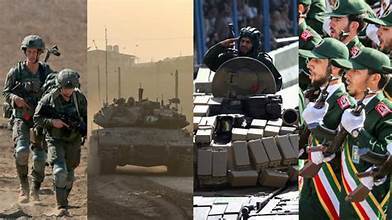
Recent developments in Iran suggest that Tehran has entered a new phase in managing its confrontation with the United States—one that combines calibrated military escalation with a continued commitment to diplomacy. This dual-track approach reflects an effort to reshape the deterrence equation following the recent conflict and to strengthen Iran's negotiating position in the post-Khamenei era. Foreign Minister Abbas Araghchi's declaration that negotiations on a final agreement cannot begin while U.S. threats persist, coupled with Western accusations that the Islamic Revolutionary Guard Corps (IRGC) targeted commercial vessels in the Strait of Hormuz, underscores Tehran's determination to demonstrate that it will neither negotiate from a position of weakness nor relinquish military leverage as a central component of its bargaining strategy.
The Iranian position reflects a clear awareness of the country's sensitive political transition. Following the death of Supreme Leader Ali Khamenei, the new leadership faces the dual challenge of preserving domestic cohesion while maintaining external deterrence. Accordingly, official rhetoric has centered on rejecting negotiations conducted under pressure, seeking to project the image that the leadership transition has neither diminished the state's strategic resolve nor weakened its capacity to confront the United States and Israel.
On the other side, the administration of President Donald Trump appears committed to its long-standing strategy of "negotiation through pressure." This approach has consistently relied on a combination of economic sanctions, military pressure, and the threat of force to compel Tehran to make concessions regarding its nuclear program, ballistic missile capabilities, and regional influence. Trump's warning that the United States would "finish the job" should no agreement be reached reflects Washington's continued belief that sustained pressure will ultimately force Iran's leadership to accept more stringent terms.
Iran's response, however, suggests an attempt to reverse this equation by insisting that any future agreement must be based on reciprocity and mutual respect for commitments rather than coercion or political intimidation. In this context, Araghchi's remarks should be understood as an effort to redefine the rules of engagement by making the cessation of American threats a prerequisite for negotiations on a comprehensive agreement.
Against this backdrop, the escalation in the Strait of Hormuz carries strategic implications that extend well beyond the immediate military incidents. Whether or not the IRGC is ultimately confirmed to be responsible for targeting commercial vessels, the mere occurrence of such attacks in one of the world's most critical maritime chokepoints sends a powerful message: Iran retains the capacity to influence international shipping and global energy markets. The Strait of Hormuz remains one of Tehran's most valuable strategic assets, through which a significant share of the world's oil and natural gas exports transit. Consequently, any disruption to maritime security in the area has economic repercussions that extend far beyond the Gulf region.
Tehran is likely seeking to manage this escalation within carefully calculated limits, raising the costs of U.S. pressure without triggering a full-scale military confrontation. Iran's strategic behavior over the past decades has consistently reflected a doctrine of "controlled escalation," whereby calibrated acts of deterrence increase strategic risks for adversaries while avoiding actions likely to provoke an overwhelming military response. In this sense, attacks on commercial shipping—if confirmed—could be interpreted as a reminder that the stability of global energy markets remains closely tied to Gulf security, and that ignoring Iran's strategic interests carries regional and international consequences.
Domestically, the funeral ceremonies for former Supreme Leader Ali Khamenei carried political significance extending far beyond their symbolic dimension. Iranian authorities sought to transform the event into a demonstration of national unity and institutional continuity through mass public mobilization and a political narrative centered on resilience, revenge, and the continuation of confrontation with the United States and Israel. Amid the ongoing leadership transition, this messaging assumes particular importance, as the new leadership seeks to reassure both domestic and external audiences that Khamenei's death has not created a vacuum within the Islamic Republic's governing structure and that state institutions remain cohesive and fully functional.
Nevertheless, several developments within the domestic political landscape merit closer attention. Most notably, Mojtaba Khamenei's absence from the funeral prayers contrasted with the public reappearance of former President Mahmoud Ahmadinejad, marking his first appearance since the recent conflict. While these developments alone should not be overinterpreted, they nevertheless suggest that Iran's political elite continues to undergo an internal process of recalibration as the post-Khamenei order gradually takes shape. This period is likely to witness a measured competition over the future direction of leadership and decision-making, particularly concerning foreign policy and national security.
From a strategic perspective, Iran appears to be pursuing three parallel objectives simultaneously. The first is preserving domestic stability and preventing any perception that the leadership transition has weakened the state's institutional cohesion. The second is maintaining regional deterrence by preserving military, naval, and missile capabilities that discourage adversaries from exploiting the transitional period. The third is keeping diplomatic channels open while insisting that future negotiations proceed under revised terms reflecting the new balance of power that Tehran believes has emerged following the recent conflict.
The United States, meanwhile, faces a strategic dilemma of its own: how to sustain its maximum-pressure policy without provoking a broader regional confrontation that could jeopardize global energy security and impose significant political and economic costs on Washington and its allies. Consequently, the coming period is likely to witness the continuation of what may be described as "escalation beneath the threshold of negotiation," whereby both sides employ coercive instruments to strengthen their bargaining positions while carefully avoiding a direct military conflict.
Taken together, these developments suggest that the Middle East is moving not toward an all-out war but toward a new phase in the management of strategic competition, where escalation and negotiation function as complementary rather than contradictory instruments of statecraft. Iran understands that its negotiating leverage increases as long as it preserves its capacity to influence regional security dynamics, while the United States recognizes that any durable agreement will ultimately require managing—rather than merely confronting—Iran's regional influence. Between these competing strategic calculations, the future of diplomacy will depend on whether both sides can move beyond testing each other's resolve and begin constructing a new framework of understandings that reflects the balance of power shaped by the recent conflict, Iran's leadership transition, and the broader geopolitical transformations unfolding across the Gulf and the Middle East.
Most read


Read also