Geographical Chokepoints: The New Weapon of Hybrid Warfare — The Strait of Hormuz as a Case Study

Introduction
Over the past few decades, the nature of international conflicts has undergone profound transformations. Conventional military power is no longer the sole determinant in managing conflicts and securing strategic gains. Instead, new instruments have emerged that integrate economic, informational, cyber, and geographical dimensions into what is commonly known as hybrid warfare. Within this framework, the concept of geographical chokepoints has become one of the most significant forms of indirect coercion, whereby strategic maritime passages and straits are transformed into instruments capable of influencing global security and the international economy without resorting to full-scale military confrontation.
The Strait of Hormuz represents the clearest example of this form of geographical coercion due to its strategic location and pivotal role in global energy security. Consequently, it has become a persistent focal point of geopolitical competition and a continuous source of regional and international tensions.
First: Geographical Chokepoints and Their Strategic Significance
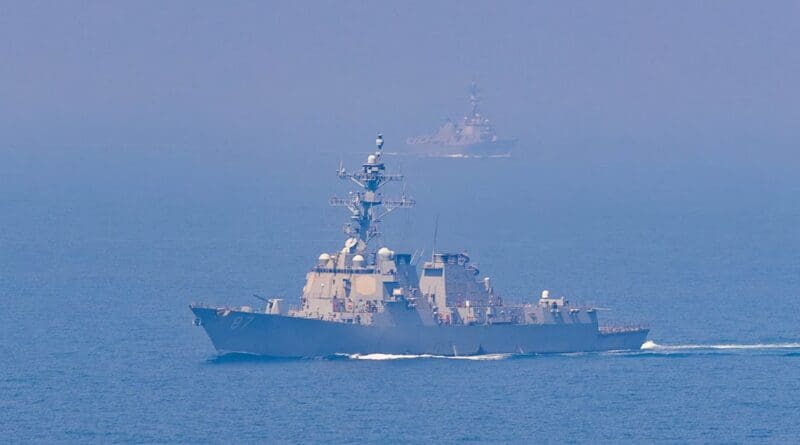
The Strait of Hormuz lies between the Iranian and Omani coastlines and is approximately 54 kilometers wide. It is widely regarded as one of the world's most critical maritime corridors. Roughly one-fifth of the world's seaborne oil trade, in addition to a substantial share of global liquefied natural gas (LNG) shipments, passes through the strait, making it one of the world's most vital maritime chokepoints.
The strategic significance of the Strait stems largely from the limited availability of alternative routes capable of accommodating equivalent volumes of energy exports within a short timeframe. This reality grants the Strait considerable geopolitical weight, transforming geography from a mere physical feature into an active determinant of power balances and international relations.
Second: The Legal Framework Governing the Strait
The Strait of Hormuz is governed by Part III of the 1982 United Nations Convention on the Law of the Sea (UNCLOS), which established the principle of transit passage. This principle guarantees all ships and aircraft the right to continuous and expeditious transit through straits used for international navigation.
At the same time, the littoral states retain sovereign rights related to safeguarding their security, regulating navigation, and protecting the marine environment. This legal framework seeks to strike a balance between state sovereignty and freedom of navigation, while simultaneously making the Strait a permanent arena for legal and political contestation.
Third: The Strait of Hormuz in the Context of Hybrid Warfare
Hybrid warfare relies on the coordinated use of both military and non-military instruments to achieve strategic objectives without escalating into conventional warfare. In the case of the Strait of Hormuz, an actual closure of the waterway is not required to generate strategic effects. Mere threats to disrupt maritime traffic or an escalation in security risks are sufficient to increase maritime insurance premiums, trigger fluctuations in global energy prices, and unsettle international markets.
Accordingly, the Strait functions not merely as a geographical passage but as a multidimensional instrument of pressure with political, economic, and psychological implications.
Fourth: Economic and Strategic Implications
Any disruption in the Strait of Hormuz extends far beyond the Gulf region, affecting the global economy as a whole due to the close interdependence between international energy markets and global supply chains on the uninterrupted flow of oil and natural gas through the Strait.
Threats to maritime navigation typically result in higher energy prices, increased transportation and insurance costs, and direct repercussions for inflation rates and economic growth across numerous countries.
These realities underscore that the security of strategic maritime routes is no longer solely a regional concern but has become a fundamental pillar of both global economic security and international security.
Conclusion
The case of the Strait of Hormuz illustrates a profound transformation in the nature of contemporary international conflict. Geographical chokepoints have evolved into strategic instruments capable of producing political and economic consequences that may, in some cases, exceed the impact of direct military confrontations. As hybrid warfare continues to evolve, securing strategic maritime corridors has become an essential prerequisite for preserving global economic stability and strengthening both regional and international security.
In light of these developments, an important question remains: Can international law keep pace with the growing use of geography as an instrument of conflict, or have its existing legal frameworks become insufficient to limit the exploitation of geographical chokepoints as weapons within the broader spectrum of hybrid warfare?
Most read



Read also