From Unipolarity to Multipolarity: Is the World Entering a Phase of Reconstructing the International Order?

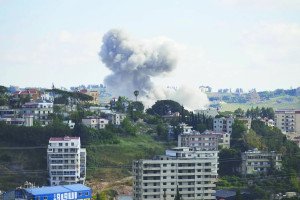
The international environment has undergone rapid transformations since the outbreak of the war between Russia and Ukraine, bringing back to the forefront a fundamental question regarding the future of the global order and the distribution of international power in the coming decades. The war has evolved beyond a regional conflict over borders and influence into a pivotal moment exposing the structural transformations that have shaped the international system since the beginning of the twenty-first century. It has also demonstrated that the era of unipolar dominance led by the United States after the Cold War no longer enjoys the same degree of stability or exclusivity.
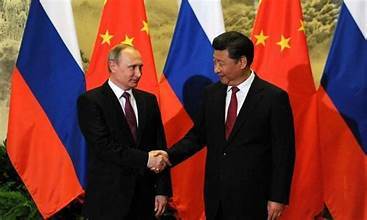
In this context, the repeated Russian–Chinese discourse advocating the construction of a “more just multipolar international order” has gained strategic importance. This discourse reflects not merely a political position tied to the Ukrainian crisis, but a broader vision through which Moscow and Beijing seek to reshape global balances of power and reduce Western dominance over international institutions and the mechanisms governing the global economy.
The Erosion of Unipolarity and the Rise of New Centers of Power
Following the Dissolution of the Soviet Union, the world entered a unipolar era that granted Washington unprecedented military, economic, and political superiority. However, this phase gradually began to face mounting challenges due to a series of structural transformations, most notably the economic and technological rise of China, the return of Russia as a major geopolitical and military actor, and the growing influence of regional middle powers seeking greater strategic autonomy outside traditional alignments.
Consequently, discussions surrounding “multipolarity” are not limited to redistributing military power; they also concern redefining international legitimacy itself. Both Moscow and Beijing argue that current international institutions—such as the United Nations Security Council, the International Monetary Fund, and the World Bank—continue to reflect the balance of power established after the Second World War, while failing to accurately represent contemporary economic and demographic realities, particularly with the shift of much of global economic gravity toward Asia.
China and Russia: A Partnership of Strategic Necessity
China has emerged as the world’s second-largest economy and a central hub for global manufacturing and supply chains, while also advancing rapidly in technology, artificial intelligence, and energy sectors. Meanwhile, Russia has reasserted itself geopolitically by employing instruments of hard power, particularly energy resources and military capabilities, to prove that it remains an indispensable player in international security affairs.
In this regard, the Russian–Chinese partnership appears less like an ideological alliance resembling those of the Cold War era and more like a strategic partnership of interests aimed at rebalancing the international system. Both states recognize that continued Western dominance constrains their ability to expand their global political and economic influence.
Similarly, the recent expansion of the BRICS group reflects a growing desire among emerging powers and Global South countries to establish parallel frameworks of economic, financial, and political cooperation outside the traditional Western-centered system.
The Ukraine War and the Transformation of International Alignment
The Russia–Ukraine war has served as a practical test of the current international order. Despite broad Western alignment behind Ukraine, many countries across Asia, Africa, and the Middle East adopted more pragmatic policies based on avoiding full involvement in the conflict while maintaining balanced relations with competing international powers.
This has brought forward the concept of “strategic neutrality” as one of the defining features of the current era. Increasingly, states are unwilling to bind themselves to a single international axis; instead, they seek to diversify their economic, political, and security partnerships in ways that maximize national interests within an increasingly fluid and uncertain international environment.
Such developments reflect the declining ability of major powers to impose rigid alignments similar to those that characterized the Cold War, while simultaneously giving rise to a more flexible model of international relations built on shifting interests and multiple balances of power.
The Middle East and Repositioning Within the International System
The Middle East is no longer merely a peripheral arena within global competition. Rather, it has become one of the central regions in the process of reshaping international balances due to its strategic geographic location, energy resources, maritime corridors, and substantial sovereign wealth and investment capabilities.
As a result, regional states have begun pursuing more flexible and independent foreign policies than in previous decades. On one hand, many maintain strong security and military partnerships with the United States; on the other, they continue expanding economic cooperation with China while preserving political and security channels with Russia.
This behavior reflects a growing recognition among Middle Eastern states that the international system is evolving toward a more complex form of multipolarity, offering greater room for maneuver and pursuit of national interests beyond rigid geopolitical alignments.
However, the central challenge for the region lies not merely in adapting to global transformations, but in its ability to exploit this historical moment to build more sustainable and independent development models rather than once again becoming merely an arena for great-power competition.
Toward a More Complex International Order
The world does not appear to be moving toward the complete collapse of American dominance so much as toward the gradual erosion of the monopoly of power and the emergence of a more complex and pluralistic system. This new order will neither revolve around a single hegemonic pole nor reproduce the traditional bipolar structure of the Cold War. Instead, it will likely consist of an interconnected network of power centers, flexible alliances, and shifting interests.
Within this evolving system, military power alone will no longer be the decisive factor. Other elements will become equally critical, including technology, energy, artificial intelligence, food security, control over data, and dominance of global supply chains.
Accordingly, the current era can best be described as a transitional phase between an old international order whose foundations are gradually weakening and a new order whose contours remain unclear. Such transitional periods are typically characterized by heightened competition and uncertainty, yet they also create opportunities for regional powers and emerging states to reposition themselves within the new global landscape.
Conclusion
The most important question today is no longer simply who will lead the future international order, but rather how states—particularly those in the Middle East—can move from being passive subjects of global transformations to active players capable of leveraging these changes to advance their strategic interests.
The world is gradually entering an era in which absolute unipolarity is receding, without a fully defined multipolar structure yet emerging. In this transitional environment, the ability to build flexible alliances, diversify partnerships, and develop economic and technological power will become the decisive factor determining the position of states within the emerging international order.
Most read


Read also