From Islamabad to Hormuz: How Stalled Negotiations Are Reshaping the Map of Corridors and Energy

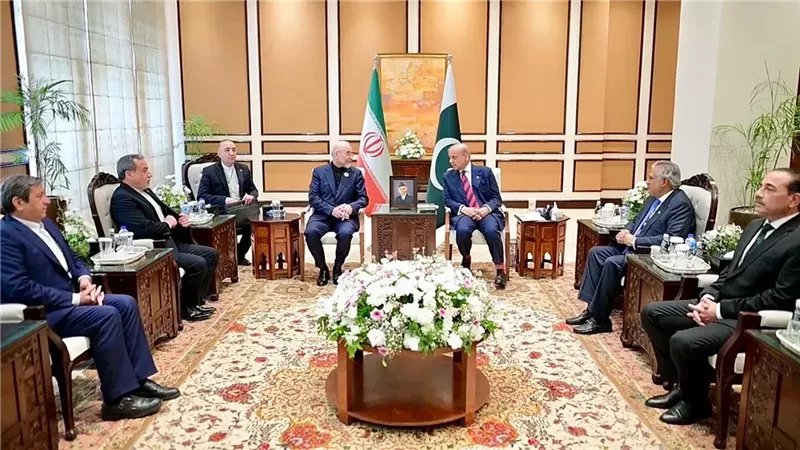
The latest round of negotiations between the United States and Iran reflects a shift in the nature of the crisis from a conventional nuclear dispute to a broader equation involving energy security, international corridors, and geopolitical balances. The failure of the negotiations to produce an agreement has not resulted in a complete collapse of the process, but it has reinforced a pattern of costly “managed tension” whose effects extend to regional stability and global supply chains.
In this context, maritime corridors—particularly the Strait of Hormuz—have emerged as a key focal point in the interaction between pressure and negotiations, while the calculations of major powers, foremost among them the United States, China, and Russia, intersect in shaping an environment that does not necessarily push toward a decisive resolution as much as it perpetuates a state of “no agreement.”
For Egypt, this situation creates direct economic challenges, but at the same time opens conditional opportunities to strengthen its role as a regional hub for energy and logistics services, particularly amid the potential rerouting of energy flows. Accordingly, Egypt’s position in the coming phase will be determined by its ability to manage the balance between short-term risks and long-term strategic opportunities.
Introduction
The failure of the latest round of negotiations between the United States and Iran was not so much surprising as it was the natural outcome of a negotiating process that had reached its limits without being able to overcome them. The talks, which at certain stages came close to achieving a breakthrough, ended without a final agreement. At the same time, however, they did not result in a complete rupture, reflecting an increasingly prevalent pattern of managing disagreements rather than resolving them.
The significance of this setback, however, lies not merely in the failure of a negotiating round, but in the fact that it is reshaping a broader equation that extends beyond the nuclear issue to encompass the security of international corridors, the stability of energy markets, and regional balances of power. Accordingly, interpreting these developments requires moving from an analysis of the event itself to an analysis of the broader trend, particularly given its direct connection to international and regional interests, including those of Egypt.
Against this backdrop, this analysis offers a broader perspective that goes beyond the event itself by examining the causes of the impasse and its implications for regional balances, energy markets, and international corridors, ultimately assessing the possible scenarios for the coming phase. It also focuses on Egypt’s position within this equation, in light of the challenges imposed by current developments and the conditional opportunities they offer for strategic repositioning.
First: Background to the Negotiating Process
The negotiating process between Washington and Tehran is rooted in a long legacy of mistrust, which deepened following the U.S. withdrawal from the nuclear agreement and the subsequent reimposition of sanctions. Since then, rounds of negotiations have been characterized by fluctuations, as domestic calculations have intersected with strategic considerations, limiting the prospects for reaching a stable formula for managing the dispute.
In the latest phase, negotiations have no longer been confined to the nuclear issue but have expanded to encompass more complex questions, such as security guarantees and maritime security. This has raised the stakes of the negotiations to a level at which achieving a rapid or comprehensive settlement has become increasingly difficult, particularly amid a tense regional environment characterized by overlapping issues and multiple influential actors.
Second: Reasons for the Failure of the Negotiations
The failure of the negotiations is linked to a set of interconnected factors, foremost among them the widening gap between the objectives of the two sides. While Washington seeks an agreement that would recalibrate Iranian behavior in both its nuclear and regional dimensions, Tehran is focused on easing pressure without compromising its core sources of power. This creates a divergence in how the two sides define an “agreement” itself even before they begin disagreeing over its details.
At the heart of this impasse is the crisis of trust, which remains a decisive factor that is difficult to overcome. Tehran views U.S. commitments as subject to change, while Washington insists on establishing durable arrangements that reflect its desire to regulate Iranian behavior over the long term.
The issue of nuclear enrichment remains the most sensitive point because it intersects with both technical and sovereign considerations, making any concession politically costly for both sides. The expansion of the negotiating agenda to include additional issues—particularly those related to maritime security—has also complicated the process and made any progress vulnerable to collapse at the moment of final decision.
Third: The Impact of the Impasse on the Region
The failure of the negotiations has reinforced a pattern of “managed tension,” in which mutual pressure continues without sliding into a comprehensive confrontation. Although this pattern reduces the likelihood of immediate escalation, it keeps the region in a state of strategic fluidity characterized by elevated levels of risk and uncertainty.
This situation also affects the regional economy, as continued tensions contribute to greater volatility in energy prices and reinforce uncertainty, affecting investment and trade flows and reshaping the priorities of economic actors, whether in terms of diversifying energy sources or seeking safer and more stable routes.
Fourth: International Corridors and Energy
The Strait of Hormuz represents a key focal point in the repercussions of this impasse because of its vital position within the global energy-flow network. As tensions escalate, maritime navigation becomes increasingly exposed to risks, not only in terms of direct threats but also through rising insurance costs and disruptions to supply chains, with rapid repercussions for global energy prices.
The impact is not limited to Hormuz but extends to a broader network of maritime corridors, including the Red Sea, where transit trade and major transportation routes are affected. In this context, alternative routes are becoming increasingly important, whether through pipelines that bypass maritime chokepoints or through alternative land and sea corridors. This points to a gradual transformation in the international energy map based on reducing dependence on high-risk routes.
Fifth: The Role of the United States and Major Powers
The crisis extends beyond the bilateral framework to encompass broader interactions among the major powers. The United States is acting not only as a negotiating party but also as a maritime actor seeking to secure vital corridors and ensure the stability of energy flows, reflecting the close connection between maritime security and U.S. strategic interests.
China, by contrast, tends to support the stability of energy flows given its heavy dependence on oil and gas imports, but it remains cautious about becoming involved in arrangements that could reinforce the dominance of a single power over the management of maritime corridors. Russia, meanwhile, views the continuation of tensions as an opportunity to rebalance international interactions, allowing it to benefit from volatility in energy markets while limiting the concentration of Western powers on other theaters.
Between these positions, an international environment is taking shape that does not strongly push toward a decisive settlement, but rather tends toward managing the crisis within certain limits.
Sixth: What Does This Mean for Egypt?
For Egypt, the implications of this impasse are multifaceted. On the one hand, higher energy prices and supply disruptions create direct pressures on the economy, particularly through their impact on production and transportation costs.
On the other hand, this situation once again highlights the strategic importance of the Suez Canal within the global trading system, as it remains one of the most important alternative or complementary corridors for trade between East and West. Consequently, any changes in navigation patterns or energy flows have a direct impact on Egypt’s economic position.
Seventh: Egypt’s Opportunities in the Event of Energy Rerouting
Despite these challenges, potential opportunities are emerging for Egypt amid the restructuring of the energy map. Its geographic location, together with its infrastructure in liquefied natural gas and port facilities, gives it the capacity to strengthen its role as a flexible regional hub for energy and logistics services.
Egypt can also benefit from the connection between the Suez Canal and energy projects in the Eastern Mediterranean, enabling it to play a role in re-exporting energy and providing services associated with supply chains. However, these opportunities remain conditional on Egypt’s ability to operate within a coordinated regional framework and capitalize on these transformations without being exposed to their direct risks.
Eighth: Egypt’s Role in the Regional Equation
Egypt’s role in this context can be understood through three principal dimensions:
First, a political balancing role reflecting its network of regional and international relations.
Second, a strategic geographic role linked to its position at the heart of global maritime corridors.
Third, an economic role based on its ability to leverage its infrastructure to support the movement of trade and energy.
Within this framework, Egypt’s importance is not limited to being affected by these developments. It also extends to its role as an actor capable of adapting to transformations and contributing to the reshaping of certain aspects of the regional equation.
Ninth: Possible Scenarios
Current indicators point to the continuation of “managed tension” as the most likely scenario, with mutual pressure continuing without a decisive outcome while limited channels of negotiation remain open.
The possibility of gradual escalation also remains, particularly if friction in maritime corridors increases or economic pressure intensifies. At the same time, partial understandings may emerge aimed at managing specific issues without reaching a comprehensive settlement.
As for a scenario of broad escalation, it remains less likely in the short term, but cannot be ruled out given the fragility of the current balance and the possibility of sudden developments that could push the parties toward more hardline positions.
Conclusion
The failure of negotiations between Washington and Tehran reveals a deeper transformation in the nature of the crisis—from a dispute that could potentially be resolved into an open-ended equation of balance management. Under these circumstances, the question is no longer whether an agreement is possible, but rather when the cost of maintaining this tension will become greater than the cost of reaching a settlement.
Until that point, the region will remain trapped in a gray zone where deterrence and negotiations coexist without either one decisively prevailing over the other—a situation that is gradually reshaping the contours of the region and placing actors such as Egypt before a genuine test of their ability to adapt to and capitalize on these transformations.
Most read



Read also