Eurofighter Deal: Reviving the Strategic Defense Partnership Between Turkey and Europe

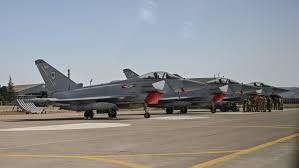
Europe’s security architecture is undergoing a profound transformation amid growing uncertainty surrounding the reliability of the American security umbrella and the continued escalation of threats associated with the war in Ukraine. Within this evolving strategic landscape, Turkey has reemerged as a pivotal actor in the continent’s defense equation. This reality was reflected in the recent visit of British Prime Minister Keir Starmer to Ankara, accompanied by the UK Secretary of Defense and the Chief of the Royal Air Force. The visit carried significant strategic implications, culminating in the signing of a deal for the supply of Eurofighter Typhoon combat aircraft to Turkey—an agreement that signals a shift in defense relations between Ankara and London from political coordination to a deeper and more institutionalized military partnership.
The Eurofighter agreement goes beyond a conventional arms contract. It represents part of a broader process aimed at redefining Turkey’s position within Europe’s defense architecture. The deal includes the supply of twenty aircraft with the possibility of expansion in the future. Turkish officials have also outlined plans to increase the total number of aircraft to forty-four through additional acquisitions from Qatar and the Sultanate of Oman. This arrangement reflects a significant shift in European strategic thinking toward Turkey. After years of political tensions and disputes within NATO, several European capitals now increasingly view Ankara as an indispensable security partner capable of contributing to the continent’s defense posture.
Germany’s decision in 2025 to lift its earlier objection to the deal illustrates a broader shift in Europe’s strategic mood. Berlin had previously blocked the export license due to disagreements related to Turkey’s military operations in northern Syria and concerns over human rights issues. However, growing European anxiety regarding the long-term reliability of American security guarantees has prompted a reassessment of Turkey’s strategic value. Turkey possesses NATO’s second-largest army, occupies a geographically pivotal position spanning the Balkans, the Caucasus, the Middle East, and the Black Sea, and has developed an increasingly capable defense industry that produces advanced unmanned systems, naval platforms, and air defense technologies.
Within this framework, the Eurofighter deal can be understood as part of a wider effort to integrate Turkish defense industries into European initiatives aimed at achieving greater strategic autonomy from the United States. For several years, the European Union has sought to develop a military-industrial complex capable of meeting the continent’s defense requirements while reducing reliance on American technology. From this perspective, incorporating Turkish industrial capabilities into these initiatives offers mutual benefits: Europe gains access to an additional industrial base, while Turkey strengthens its presence in advanced defense manufacturing programs.
This development also aligns with the evolving global strategy of the United States, which increasingly favors burden-sharing with allies rather than maintaining a model of comprehensive global dominance. Washington has encouraged European partners to assume greater responsibility for their own regional security while the United States adopts a supporting and guiding role. In this context, the growing defense cooperation between Turkey and Europe can be seen as a reflection of broader structural changes in the international security system, where regional actors increasingly rely on multilateral security arrangements rather than exclusive dependence on American protection.
At the same time, Turkey’s decision to procure Eurofighter aircraft is closely linked to the restructuring of its airpower doctrine in response to lessons drawn from recent regional conflicts. The wars and military confrontations that have unfolded in the Middle East since October 2023, including the brief confrontation between Israel and Iran, have highlighted the growing importance of advanced air capabilities capable of operating in complex combat environments that combine manned aircraft, unmanned aerial systems, and sophisticated air defense networks. In response, Ankara is working to build a hybrid air force composed of a mixture of advanced Western fighter jets, domestically developed aircraft, and a comprehensive ecosystem of combat drones.
In this context, the Eurofighter Typhoon provides Turkey with a critical transitional capability. Classified as a generation 4.5 fighter, the aircraft combines high maneuverability with advanced electronic sensing systems and data-link networks that enable integration with other aerial platforms. These capabilities allow Turkey to bridge the gap between its aging fleet of F-16 aircraft and older F-4 fighters and its long-term objective of fielding the domestically developed fifth-generation fighter jet known as “KAAN,” which remains under development and is expected to require several more years before entering full production.
The acquisition also occurs amid an intensifying regional airpower competition across the Eastern Mediterranean and the broader Middle East. Israel currently operates a significant fleet of stealth F-35 aircraft, while Greece has pursued an ambitious modernization program that includes the purchase of F-35 fighters, French Rafale jets, and the upgrade of its F-16 fleet. Meanwhile, several Arab states—including Egypt, the United Arab Emirates, Qatar, and Saudi Arabia—have acquired advanced Rafale and Eurofighter aircraft. Within this complex strategic environment, Turkey seeks to preserve a balanced regional airpower posture by strengthening its aerial capabilities and integrating new technologies into its military structure.
The structure of the deal itself—particularly the procurement of additional aircraft from Qatar and Oman—also reflects a high level of defense coordination between Turkey and several Gulf states. This arrangement allows Ankara to accelerate the operational integration of European fighters without waiting for the extended production timelines associated with the European consortium. As a result, Turkey gains a practical mechanism for covering the capability gap between its current air fleet and the future deployment of the KAAN fighter program.
Ultimately, the Eurofighter deal represents more than a modernization of Turkey’s air force. It signals a broader shift in defense relations between Turkey and Europe and reflects Ankara’s gradual repositioning within the Western security architecture. Should this momentum continue in the coming years, Turkey could become a key partner in European defense manufacturing programs, potentially reshaping the balance of airpower in the Eastern Mediterranean and influencing the trajectory of regional military competition.
Most read