China and the U.S.-Israeli War Against Iran

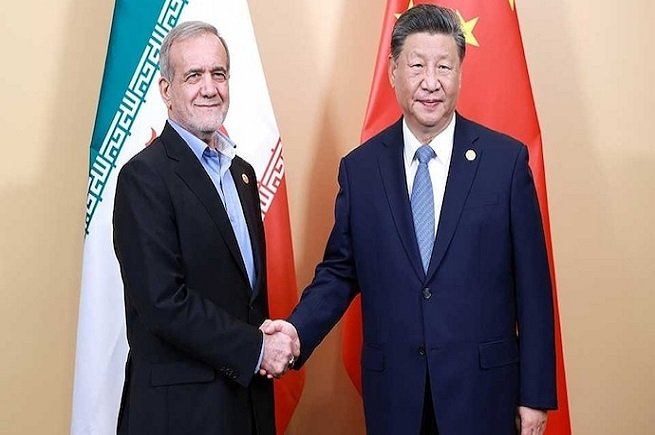
China was among the first major powers to recognize Iran's new political system following the 1979 Islamic Revolution. This early recognition was driven by a strategic vision that viewed the reduction of American influence in the Middle East as a vital interest. The fall of the Shah's regime represented a significant contraction of U.S. influence in the region, reflecting Beijing's early desire to cultivate a regional partner that shared its concerns regarding unipolar dominance.
Over the past four decades, Sino-Iranian relations have steadily evolved, reaching a historic milestone in 2021 with the signing of a 25-year Comprehensive Strategic Cooperation Agreement, elevating bilateral relations to the level of a Comprehensive Strategic Partnership.
When the war began with the initial strikes on 28 February 2026, China characterized the conflict as an action lacking authorization from the United Nations, violating international law, and threatening Gulf security, global energy supplies, maritime navigation, and regional stability. Although Beijing has become a major economic power and an active diplomatic mediator, it has not yet evolved into a security guarantor commensurate with the scale of its expanding strategic interests.
The U.S.-Israeli war against Iran emerged at a moment of exceptional fragility in the international system—a period in which the global order faces a historic turning point. Successive crises, coupled with the erosion of international law in favor of power politics, as demonstrated by both the Gaza war and the conflict in Ukraine, have fundamentally altered the strategic environment.
Consequently, the war should not be viewed merely as an isolated Middle Eastern crisis. Rather, it represents a manifestation of a broader global moment characterized by overlapping crises, weakening international restraints, and an increasing likelihood that a regional conflict could escalate into a major international shock affecting energy security, global trade, and even the legitimacy of the international order itself.
China's Position on the U.S.-Israeli War Against Iran
From the earliest days of the conflict, China adopted a clear official position combining legal condemnation with a broader political interpretation of the crisis.
During a press conference on 8 March, Chinese Foreign Minister Wang Yi articulated Beijing's position in comprehensive terms, stating that "this is a war that should never have broken out" and emphasizing that "there can be no winners."
He argued that resolving both the Iranian nuclear issue and the broader Middle East crisis requires adherence to five interrelated principles:
- Respect for the sovereignty of states.
- Rejection of the arbitrary use of force.
- Commitment to the principle of non-interference in the internal affairs of states.
- Resolution of regional crises through political dialogue and diplomacy.
- A constructive role by major powers based on justice and good faith.
Accordingly, China's position was not merely an objection to a specific military strike. Rather, Beijing presented itself as defending international legitimacy, regional stability, and the principle that security should not be reshaped through war or by imposing regime change from outside.
China also stressed that it does not endorse attacks against Gulf states and condemns indiscriminate attacks on civilians and non-military targets, emphasizing that the immediate priority should be an unconditional ceasefire, an end to military operations, and the prevention of further escalation.
This position illustrates Beijing's effort to reconcile three complementary objectives:
- Rejecting the war against Iran on both legal and political grounds.
- Preventing the conflict from expanding into neighboring Gulf states.
- Preventing attacks on civilians and civilian infrastructure.
Thus, China's stance should not be interpreted as unconditional alignment with Tehran but rather as an attempt to contain the conflict and prevent it from escalating into a wider regional war.
As military operations intensified, Beijing moved beyond official statements to active diplomacy. China's Special Envoy for the Middle East, Zhai Jun, undertook a regional tour that included Saudi Arabia, the United Arab Emirates, Bahrain, Kuwait, and Egypt. He also met with the Secretaries-General of both the Gulf Cooperation Council (GCC) and the League of Arab States, while holding telephone consultations with Qatari officials.
Throughout these diplomatic efforts, the Chinese envoy emphasized that an immediate ceasefire and the cessation of hostilities constitute the only fundamental solution. He further stressed the importance of respecting the sovereignty, security, and territorial integrity of GCC member states, avoiding attacks on civilian infrastructure, and ensuring the uninterrupted security of international maritime routes
China's Strategic Calculations
China has managed the current crisis through a complex set of economic, strategic, and security considerations. Beijing's policy is governed by a delicate balancing act centered on several key objectives:
- Protecting China's energy security, which increasingly depends on Iranian oil supplies.
- Preserving Iran's role as a critical geopolitical hub and a vital Eurasian bridge for the long-term success of the Belt and Road Initiative (BRI).
- Avoiding confrontation with its strategic economic partners in the Gulf while maintaining its strategic partnership with Tehran.
On both the diplomatic and operational levels, Beijing has sought, through the United Nations Security Council and other multilateral institutions, to prevent the establishment of international precedents that would legitimize preemptive military strikes or regime change by force.
At the same time, China has attempted to internationalize the crisis, transforming it from a bilateral confrontation into a broader international issue by utilizing multilateral platforms such as BRICS and the Shanghai Cooperation Organization (SCO).
In parallel, Beijing has continued providing Iran with indirect economic and technical support designed to mitigate the impact of Western sanctions, thereby helping Tehran maintain a degree of economic resilience without direct military involvement.
Today, China views the U.S.-Israeli war against Iran as a direct threat to both its strategic initiatives and its core national interests.
Iran represents a fundamental pillar of China's energy security. Beijing currently imports approximately 90 percent of Iran's oil exports, despite the existing sanctions regime. Furthermore, China has committed to extensive long-term investments in Iran's infrastructure and energy sectors under the framework of the 25-year strategic partnership.
Consequently, China's current strategy toward Iran can be summarized as preserving the Iranian state without providing direct military intervention.
This approach enables Beijing to remain an influential actor while avoiding direct confrontation with the United States. Simultaneously, it allows China to preserve balanced relations with Israel, thereby safeguarding important technological and economic interests.
Rather than military intervention, China has relied on instruments of soft power, including alternative payment mechanisms, trade conducted through non-dollar currencies, and financial arrangements designed to sustain Iran's economy while avoiding direct involvement in the conflict.
At the same time, Beijing remains equally committed to protecting its extensive network of interests with the Gulf Cooperation Council (GCC) states.
Accordingly, China has carefully avoided allowing its strategic partnership with Tehran to become a source of tension with its principal economic partners in the Gulf.
Although Beijing may see the current conflict as an opportunity to divert American strategic attention and resources away from East Asia, it nevertheless considers the potential collapse of the Iranian regime a red line.
Such an outcome would threaten China's energy security, undermine the Belt and Road Initiative, and weaken one of Beijing's most important strategic partners.
Should the Iranian government approach the point of collapse, China could be compelled to adopt a higher level of strategic engagement in order to prevent regime failure and protect its privileged access to discounted Iranian energy supplies outside the dominance of the U.S. dollar.
Simultaneously, Beijing views the conflict as gradually consuming American military capabilities, potentially creating a historic opportunity to accelerate the transition toward a multipolar international order, with the Middle East serving as one of its principal geopolitical arenas.
Nevertheless, Chinese policymakers also recognize that excessive alignment with Iran could carry significant economic costs.
China's trade volume with the GCC now exceeds US$300 billion, while Saudi Arabia and the United Arab Emirates have become economic and technological partners whose importance to Beijing surpasses that of the heavily sanctioned Iranian market.
Moreover, the Gulf states—particularly Saudi Arabia—remain China's largest and most reliable suppliers of energy.
Any prolonged disruption of maritime routes in the Gulf would therefore strike at the heart of China's industrial economy.
For this reason, Beijing continues to emphasize mediation efforts similar to those that produced the Beijing Agreement of March 2023, which restored diplomatic relations between Saudi Arabia and Iran.
From China's perspective, that agreement was primarily intended to reduce the geopolitical risks surrounding its energy supplies and safeguard the stability necessary for its long-term strategic interests.
Future Scenarios for China's Position
It is difficult to formulate fixed scenarios for Beijing's future behavior without linking them to the scale of the threat posed to China's vital interests, strategic projects, and long-term ambitions as a global power. Based on the evolution of the war against Iran, three principal scenarios can be identified, each reflecting a different level of Chinese involvement.
Scenario One: Non-Involvement (Most Likely)
Under this scenario, China would continue to avoid direct involvement in the conflict while maintaining diplomatic support for Iran in the United Nations Security Council. Beijing would also continue providing indirect economic assistance by purchasing Iranian oil at preferential prices.
This scenario would remain viable so long as the conflict stays within its current limits—characterized by reciprocal strikes—and does not escalate into the comprehensive destruction of Iran's infrastructure or a ground invasion.
As long as China's energy supply chains and broader strategic interests are not exposed to an existential threat, Beijing is expected to preserve its current policy of cautious neutrality.
Scenario Two: Moderate Engagement
China could decide to increase its level of strategic support for Iran without entering the conflict militarily.
Such measures might include:
- Granting Iran full access to China's BeiDou satellite navigation system to enhance the accuracy of Iranian missiles and unmanned aerial systems.
- Providing high-resolution satellite imagery.
- Expanding technical cooperation in cyber warfare capabilities.
- Utilizing multilateral organizations such as BRICS and the Shanghai Cooperation Organization to coordinate economic measures that would mitigate Western pressure on Tehran.
This scenario would become more likely if Washington and Tel Aviv pursued objectives aimed at regime change or the complete paralysis of Iran's oil sector.
From Beijing's perspective, such developments would constitute a direct threat to both the Eurasian Land Bridge underpinning the Belt and Road Initiative and China's long-term energy security.
Scenario Three: Maximum Engagement (Least Likely)
In this scenario, China would abandon its traditionally cautious and balanced foreign policy and become deeply involved in managing the conflict.
This would not necessarily imply direct military participation alongside Iran. Instead, it could include:
- Deploying Chinese naval forces to the Arabian Sea, the Indian Ocean, and the Strait of Hormuz under the pretext of protecting Chinese commercial shipping.
- Activating the security provisions contained in its strategic agreements with Iran.
- Employing stronger economic and diplomatic measures designed to compel an immediate end to the conflict.
Conditions for the Scenarios
The non-involvement scenario remains Beijing's preferred option.
It enables China to benefit strategically from the gradual depletion of American military and political resources while preserving stable relations with the Gulf states and Israel, without risking the collapse of the Iranian government.
The moderate engagement scenario may become necessary if the United States and Israel move decisively toward overthrowing the Iranian regime or completely disabling Iran's energy sector.
China would interpret such developments as a direct challenge to its Belt and Road strategy, its long-term investments, and its national energy security.
The maximum engagement scenario would likely be considered only if China's own economic interests suffered severe damage—for example, if a prolonged regional war resulted in the complete closure of the Strait of Hormuz, the Arabian Sea, and Bab el-Mandeb.
Such a development would interrupt more than half of China's energy imports, destabilize international financial markets, and create serious domestic economic consequences, including electricity shortages and disruptions to industrial production, thereby posing a direct threat to China's national security.
Conclusion
China is expected to continue avoiding direct military involvement in the war.
However, the evolving military situation remains highly fluid, and future developments could compel Beijing to adopt progressively more active forms of strategic engagement.
Ultimately, China's policy toward the current conflict is governed by a dual imperative:
- Preventing the collapse of the Iranian state without alienating its Gulf partners.
- Safeguarding the uninterrupted flow of discounted Iranian oil while preserving its extensive trade and investment partnerships with the Gulf Cooperation Council states.
This balancing strategy allows Beijing to protect its energy security, sustain the Belt and Road Initiative, preserve its expanding regional influence, and continue presenting itself as a responsible global power committed to diplomacy rather than military confrontation.
Originally published by the Al-Ahram Center for Political and Strategic Studies.
Most read



Read also