Can UN and U.S. Initiatives Lead to a Settlement of the Libyan Crisis?

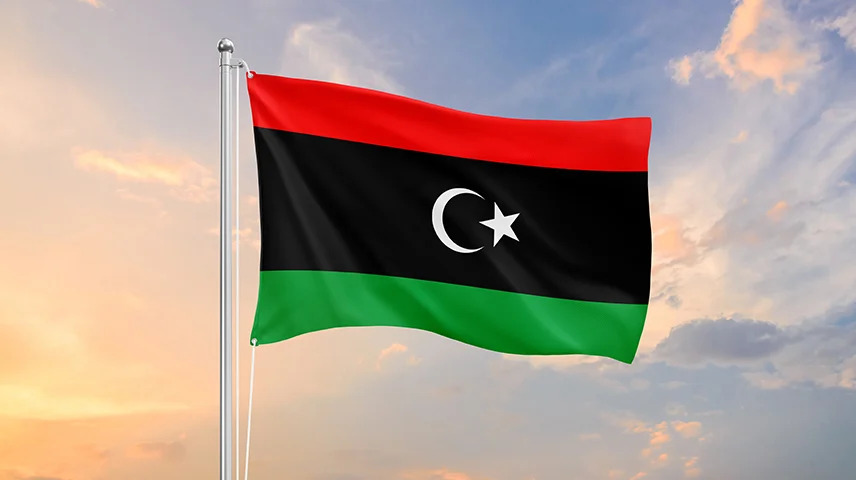
The Libyan crisis witnessed significant political momentum during June 2026, amid a proliferation of initiatives aimed at breaking the longstanding deadlock. These included the announcement of the outcomes of the UN-sponsored Structured Dialogue, U.S. diplomatic efforts, and understandings reached among Libya’s three main political councils.
Although these tracks share a common objective — resolving the current crisis — they differ in their implementation mechanisms and policy priorities. This raises important questions about whether they can complement one another or may instead come into conflict, as well as about the challenges that could obstruct their transformation into a viable political settlement.
1. Debate Over the Outcomes of the Structured Dialogue
Libya’s Structured Dialogue Committee, launched under United Nations auspices last December, concluded its work during a final session held in Tripoli on June 7.
The committee presented a set of recommendations covering political, economic, and security tracks, as well as reconciliation and human rights. Among its most significant proposals was the formation of a new government to oversee a transitional period lasting between 18 and 24 months, with no possibility of extension. Members of the new government would be required to provide an explicit written pledge not to stand as candidates in the subsequent elections.
The recommendations also called for the formation of a Presidential Council consisting of a president and two deputies, as is currently the case, with the Council entrusted with supreme command of the armed forces.
The UN Special Representative for Libya, Hanna Tetteh, expressed optimism about the committee’s conclusions and recommendations, saying that she had witnessed “a strong desire for change, coupled with a firm determination that such change should be Libyan-led and Libyan-owned.”
The Structured Dialogue mechanism generated considerable debate within Libya.
Some viewed it as a successful attempt to move discussions over the country’s political settlement beyond the traditional elites and principal actors toward something resembling a broader societal dialogue. The committee brought together a diverse cross-section of Libyans and succeeded in representing a substantial segment of society, with more than 120 male and female members from different regions, including representatives of cultural communities, young people, and persons with disabilities.
Others, however, regarded the Structured Dialogue as little more than a reproduction of previous approaches, arguing that most of its proposals offered nothing fundamentally new to the Libyan crisis. Supporters of this view contend that the outcomes are unlikely to break the deadlock and may instead introduce further complications in the foreseeable future.
2. Challenges Surrounding the Selection of a New Government
The recommendations of the Structured Dialogue raise additional challenges concerning who has the authority to select the executive branch and how the country should proceed toward elections.
Under the proposed arrangement, the Presidential Council and the prime minister would be selected through the Dialogue Committee. The designated prime minister would then present a cabinet to the House of Representatives for a vote of confidence within no more than 30 days.
If the government failed to secure parliamentary confidence, however, it could instead be approved by the Dialogue Committee.
Such a formula is likely to face resistance from Libya’s existing political institutions. The two rival governments may view it as the beginning of an attempt to remove them from the political landscape, while the House of Representatives may consider the committee’s ability to approve a government after parliament has withheld confidence to be an encroachment on its constitutional and political authority.
Accordingly, Libya’s principal actors are unlikely to accept exclusion from the political equation or voluntarily surrender the gains and interests they have accumulated over the past several years. Their positions are reinforced by the military power at their disposal, which each side could employ to defend its interests if necessary.
Nevertheless, some observers viewed the June 18 announcement by Libya’s three councils — the House of Representatives, the High Council of State, and the Presidential Council — that they had reached an agreement to hold presidential and parliamentary elections no later than February 2027 as an important step toward creating greater common ground and encouraging the parties to make concessions.
This remains the case even though the proposed timetable — holding elections within roughly eight months — may prove unrealistic given the complexity and interconnection of the unresolved issues.
The UN mission’s proposals also leave unanswered questions regarding the constitutional framework and the electoral laws under which elections would be held.
Would temporary constitutional rules be adopted, or would Libya first establish a permanent constitution? What eligibility requirements would apply to candidates? And what would be the status of military personnel and dual nationals seeking to contest the elections?
These issues have long been among the most contentious in Libya and have repeatedly obstructed previous settlement efforts.
3. Declining Effectiveness of the United Nations
UN Special Representative Hanna Tetteh presented the outcomes of the Structured Dialogue to the Security Council during her monthly briefing on June 18, seeking international legitimacy and support.
This could make the recommendations the basis for a renewed settlement process and the latest starting point on which the United Nations will rely in its efforts to end Libya’s transitional period, which has now lasted for more than 15 years.
Securing legitimacy and support from the Security Council does not appear likely to be particularly contentious, and the initiative may receive broad international backing.
The real dilemma, however, lies neither in the design of the roadmap nor in the actors involved, nor even in the extent of expected international support. Rather, it lies in the UN mission’s ability to break the political stalemate and bring the prolonged transitional period to an end without once again becoming trapped in a cycle of repetition.
Expectations of the UN mission may nevertheless need to remain limited because of the nature of its mandate and powers.
Its role is primarily to facilitate dialogue among the parties to the conflict and exercise good offices in an effort to reconcile their differences. It does not possess the authority to compel the various actors to implement agreed recommendations.
Tetteh herself acknowledged this limitation, describing the Structured Dialogue’s outcomes as consensus-based, non-binding recommendations rather than executive decisions.
Libya’s experience since the first UN envoy became involved in settlement efforts in 2011 suggests that successive UN missions have often proved more successful at drafting roadmaps than at implementing them.
As a result, political arrangements in Libya have repeatedly risked becoming part of a self-perpetuating cycle.
4. Diverging UN and U.S. Approaches
Libya is currently witnessing two parallel externally driven political tracks.
The first is the UN-sponsored Structured Dialogue, while the second consists of efforts led by Massad Boulos, the U.S. presidential adviser for Africa and the Middle East.
Although the approaches pursued by Tetteh and Boulos share the same ultimate objective — unifying the executive authority and ending Libya’s political division — they differ in their methods and mechanisms.
Put differently, the UN approach seeks to reorganize the political landscape through an expanded national dialogue. The U.S. approach, by contrast, begins with the existing balance of power, engaging the de facto authorities and the most powerful actors in eastern and western Libya as the foundation for any solution, while seeking to narrow the gap between them.
Washington is attempting to leverage its influence and its ability to exert pressure on Libya’s principal actors to achieve progress toward unifying state institutions.
This approach was evident in U.S. efforts that helped persuade Libyan parties, for the first time in 13 years, to approve a unified national spending budget in April.
That same month, forces from eastern and western Libya participated together in the Flintlock 2026 military exercise in Sirte. It was the first time in nearly a decade that forces from both sides had taken part in the same military exercise led by the United States Africa Command, AFRICOM.
Recent reports have also pointed to U.S. efforts to restructure Libya’s executive authority through a new power-sharing arrangement under which Saddam Haftar, Deputy Commander-in-Chief of the Libyan National Army, would assume the presidency of a new Presidential Council, while Abdul Hamid Dbeibah would remain prime minister of a unified government.
The diversity of actors and proliferation of initiatives can have contradictory effects on the settlement process.
On the one hand, they may create opportunities for more effective intervention if roles are coordinated and the parties’ respective strengths and influence are directed toward a common objective.
On the other hand, an overcrowded landscape of settlement tracks and initiatives could generate competition or outright friction, providing domestic actors with greater room to maneuver between competing external sponsors.
During his meeting with Tetteh on June 13, Boulos affirmed his support for the Structured Dialogue and its final recommendations. He stated that Washington’s efforts were aligned with the UN roadmap calling for unity, inclusivity, and the establishment of a Libyan-led political process.
The prospects for genuine complementarity between the UN and U.S. tracks will therefore depend on Washington continuing to support the UN initiative rather than operating outside the UN framework or transforming its efforts into a parallel process centered primarily on deals and arrangements with Libya’s dominant power centers.
5. The Problem of Multiple Centers of Power
Every attempt in recent years to complete Libya’s political transition has confronted the division between the rival eastern and western governments and the resulting proliferation of competing centers of authority.
This remains the principal obstacle to any potential political settlement, particularly if future arrangements fail to take the interests of these actors into account.
Although Libya’s most influential actors have yet to issue clear and direct positions on the Structured Dialogue’s recommendations, previous statements reveal a significant crisis of confidence in the UN mission.
Osama Hammad, head of the government appointed by the Libyan House of Representatives, opposed the initiative from the outset. He accused the UN mission of bypassing Libyan laws and legislation in selecting members of the Structured Dialogue and designing the roadmap. In November, he went further by announcing the suspension of all forms of engagement with the mission.
Similarly, Field Marshal Khalifa Haftar, commander of the Libyan National Army, implicitly rejected the UN initiative last October, saying that “its threads were woven beyond the borders.”
In December, Dbeibah welcomed the launch of the dialogue rounds and described them as important for overcoming the political deadlock.
That position, however, does not necessarily mean that he accepts the dialogue’s final recommendations. He remains opposed to any arrangement that would establish an alternative government before elections.
Yet this is precisely the course endorsed by the Dialogue Committee following the conclusion of its work. The committee stressed the need to establish a “National Mandate Government” tasked with creating the conditions necessary for elections within a period not exceeding 24 months.
The dialogue’s recommendations and the proposed formation of another government also revive the persistent problem of Libya’s “transitional leaders.”
Each new transitional phase produces a group entrusted with governing temporarily. When the transition subsequently stalls, these supposedly interim leaders become entrenched as de facto authorities, adding yet another layer of complexity to the political landscape.
6. Fears of Deepening Libya’s Divisions
The conclusion of the Structured Dialogue coincided with an announcement by nine Libyan municipalities — Misrata, Al-Khums, Zliten, Bani Walid, Tarhuna, Tininai, Al-Mardum, Msallata, and Qasr Al-Akhyar — on June 8 establishing what they called the “Central Region.”
According to its founding statement, the purpose of the new entity is to strengthen coordination, consultation, and joint cooperation among municipalities located within Libya’s central geographical area, with the aim of promoting development and improving public services.
The announcement generated considerable controversy in Libya over its legality, its underlying purpose, and its potential implications for the country’s future and territorial unity.
Regardless of the legal status of the declaration — and despite protests in Bani Walid and Tarhuna against the inclusion of the two cities in the proposed entity — the timing of the announcement, as the United Nations seeks to overcome Libya’s political and institutional divisions, has raised broader questions about the future structure of the Libyan state and the distribution of wealth and power.
It has also prompted speculation over whether the move could herald a redrawing of Libya’s internal map and the emergence of a fourth region alongside the country’s three historical regions: Tripolitania, Cyrenaica, and Fezzan.
In this context, any project built primarily around regional or territorial identities could deepen Libya’s divisions.
The municipalities involved may also be seeking to reposition themselves and secure a place in future political arrangements, particularly if the UN mission succeeds in establishing a new government and thereby initiates another redistribution of power and influence.
Ultimately, the roadmap endorsed by the UN mission, together with the U.S. initiative and the agreement among Libya’s three main political councils to hold elections no later than February 2027, has restored political momentum to the Libyan crisis and widened the scope for cautious optimism about completing the political process.
Nevertheless, any meaningful breakthrough will depend on the seriousness and willingness of Libya’s competing actors to reach genuine compromises, the degree of consensus that can be established among them, the ability of UN and U.S. efforts to complement rather than compete with one another, and the constructive involvement of key regional powers.
Source: Future Center for Advanced Research and Studies
Most read

Read also