Cairo Seminar Discusses Diversity Management and Coexistence, Calls for Stronger Arab-Kurdish Partnership

A seminar held in the Egyptian capital, Cairo, highlighted the importance of strengthening Arab-Kurdish partnership as a historic model of coexistence in the region. Participants called for greater cultural and social cooperation among the region’s diverse communities and for reinforcing the values of citizenship, dialogue, and pluralism as key pillars of stability and development.
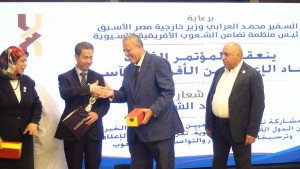
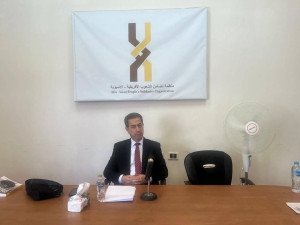
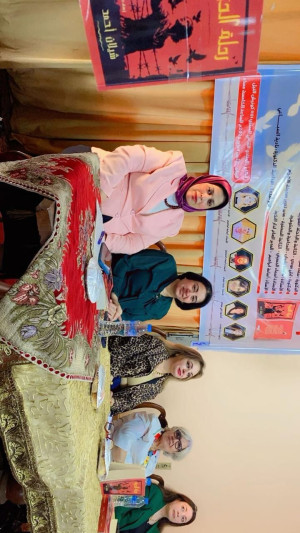
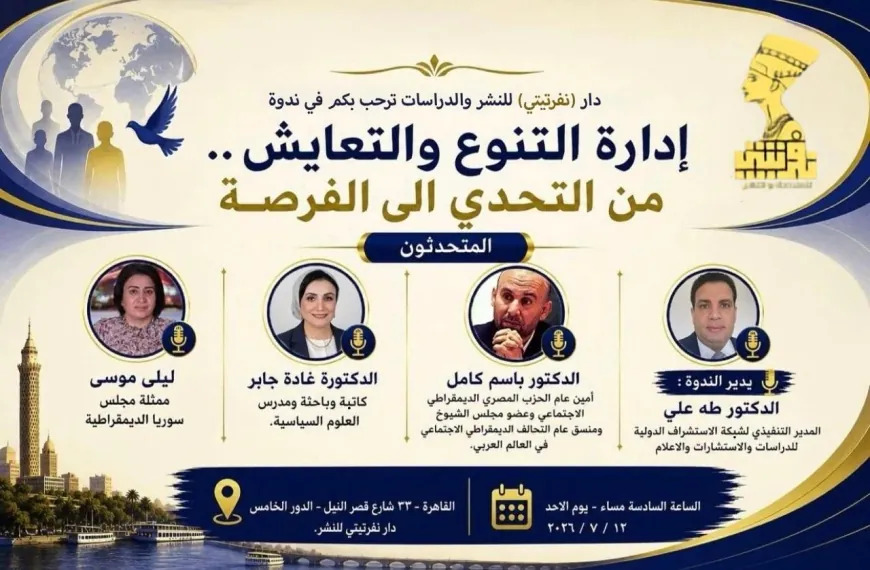
The seminar, titled “Managing Diversity and Coexistence: From Challenge to Opportunity,” was held in Cairo on Sunday and organized by Nefertiti Publishing House for Publishing and Studies. It brought together academics, politicians, journalists, media professionals, and intellectuals to discuss ways of managing cultural and social diversity in the Middle East and promoting coexistence among the region’s various communities.
The seminar addressed several key themes. Bassem Kamel, Secretary-General of the Egyptian Social Democratic Party, opened the discussions with an overview of the cultural, linguistic, and social diversity of the Middle East and the challenges it faces. He also examined the impact of stereotypes and preconceived notions on relations among different communities, as well as the role of educational and media institutions in managing diversity.
Writer and researcher Ghada Gaber discussed the concept of inclusive citizenship and social partnership, emphasizing the importance of building trust among different social groups and ensuring equal participation in public life. She also highlighted successful models for strengthening social cohesion.
Layla Mousa, a representative of the Syrian Democratic Council, reviewed the Kurdish experience in preserving cultural and linguistic identity and discussed the role of Kurds in promoting social stability. She also explored prospects for strengthening Arab-Kurdish partnership in the fields of culture, education, and development.
The seminar was moderated by Taha Ali, Executive Director of the International Foresight Network for Studies, Consultations and Media, and was attended by parliamentarians, journalists, media professionals, intellectuals, politicians, and others interested in diversity and coexistence issues from Egypt and several Arab countries.
At the conclusion of the seminar, participants issued a set of recommendations emphasizing that the experience of Arab-Kurdish coexistence represents a historic model worthy of further political, social, and cultural support and development. They stressed that cultural and social diversity should be regarded as an added value rather than a source of division.
The recommendations called for supporting cultural and media initiatives that promote dialogue and mutual understanding among different communities; integrating the concepts of pluralism and acceptance of others into educational curricula; strengthening the role of young people and women in trust-building initiatives; and supporting joint projects in culture, the arts, and development.
They also called for establishing a communication network connecting researchers, journalists, media professionals, and others interested in issues of diversity and coexistence, with the aim of facilitating the exchange of expertise, experiences, and best practices.
Most read