
Beyond the Illusion of Decisive Victory: Reading the Middle East's Contest of Wills

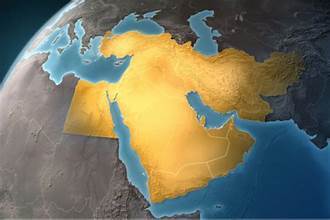
As the Region Becomes an Open Arena for Rewriting the Rules of Engagement and Redefining Influence
Understanding the current dynamics of the Middle East requires abandoning any illusion of a swift military resolution or a comprehensive political settlement. The region has entered an unprecedented phase of what can best be described as a contest of wills, in which every major actor seeks to test the limits of power while expanding its room for strategic maneuver within an increasingly fluid geopolitical environment.
The crisis is no longer defined by an isolated flashpoint or a temporary military escalation. Rather, it reflects a profound collision between competing visions of the future regional order. As long as each actor remains determined to avoid emerging from this confrontation as the perceived loser, stability will remain an elusive objective rather than an imminent reality.
This ongoing struggle is manifested in a persistent confrontation among the region's principal players, each operating according to a distinct strategic logic. Iran continues to pursue a doctrine of extended deterrence, expanding its influence through networks of non-state actors that compensate for the limitations of its conventional military capabilities while preserving strategic depth across multiple theaters.
Meanwhile, the Arab region's key states face an increasingly delicate balancing act. On one hand, they seek to safeguard the integrity of the nation-state while advancing ambitious economic transformation and development agendas. On the other, they are compelled to contain successive waves of regional escalation that threaten the economic lifelines upon which these modernization projects depend, from maritime trade routes to energy markets and international investment flows.
Israel, for its part, continues to rely on its technological superiority and overwhelming military capabilities in an effort to impose a new security reality, both along its borders and beyond them. Yet this strategy appears to be accumulating rather than resolving the underlying drivers of instability, as military dominance alone has proven insufficient to establish a sustainable regional equilibrium.
The regional landscape becomes even more complex when these rivalries intersect with the strategic calculations of the major powers. The United States finds itself increasingly torn between its long-term strategic priority of competing with China in the Indo-Pacific and its continuing obligation to protect regional allies, secure vital maritime routes, and preserve the broader balance of power in the Middle East.
At the same time, both Russia and China have sought to capitalize on this strategic tension by consolidating their regional presence through energy partnerships, trade, infrastructure investment, and a carefully calibrated diplomatic approach that favors long-term engagement over overt geopolitical confrontation.
Perhaps the most consequential transformation, however, lies not in the growing number of competing actors but in the evolution of the instruments of conflict themselves. Unmanned aerial systems, cyber warfare, precision strikes, and attacks targeting supply chains have dramatically lowered the cost of projecting force deep into an adversary's territory. As a result, traditional concepts of deterrence have been fundamentally disrupted, while the established rules of engagement have steadily eroded without being replaced by a new and widely accepted strategic framework.
The cumulative effect is a security environment characterized by persistent uncertainty, where escalation no longer requires conventional military superiority, and where relatively limited capabilities can generate disproportionate strategic consequences. In such an environment, the threshold separating competition from direct confrontation becomes increasingly blurred.
Ultimately, a careful reading of the region suggests that the current contest is unlikely to produce clear winners or decisive losers in the traditional sense. The continuous strategy of operating on the brink of the abyss may deliver temporary tactical advantages, yet it simultaneously leaves every regional actor only one miscalculation away from a large-scale confrontation whose economic, political, and strategic costs would far exceed any conceivable gains.
Breaking this vicious cycle ultimately depends on the emergence of a fundamental strategic realization: security in the Middle East is indivisible. No state can achieve lasting stability in isolation while its neighbors remain trapped in recurring cycles of conflict. The only viable alternative to perpetual mutual exhaustion lies in constructing a new regional security architecture founded upon a balance of interests, mutual recognition of the limits of power, and the replacement of zero-sum competition with a more sustainable framework of strategic coexistence.
Most read

Studies and research
Adib Ishaq: An Enlightened Mind and a Voice of the Arab Nahda (1856–1885)
Analysis
Could Canada Join the European Union? A Legal and Geopolitical Reading of the Limits of European Membership

Culture
Sinai: Braids of Hope and Pain: A Reading in the Thought of Gamal Hamdan

Free opinions
Why Minnesota May Matter More Than Iran for America’s Future