Between Competition and Capture: Iraq’s Political Stability Dilemma

Dr. Taha Ali Ahmed
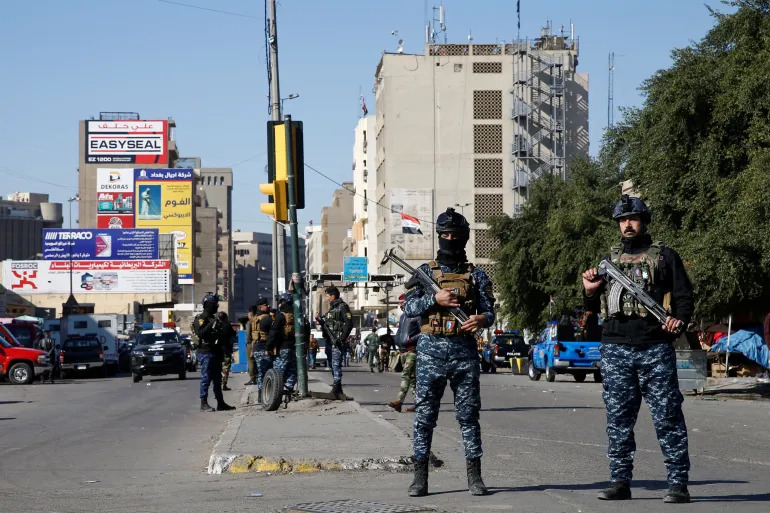
Iraq is entering a phase of political realignment following the recent elections, where the transfer of power is shaped less by numerical results than by negotiated balances within a system built on competitive pluralism and power-sharing.
Government formation thus represents a critical test of the ruling order’s ability to reproduce a sustainable consensus in the absence of a dominant majority and amid multiple actors with divergent interests inside the most influential political bloc. The stakes extend beyond selecting the next executive leadership to defining the mode of governance itself — the limits of attainable stability and the mechanisms for managing political competition within a fragile domestic environment intersecting with ongoing regional and international pressures.
The Illusion of Leadership-Centered Stability
In Washington policy circles, a prevailing analytical view holds that Iraq’s current leadership represents a break from past power-concentration models — particularly the post-2003 second-term experience. This perception frames the prime minister as less confrontational and more technocratic, operating in what is seen as a comparatively stable phase.
Yet this reassuring narrative oversimplifies reality. It assumes that individual leadership traits are sufficient to secure stability and sustain cooperation with the United States on sensitive files such as institutional reform and militia control. It favors continuity as the least risky option while overlooking the structural constraints that make such stability temporary and prone to erosion.
The deeper problem lies not in personalities but in entrenched institutional distortions. Iraq’s political system suffers from chronically weak checks and balances, while the state functions in practice as a resource for elite patronage distribution. In such fragile environments, prolonged tenure gradually converts time-limited authority into accumulated power — allowing even relatively competent leaders to weaken institutions simply by remaining in office.
Competition as the Core of Stability
Iraq’s stability challenge is therefore not a comparison between leadership styles but a question of whether the political system preserves genuine competitiveness.
Effective competition requires that losing actors believe power can be regained through institutional channels and that political conflict remains within the system rather than spilling into parallel arenas. In Iraq, this is not merely a democratic principle — it is a core national security pillar. Its erosion pushes actors toward coercive alternatives that undermine stability over time.
Since 2003, Iraq has featured intense political competition but lacked strong institutional restraints on power accumulation. State institutions have served not only policymaking functions but also coalition management — distributing posts, contracts, and security positions to preserve alliances.
All prime ministers contributed to this pattern to varying degrees. The key difference lay in their willingness to transform the state into a closed patronage network.
Leaders such as Haider al-Abadi, Adil Abdul-Mahdi, and Mustafa al-Kadhimi lost power partly due to limited capacity — or limited desire — to entrench deep influence networks. Yet they left behind a state less politically monopolized.
By contrast, leaders who treated the state as political spoils and built extensive patronage systems — most notably Nouri al-Maliki — maintained power longer, but at the cost of institutional erosion.
The First-Term Constraint — and the Second-Term Trap
First terms in Iraq are typically phases of management rather than consolidation. Power is acquired through quota-based bargaining that distributes ministries and senior posts across factions, limiting prime ministerial control over a politicized bureaucracy.
This constraint explains why early administrations focus on containment strategies — minimizing friction among power centers, prioritizing short-term deals, and managing militia files through cautious integration and selective pressure.
Such approaches may produce temporary calm but defer structural dysfunction. The turning point comes with second terms, when incentives shift toward entrenchment.
Leaders anticipating prolonged rule begin redesigning institutions to sustain personal dominance: appointing loyalists to sensitive posts, using contracts and spending as political shields, weakening oversight, and selectively deploying accountability mechanisms against rivals.
Early signs of this dynamic appeared near the end of the current government’s first term — including intensified federal audits targeting Kurdistan’s finances, later used in 2025 to justify delaying budget transfers.
This pattern reflects Iraq’s “second-term trap”: not an immediate slide into overt authoritarianism, but a gradual transformation of state tools into closed systems that hollow out institutional independence while being framed externally as efficiency or stability.
How State Capture Unfolds
In Iraq, administrative capture advances incrementally through intertwined legal, political, and economic instruments.
It begins with selective appointments in sovereign sectors controlling force, resources, and accountability — particularly the Interior Ministry, intelligence agencies, Finance and Planning ministries, and judicial oversight bodies.
As control consolidates, capture expands through opaque contracting, emergency procedures, off-budget spending, and state-linked entities used as financial conduits.
Oversight institutions gradually enforce rules selectively: accountability tools target political opponents while allies gain growing immunity.
The cumulative effect directly degrades state capacity. Loyalty replaces competence, intelligence transparency declines, and resources are allocated through influence networks rather than readiness needs — creating a false sense of strength at the leadership level while public trust erodes.
Iraq experienced this dynamic before. In 2014, security forces that appeared formidable collapsed rapidly before the advance of Islamic State — later attributed to corruption, politicized appointments, and institutional decay.
Competitiveness as a Structural Safeguard
Since 2014, Iraq has endured cycles of unrest, protests, and legitimacy crises. Yet modest gains emerged largely because executive permanence was never assumed.
Even in fragile transitional contexts, the belief that leaders were removable preserved political openness and discouraged zero-sum behavior.
When losing actors expect future access to power, they engage institutionally. When leadership becomes entrenched, competition turns existential — driving obstruction, parallel power-building, and escalation toward violence.
In an environment already saturated with armed groups, this dynamic carries compounding risks of systemic breakdown.
Implications for US Policy
American leverage in Iraqi politics is limited, and direct intervention often backfires — fueling nationalism, empowering spoilers, and reinforcing perceptions of external leadership engineering.
An effective US approach should therefore prioritize institutional competitiveness and accountability mechanisms over betting on individual leaders.
While Washington’s desire for stability is understandable, Iraq’s experience shows that surface calm can coexist with deep institutional decay — whose costs emerge only during major crises.
The central strategic question is not who governs, but whether political competition remains open and institutions resist capture.
Continuity contributes to stability only when paired with effective safeguards and real pathways for political change. Absent these conditions, what appears as stability becomes deferred risk — inevitably coming due at the next major political or security shock.
Most read


Read also