Beijing and Tehran Confront Washington: Why China Manages Conflict While Iran Exhausts Itself

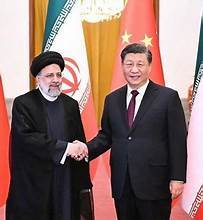
The comparison between U.S.–China relations and U.S.–Iran relations reveals one of the most striking paradoxes in contemporary international politics: the broader and more complex the disputes between Washington and Beijing become, the greater the ability of both sides to manage competition and prevent escalation. By contrast, fewer disputes between Washington and Tehran have produced far higher levels of hostility, sanctions, military confrontation, and instability. This paradox is not merely rooted in the nature of the disputed issues themselves, but reflects a profound difference in the philosophy of conflict management and in how China and Iran each perceive power, ideology, and their relationship with the international order.
At the surface level, the disagreements between China and the United States appear significantly broader and more multilayered than those between Iran and the United States. The Sino-American rivalry spans trade, tariffs, artificial intelligence, semiconductors, Taiwan, the South China Sea, cyber security, military competition, and the future structure of the international order itself. In essence, Washington and Beijing differ on nearly every major strategic issue. Yet despite this enormous scope of disagreement, their relationship has not collapsed into full diplomatic rupture or direct war. Instead, it remains governed by a framework of what may be called “managed competition.”
In contrast, disputes between Iran and the United States are comparatively fewer in number, focusing mainly on Iran’s nuclear program, sanctions, regional influence, Israel, missile capabilities, and the American military presence in the Middle East. Nevertheless, these relatively limited issues have generated far greater levels of hostility and instability, leading to direct military confrontations, maximum-pressure sanctions, and deep political isolation.
Herein lies the central distinction between the two models. China views its rivalry with the United States as a long-term structural competition that can be controlled and managed through calculations of interests, costs, and benefits. Iran, however, approaches its conflict with Washington as an ideological and existential confrontation that touches the very identity of the political system itself, making compromise appear less like pragmatic diplomacy and more like strategic surrender.
Since the reforms initiated by Deng Xiaoping, Beijing has understood that becoming a global power would not come through direct military confrontation with the United States, but through economic penetration, industrial supremacy, technological advancement, and long-term strategic endurance. Consequently, China adopted a strategy that separates areas of conflict from areas of cooperation. Tensions may rise over Taiwan or advanced technologies, but trade continues, investments remain active, and diplomatic channels stay open.
This explains why bilateral trade between China and the United States still ranges between roughly $500 and $650 billion annually despite trade wars, technological restrictions, and escalating rhetoric. Beijing understands that economic growth is not merely a tool of power, but the foundation of the Chinese Communist Party’s domestic legitimacy. Any comprehensive confrontation with the United States could threaten growth and social stability — the two pillars upon which the Chinese system depends.
Moreover, China treats time itself as a strategic asset. Patience, gradualism, and long-term competition are central elements of modern Chinese statecraft. Beijing does not seek to defeat Washington in a sudden confrontation; rather, it aims to gradually reshape the balance of power until the United States becomes less capable of maintaining unilateral global dominance.
Iran, by contrast, has approached its confrontation with the United States through an entirely different framework. Since 1979, relations between the two countries have been shaped by a deeply ideological and security-driven mindset rooted in mutual distrust and perceptions of existential threat. The disputed issues are not viewed as separate, negotiable files, but rather as interconnected components of a broader and continuous conflict. As a result, any setback in one area — whether nuclear negotiations or sanctions relief — often leads to the collapse of the entire diplomatic process.
This is precisely why U.S.–Iran relations appear far more fragile than U.S.–China relations despite the much smaller scale of interaction between Washington and Tehran. The absence of economic interdependence, the lack of formal diplomatic relations, and reliance on intermittent mediation have all created a relationship governed by a logic of “permanent crisis” rather than “managed competition.”
Furthermore, Iran has struggled to separate national security priorities from economic imperatives. While China redefined economic development as the central pillar of its national strategy, Tehran has remained trapped within the overlap between ideological, security, and regional considerations. This has made U.S. sanctions far more effective in weakening Iran’s economy than American pressure has been against China.
The Iranian nuclear agreement demonstrated that reaching understandings with the United States is technically and politically possible. However, it also exposed the fragility of such agreements in the absence of deeper structural trust. Unlike China, Iran has not succeeded in building a network of global economic interests that would raise the cost of confrontation for Washington and its allies.
More broadly, the contrast between the two models reflects their vastly different positions within the international order. China constitutes an essential pillar of the global economy, supply chains, manufacturing, and technology networks, granting Beijing significant leverage and room for maneuver. Iran, despite its major geopolitical and regional importance, lacks the global economic weight necessary to transform international dependence into strategic leverage.
For this reason, the United States treats China as a strategic competitor that must be contained without provoking systemic collapse, while it approaches Iran as a regional power that can be pressured, isolated, and weakened. Washington recognizes that full economic decoupling from China would carry devastating global consequences, whereas sustained pressure on Iran remains comparatively manageable.
Yet the irony is that this confrontational model has imposed immense political, economic, and security costs on Iran without fundamentally transforming regional or global balances of power in its favor. Consequently, questions have increasingly emerged within Iranian political circles regarding the sustainability of managing relations with the United States through the logic of permanent confrontation, especially after successive wars, economic deterioration, and the shrinking prospects for durable settlements.
In this context, the central question facing Iranian decision-makers today is no longer merely how to confront the United States, but how to manage conflict with Washington while minimizing strategic costs. Herein lies the growing attraction of the “Chinese model” — not as a model of alliance with the United States, but as a model for transforming rivalry from an open-ended existential struggle into a controlled and manageable competition.
However, any Iranian shift toward such a strategy would not be easy. It would require redefining the relationship between ideology and national interest, between security and economic development, and between foreign policy ambitions and domestic economic priorities. It would also require a broader transformation in Iran’s perception of its regional role and its relationship with the international system.
Ultimately, the real difference between China and Iran lies not simply in power capabilities or the nature of their disputes with the United States, but in how each state understands conflict itself. While China manages competition with Washington as a long-term strategic contest requiring patience, flexibility, and gradualism, Iran continues to engage the United States within a predominantly ideological and security-driven framework — one that leaves it far more vulnerable to exhaustion, recurring crises, and strategic overextension.
Most read