Women Are Not Just a “Cause” — They Are a Driving Force in Kurdish Society

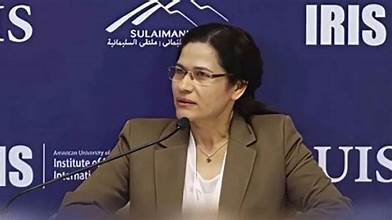
In many societies, genuine transformation is measured by the extent of women’s presence in the fabric of everyday life—not merely as symbolic figures, but as active participants shaping social reality. When examining both Arab and Kurdish societies, it becomes evident that women’s roles have never truly been marginal, even if they have often remained insufficiently recognized or underrepresented in dominant narratives. Women have always been present within the household, agriculture, education, and cultural life, and frequently at the heart of the major transformations experienced by their societies.
What has emerged in parts of northern and eastern Syria in recent years, however, offers a particularly visible and distinct example of this reality. Women there have moved beyond the role of silent partners to become visible actors within the public sphere, participating in community work, contributing to public debate, and assuming diverse responsibilities across multiple sectors.
This transformation did not occur in isolation from the broader social context. Rather, it is the product of long-term social accumulations and multiple historical experiences that gradually redefined the role of women—not only within Kurdish society, but also within the shared social environment that brings Arabs and Kurds together.
What is especially striking in this context is that women’s presence has not been confined to a single domain. It has expanded into education, civil society work, cultural initiatives, and social activities aimed at fostering a more balanced and cohesive society. In many cases, women have played a significant role in promoting dialogue, bridging differences, and reducing tensions within local communities.
These roles, which may appear “soft” or less visible compared to traditional political influence, are in fact among the most consequential in the long term. They engage directly with the social fabric itself, gradually reshaping it from within. From this perspective, the empowerment of women becomes one of the essential foundations of any serious project seeking to build sustainable stability in the region.
Within this framework, initiatives that highlight and document these experiences acquire particular importance, especially when they present women’s contributions in a realistic manner, بعيداً عن التوظيف السياسي أو الخطابات المبالغ فيها. Among such initiatives is the campaign “Takamul… Arabs and Kurds, A Shared Destiny,” one of the projects launched by the International Foresight Network for Studies, Media and Consultations. The campaign has dedicated significant space across its platforms to addressing the role of women in both Arab and Kurdish societies.
Through diverse social media content, the initiative has highlighted stories and experiences of women active in various fields, while also producing media materials that emphasize the importance of women’s roles in strengthening social cohesion and building bridges of communication between different social components.
What distinguishes this approach is that it does not present women as a mere “issue” or “cause,” but rather as a natural and integral part of society and as a central actor in its movement and transformation—not as an exception requiring symbolic treatment. This framing, in itself, contributes to changing conventional perceptions and opens the way toward a more realistic and profound understanding of women’s societal role.
When audiences encounter real examples of active and influential women, they begin to recognize that change is not an abstract or distant ideal, but an existing reality that can be developed, expanded, and built upon. In the Arab–Kurdish context specifically, this dimension creates an important space for intersection and mutual exchange, where experiences and expertise can interact to produce shared models that reflect the region’s particular realities and respond to its challenges.
By virtue of their social position, women possess the capacity to function as bridges—between generations, between cultures, and between differing social and political perspectives. Consequently, investing in this role is not merely a matter of social justice; it is also a strategic choice that contributes to building a more stable and cohesive society capable of confronting future challenges.
In this regard, initiatives such as “Takamul,” which seek to highlight these experiences and place them within a broader societal context, represent an important step in the right direction. They help reorder priorities and remind us that meaningful and lasting change always begins from within society itself.
Most read