BRICS and the Test of the Iran War: Is the “Global South” Beginning to Fracture?

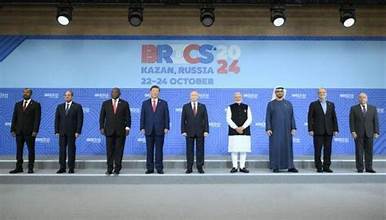
The failure of BRICS foreign ministers to issue a joint statement following their meeting in New Delhi revealed a political and strategic reality that goes far beyond temporary disagreements related to the Iranian–Israeli–American war. It exposed the fact that the bloc, which has long sought to present itself as a nucleus of a multipolar international order, is now facing a structural challenge concerning the limits of its internal cohesion and the deep contradictions between the regional interests and international alignments of its members.
While Iran attempted to push the group toward adopting a clear position condemning American and Israeli military operations against it, Tehran encountered firm resistance from several members — most notably the United Arab Emirates. This ultimately led to the collapse of consensus over a unified communiqué, forcing India, as host nation, to settle for a presidential statement reflecting the extent of divisions within the bloc. This outcome was not merely a passing diplomatic dispute; rather, it revealed a deeper crisis regarding the very nature of BRICS itself: Is it a genuine geopolitical alliance capable of producing unified positions on major international crises, or merely a loose economic-political framework bringing together states with conflicting priorities, alliances, and visions of the international order?
Since its recent expansion to include countries such as Iran, the UAE, Egypt, and Ethiopia, BRICS has sought to portray itself as the voice of the “Global South” against Western dominance. However, the recent war in the Middle East placed this narrative under a real test. Once the crisis evolved into a direct confrontation affecting the interests of members within the bloc itself, it became increasingly evident that national interests and security alliances outweigh any broader rhetoric of transnational solidarity.
Iran entered BRICS hoping to use the bloc as a political platform to break Western isolation. Tehran expected that escalating confrontation with the United States and Israel would generate political alignment within BRICS against Washington — or at least produce a strong statement condemning military operations against Iran. Yet this did not happen because several BRICS members, particularly India and the UAE, view their relations with the United States as a core component of their strategic and economic balance.
Herein lies the central paradox within BRICS: the bloc includes powers such as China and Russia that compete with the United States globally, but it also includes countries deeply tied to Washington through economic and security partnerships and which do not regard confrontation with the West as a strategic priority. Consequently, transforming BRICS into a unified political front against the United States appears far more complicated than some within the bloc had anticipated.
The recent crisis also exposed an important transformation in the nature of regional conflict in the Middle East. Iranian attacks against the UAE, and the targeting of bases and facilities associated with the American presence, shifted the confrontation from the level of proxy warfare to direct confrontation with regional structures allied to Washington. This development places Gulf states — especially the UAE — before a new security equation, where Iranian threats are no longer confined to traditional geographic disputes but are increasingly tied to these states’ positions within broader international security arrangements.
At the same time, the sharp Emirati response reflects a transformation in Gulf approaches toward Iran. The UAE, which in recent years had tended to manage disputes with Tehran through de-escalation and economic engagement, is now speaking in a far more assertive language centered on sovereignty, deterrence, and the right to military response. This suggests that the recent war has pushed several Gulf powers to reassess their perceptions of regional security, particularly as threats to maritime routes, energy infrastructure, and vital civilian facilities continue to expand.
More broadly, what took place in New Delhi reflects a gradual fragmentation within the very concept of the “Global South.” The states grouped under this framework are not a homogeneous bloc; rather, they are united by deeply conflicting geopolitical calculations. India, for instance, seeks to maintain a delicate balance between its membership in BRICS and its growing strategic partnership with the United States in response to China’s rise. The UAE considers its relationship with Washington a cornerstone of its national security, while China and Russia increasingly view BRICS as a vehicle for reshaping the international order and reducing American dominance.
Thus, the recent Iranian war not only exposed the limits of solidarity within BRICS, but also demonstrated that the bloc still lacks a unified strategic vision toward major security crises. While some members prioritize economic development and trade cooperation, others view BRICS primarily as a platform for balancing Western influence.
India’s conduct during the meeting further reflects a growing shift in New Delhi’s international behavior. India no longer sees itself merely as a member of the “Global South,” but as a rising power seeking to play an independent role within the international system while maintaining multidirectional partnerships. As a result, New Delhi sought to manage the meeting through cautious diplomatic language emphasizing dialogue, diplomacy, freedom of navigation, and respect for sovereignty, without drifting toward an openly confrontational stance against the United States or its Gulf allies.
This Indian position becomes even clearer when viewed through the lens of its economic and security interests. India is among the world’s largest importers of oil, and any disruption in the Strait of Hormuz directly threatens its energy security. Attacks on shipping lanes and maritime routes therefore place the Indian economy before significant strategic risks, particularly given the country’s growing dependence on maritime trade and Gulf energy supplies.
Iran, meanwhile, now finds itself facing a growing strategic dilemma. On one hand, Tehran seeks to leverage its eastern partnerships — particularly with China, Russia, and BRICS — to reduce Western pressure, sanctions, and political isolation. On the other hand, repeated crises increasingly reveal that these relationships are not solid security alliances, but are instead governed primarily by calculations of interests, economics, and international balancing. Tehran is gradually discovering that membership in BRICS does not automatically translate into a unified political or military umbrella against the United States.
At a deeper level, this crisis reflects an important transformation in the international system itself. The world is indeed moving toward greater multipolarity, but this multipolarity is not based on rigid ideological alliances as during the Cold War. Instead, it is shaped by flexible and constantly shifting networks of interests. Rising powers may cooperate economically within frameworks such as BRICS while simultaneously diverging sharply on questions of regional security and relations with the United States.
Accordingly, the failure of the New Delhi meeting to produce a joint statement should not be viewed as a mere diplomatic incident. Rather, it exposes the limits of BRICS’ ability to evolve from an economic-political grouping into a cohesive geopolitical bloc. It also demonstrates that the war in the Middle East is becoming an increasingly influential factor in reshaping balances within the “Global South” itself — and that the struggle over the future international order will not be determined solely by confrontation with the West, but also by the ability of rising powers to manage their own growing internal contradictions.
Most read