
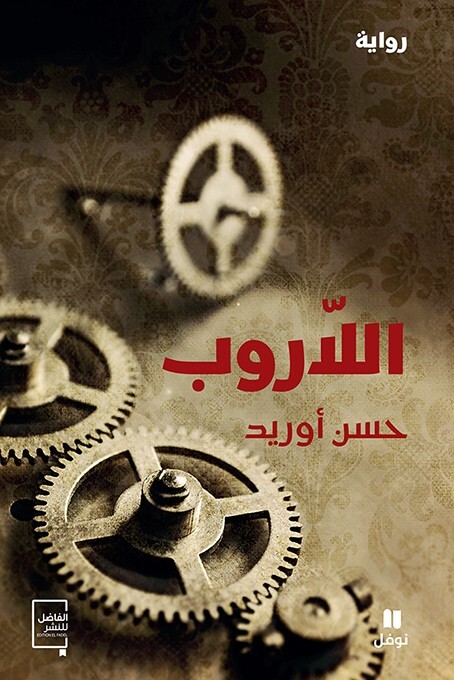
In a new addition to the Arab literary scene, the Moroccan writer Hassan Aourid’s novel Al-Laroub has been recently published through a joint collaboration between Dar Naufal (under the imprint of Hachette Antoine) and Dar Al-Fadil Publishing. The novel offers a work deeply rooted in Moroccan culture—both linguistically and thematically—blending satire with reflection, and weaving together reality and imagination within a distinctly philosophical narrative framework.
Set in Morocco on the eve of independence, the novel unfolds through the character of Mohamed Benis, an informant working for the French colonial authorities. He is assigned to monitor “Cabaret Centra,” a space where intellectuals and artists of diverse backgrounds gather, united by their rejection of colonial rule. Yet what begins as a routine surveillance task gradually evolves into a complex existential experience, confronting the protagonist with profound questions about identity, meaning, and belonging.
The narrative is structured through layered temporalities, where past, present, and future intersect. The protagonist moves fluidly between reality and imagination, embarking on a journey that unsettles his certainties and reshapes his understanding of both self and world. Within this framework, Aourid employs elements of surrealism to interrogate a troubled reality, rendering time “mercurial” and concepts unstable—mirroring a deeply fractured historical and human condition.
Rather than relying on conventional storytelling, the novel integrates multiple expressive forms, including poetry, song, and satire, producing a rich and hybrid text that transcends the physical setting. “Cabaret Centra” thus emerges not merely as a location, but as a mental and existential space reflecting the tension between repression and freedom, and between lived reality and imagined possibilities.
The title itself, Al-Laroub—a colloquial distortion of the phrase “illa rub‘” (quarter to)—encapsulates this sense of incompleteness and disorientation. Time appears suspended, norms disrupted, and everything remains caught in a state of becoming, poised between being and non-being.
With this work, Hassan Aourid continues his narrative project that combines historical consciousness with intellectual inquiry, as seen in his previous novels such as Al-Moriski and Spring of Cordoba. Through Al-Laroub, he reaffirms his position as one of the most prominent Arab novelists engaging critically with questions of identity, history, and power through innovative literary forms.
Most read