After Khamenei: How Iran Chooses a Supreme Leader — and Who Might Emerge Next

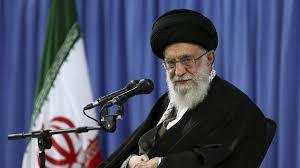
The death of Ayatollah Ali Khamenei following joint U.S.–Israeli airstrikes has triggered one of the most consequential political transitions in the Islamic Republic’s history. As Iran enters a sensitive period of leadership uncertainty, attention has turned to the constitutional process of selecting a new supreme leader — and to the political forces that may shape that outcome.
The Constitutional Mechanism
Under Iran’s constitution, the authority to appoint the supreme leader rests exclusively with the Assembly of Experts, an 88-member clerical body elected by public vote every eight years. However, candidates for the Assembly must first be approved by the Guardian Council, ensuring that only vetted figures aligned with the system can stand for election.
When the office of supreme leader becomes vacant, the Assembly convenes to deliberate and select a successor by simple majority vote. In the interim, executive authority is transferred to a temporary three-member leadership council tasked with exercising the supreme leader’s powers until a permanent replacement is chosen.
According to Iranian media, the provisional council currently consists of President Masoud Pezeshkian, Judiciary Chief Gholam-Hossein Mohseni-Ejei, and Ayatollah Alireza Arafi, a representative of the Guardian Council. While this body manages immediate affairs of state, it holds no permanent authority over succession. That responsibility remains firmly with the Assembly of Experts.
The Leading Contenders
Although the Assembly’s deliberations are conducted behind closed doors, several figures have emerged as potential successors.
Gholam-Hossein Mohseni-Ejei
Currently serving as chief justice, Mohseni-Ejei has built a career spanning Iran’s judiciary, intelligence services, and national security apparatus. He previously served as minister of intelligence and prosecutor-general, and remains a member of the Expediency Discernment Council. His background positions him as a strong representative of the conservative establishment and the security-oriented wing of the system.
Hassan Khomeini
The grandson of Ayatollah Ruhollah Khomeini, the founder of the Islamic Republic, Hassan Khomeini is sometimes viewed as a potential bridge between the revolutionary legacy and reform-leaning constituencies. Some analysts argue that elevating such a figure could preserve institutional continuity while softening Iran’s international posture. However, his prospects depend heavily on elite consensus within clerical ranks.
Alireza Arafi
A senior cleric with extensive influence in religious institutions, Arafi has served as director of Iran’s seminaries, Friday prayer leader in Qom, and member of both the Guardian Council and the Assembly of Experts. His institutional roles place him at the heart of Iran’s clerical power structure, making him a serious — if less publicly discussed — contender.
A Controlled Yet Uncertain Process
Article 111 of Iran’s constitution mandates the immediate formation of a provisional leadership council upon the death or incapacitation of the supreme leader. While the constitution does not impose a strict deadline for selecting a successor, it requires the Assembly to act “in the shortest possible time.”
In practice, however, the formal process is likely to be accompanied by intense negotiations within Iran’s political and clerical elite. Analysts suggest that succession decisions in Iran are rarely straightforward; behind-the-scenes bargaining often produces compromise candidates rather than clear frontrunners.
Amin Saikal, professor emeritus at the University of Western Australia, has noted that while Mohseni-Ejei may appear well positioned, the Assembly could ultimately choose another figure — potentially even someone outside its own ranks. “There is going to be a great deal of horse-trading,” he observed, suggesting that consensus may matter more than seniority.
Policy Implications
The identity of the next supreme leader will carry profound implications for Iran’s domestic and foreign policy trajectory.
A hardline successor is likely to maintain Khamenei’s security-first doctrine, confrontational foreign policy posture, and resistance to Western pressure. Conversely, a more pragmatic figure could pursue limited reforms aimed at easing domestic discontent and reducing sanctions through cautious diplomatic engagement.
At the same time, some analysts caution against assuming that external military pressure alone can precipitate regime change. Historical precedent suggests that air campaigns rarely succeed in dismantling entrenched political systems — particularly when core instruments of internal control remain intact.
A Defining Moment for the Islamic Republic
The succession process unfolds at a moment of acute geopolitical tension and economic strain. Internally, Iran faces mounting public dissatisfaction and structural economic challenges. Externally, it confronts heightened military pressure and diplomatic isolation.
While the constitutional pathway to selecting a new leader is clearly defined, the political outcome will ultimately depend on power dynamics within Iran’s clerical and security establishment. The decision will not only shape the future direction of the Islamic Republic but also influence the broader strategic balance across the Middle East.
In the coming weeks, Iran’s leadership transition will test the resilience of its political system — and reveal whether continuity or recalibration defines the next chapter of the Islamic Republic.
Most read