A “Cold” War with Israel

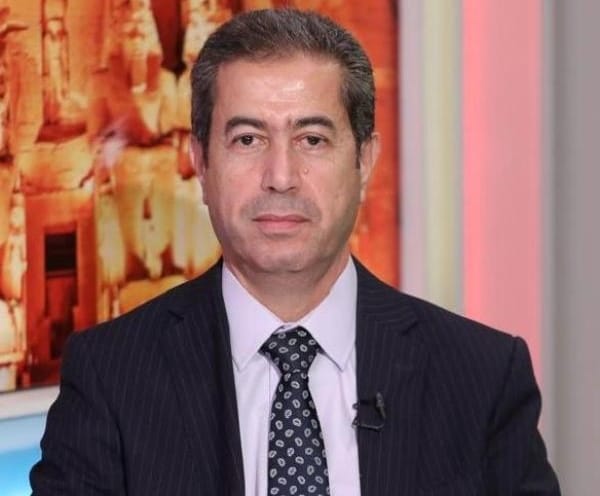
Dr: Theeb Qaralleh
Israeli aggressive rhetoric — particularly against Jordan and more broadly against several Arab states — continues to multiply day after day. Its messages gradually seep into our ears, hearts, and minds in a methodical, incremental manner. Officially, we condemn it “in the strongest terms, as usual,” while popular reactions oscillate between anger and sarcasm. Meanwhile, much of the world — states and organizations alike — remains in a deep slumber of indifference, reflecting silence and disregard, as though playing the role of the “mute devil.”
Under international law, statements that infringe upon state sovereignty — as in the case of Israel’s rhetoric toward Jordan and others — are considered precursors to war. They constitute indirect threats of force, incitement to conflict, and violations of the principle of non-interference in internal affairs, particularly since they are issued by official members of the Israeli government, not by anonymous extremists on social media.
International relations theorists argue that persistent threatening rhetoric can pave the way for aggressive realities — military, security, and economic — making such statements early violations of legal norms. The renowned war theorist Carl von Clausewitz famously asserted that politics is the “womb” in which war grows — meaning that political discourse lays the foundation for war, defines its objectives, directs it, and bears responsibility for its consequences.
Accordingly, political rhetoric targeting state sovereignty — such as Israel’s — is not mere speech, but a dangerous step revealing hostile intent and potentially serving as a prelude to military conflict. “Political warfare” begins with words, images, maps, and ideas aimed at weakening an adversary’s will and reshaping behavior before resorting to force.
Before the latest statements by Israel’s communications minister against Jordan, observers were still analyzing global reactions to Benjamin Netanyahu’s remarks about “Greater Israel,” which extended to Jordan and other Arab countries. The most striking element was the world’s alarming indifference — with many influential states offering no response at all. This raises a troubling question: does today’s silence toward Tel Aviv’s words translate into tomorrow’s support for its actions? Or is what shocks us merely familiar reality to others? Has Israel’s influence — backed by Washington — silenced these capitals into swallowing their tongues?
It remains unclear whether Arab foreign ministries have fully analyzed international reactions or what conclusions they have drawn. Have they even summoned ambassadors from key states to stress the danger of such rhetoric and demand positions — as they often do when threats come from non-state actors or extremist groups? Why this disturbing silence when the statements come from the prime minister of a state that has enjoyed global backing for seven decades?
For the record, 31 Arab and Islamic countries issued a joint statement condemning Netanyahu’s remarks as a “grave and flagrant violation of international law.” The question remains: where are the positions of the remaining Islamic states — numbering 57 in total?
The joint statement was supported by the Secretaries-General of the Arab League, the Organization of Islamic Cooperation, and the Gulf Cooperation Council. Separately, six countries — Jordan, Egypt, Saudi Arabia, Qatar, Iraq, and Lebanon — issued individual condemnations.
This naturally raises another question: did the weakness of the response and global indifference embolden Israel’s communications minister to escalate further? Will continued failure to develop new strategic responses generate even more aggressive Israeli actions?
Perhaps it is time to elevate the level of reaction — beginning domestically with a carefully managed popular and elite mobilization, free of panic or chaos.
Internationally, Arab states should leverage the upcoming UN General Assembly meetings in New York to launch a coordinated Arab diplomatic and media campaign across global platforms, languages, and institutions — delivering a clear message to Israel and the world alike.
Such a confrontation would serve as a live rehearsal for what may come next — especially before Israel shifts its focus from Gaza to the West Bank with unexpected moves.
And so that our peoples and allies can say that every possible effort was made before reaching the painful conclusion that appealing to a broken international system may ultimately be futile.
Most read