Syria’s Future: Where Is It Heading?
Dr: Theeb Qaralleh
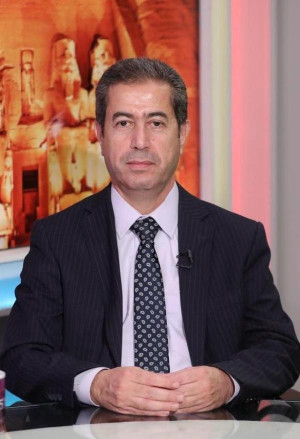
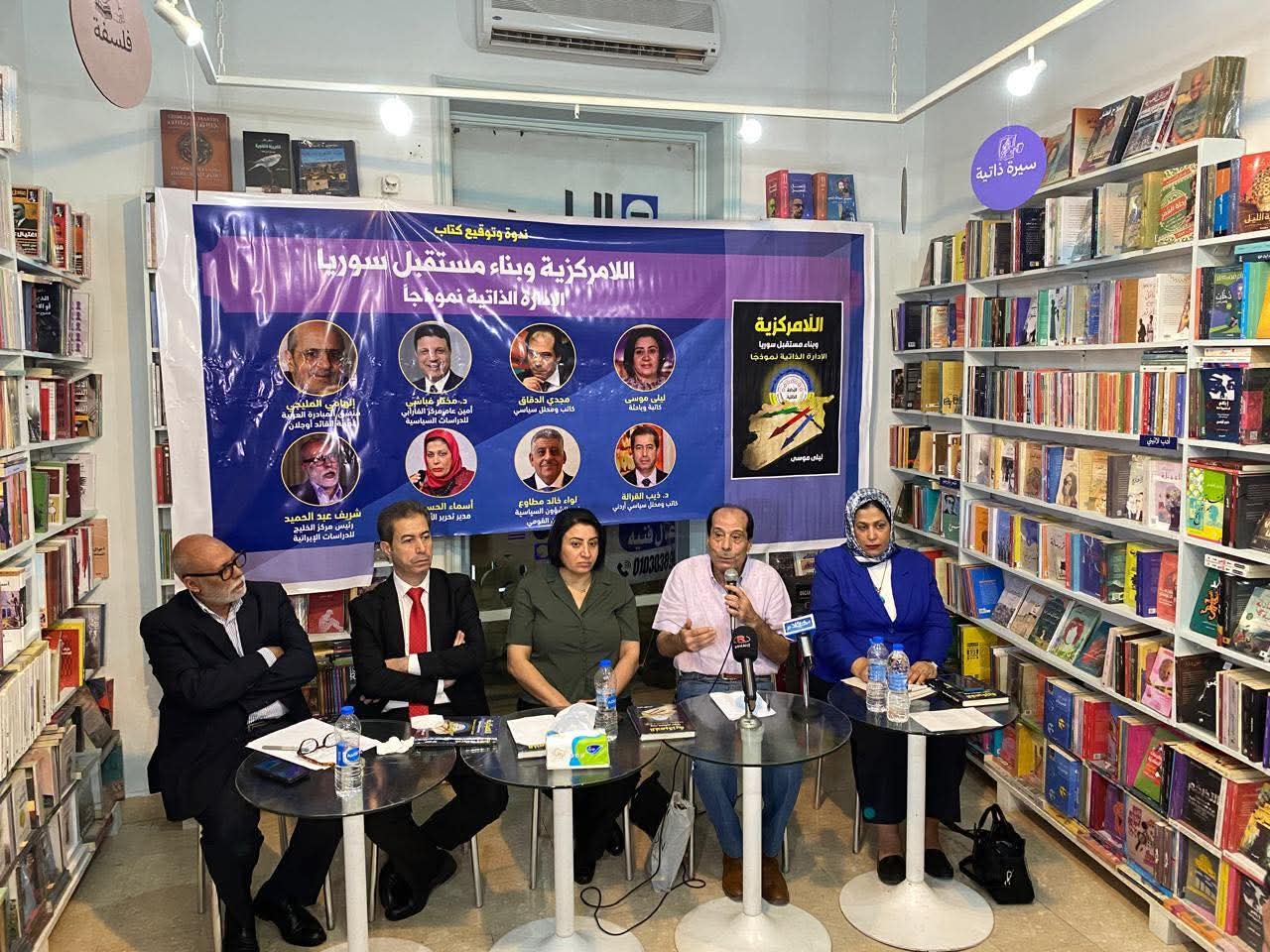
Alongside a group of distinguished academics, I participated in a seminar held in Cairo, Egypt, on the evening of Saturday, October 27, which discussed the themes of the book Decentralization and Building Syria’s Future – The Self-Administration Model.
During the session, I delivered a presentation on the impact of foreign intervention on security and stability in Syria and the hoped-for future Arab role, analyzing its motives, forms, strategic directions, and repercussions for the Syrian crisis.
The book’s author, Leila Moussa, presented an overview of the work, outlining its key chapters, significance, and timing. She explained the rationale behind decentralization, detailed the self-administration experience, and responded to questions and interventions raised by attendees, including politicians, journalists, activists, and researchers.
Dr. Mokhtar Al-Ghabashi, Secretary-General of the Al-Farabi Center for Political Studies, discussed the importance of implementing decentralization in Syria, questioning whether it would foster stability or risk further fragmentation.
Journalist Elhami Al-Meligy reviewed the self-administration experience through the lens of both its successes and failures, highlighting the current realities on the ground.
Major General Khaled Mataa examined the implications of decentralization in Syria for Arab national security.
Meanwhile, Asmaa Al-Husseini, Managing Editor of Al-Ahram Newspaper, addressed the political role of women in Syria’s emerging political landscape.
Political writer and analyst Magdy Al-Daqqaq questioned whether centralized governance remains viable in Syria after the profound transformations and sacrifices the country has endured.
The seminar was moderated by Sherif Abdel Hamid, head of the Gulf Center for Iranian Studies.
The event featured in-depth and constructive dialogue between the author, speakers, and attendees on a wide range of Syrian issues and their broader implications for the regional landscape as a whole.
Most read