
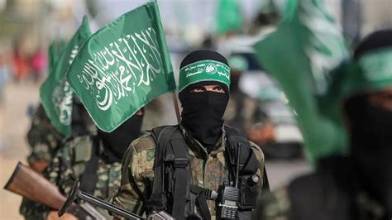
Hamas’ recent declaration expressing a willingness to discuss disarmament as part of a comprehensive political settlement is far more than another tactical negotiating statement. Since its establishment in 1987, the movement has built its political identity around armed resistance, consistently portraying its military wing as inseparable from its ideological and political existence. At no point over nearly four decades—even under intense military pressure—had Hamas publicly opened the door to discussing the future of its weapons.
This is why the latest announcement has attracted such widespread international attention. Its significance does not lie in an immediate decision to surrender arms, but rather in the fact that it breaks one of the movement’s longest-standing political taboos. The debate is no longer limited to ceasefires, hostage exchanges, or humanitarian arrangements. Instead, it raises a much broader question: can Hamas eventually evolve from an armed resistance movement into a political actor operating within the framework of a future Palestinian state?
A careful reading of the declaration, however, suggests that it should not be interpreted as an unconditional surrender. Hamas has not agreed to lay down its arms without guarantees. Rather, it has linked any discussion of disarmament to a broader political package that includes a complete Israeli withdrawal from Gaza, a permanent ceasefire, the establishment of a sovereign Palestinian state, a comprehensive reconstruction process, and internationally supervised implementation.
In effect, Hamas is attempting to shift the battlefield from military confrontation to political negotiation. By doing so, it places Israel before a new strategic dilemma: if the declared objective of the war has always been the elimination of Hamas’ military capabilities, would Israel be willing to achieve that objective through diplomacy rather than through continued military operations?
A War That Changed Everyone’s Calculations
The current conflict has fundamentally transformed Gaza’s strategic landscape. The unprecedented destruction across the Strip, the collapse of civilian infrastructure, and the significant losses suffered by Hamas’ military leadership have created realities unlike those of previous wars.
Although Hamas continues to possess military capabilities, most analysts agree that its ability to wage prolonged warfare has been substantially diminished. Meanwhile, Gaza’s civilian population has endured extraordinary humanitarian suffering, placing immense pressure on the movement’s social base.
Against this backdrop, Hamas’ evolving rhetoric becomes easier to understand. Rather than insisting that armed resistance remains the only available path, the movement has begun suggesting that its military wing could become part of a broader political settlement. This reflects an increasing recognition that Gaza’s future cannot be determined solely through armed confrontation.
Has Hamas Changed, or Have the Circumstances Changed?
The more important question is not whether Hamas has abandoned its founding ideology, but whether the strategic environment has compelled it to reassess its priorities.
For decades, Hamas rejected any discussion of disarmament, arguing that resistance would remain legitimate as long as the Israeli occupation continued. Today, the movement continues to uphold that principle but frames it differently. Instead of categorically rejecting the issue, it now presents disarmament as one component of a reciprocal political agreement.
In other words, Hamas is not declaring that it will voluntarily surrender its weapons. Rather, it argues that military capabilities could eventually become unnecessary if Palestinian statehood, Israeli withdrawal, and permanent peace are credibly guaranteed.
This distinction separates negotiated disarmament from outright capitulation.
Israel’s Strategic Dilemma
For Israel, Hamas’ proposal creates an entirely new political challenge.
Since the beginning of the war, successive Israeli governments have justified military operations through two principal objectives: destroying Hamas’ military infrastructure and ending its rule over Gaza.
If Hamas is genuinely prepared to relinquish its military capabilities under an internationally supervised agreement, then one of Israel’s principal war aims could theoretically be achieved without continued warfare.
However, profound skepticism remains within Israel's political and security establishment. Israeli officials continue to question whether Hamas would fully dismantle its military infrastructure, disclose hidden weapons stockpiles, or permanently abandon armed resistance.
Domestic politics further complicate the picture. Prime Minister Benjamin Netanyahu leads a coalition containing powerful factions that reject any agreement linking Israeli withdrawal to Palestinian statehood or allowing Hamas any future political role. Consequently, Israel’s dilemma is no longer purely military; it has become deeply political.
The "Board of Peace": Redesigning the Regional Order
Hamas’ declaration cannot be understood in isolation from the broader diplomatic initiative known as the Board of Peace, promoted by the United States as a framework for postwar Gaza.
The initiative extends well beyond a ceasefire. It envisions a phased Israeli withdrawal, the deployment of an international stabilization force, the establishment of a technocratic Palestinian administration, massive reconstruction efforts, and a renewed political process leading toward Palestinian statehood, while simultaneously advancing broader Arab-Israeli normalization.
Under this framework, Hamas’ future is no longer merely a Palestinian issue. Instead, it becomes part of a much larger effort to reshape the political and security architecture of the Middle East.
Who Governs Gaza?
Perhaps the most difficult question remains unanswered: if Hamas eventually relinquishes its military role, who will govern Gaza?
No clear consensus currently exists.
The Palestinian Authority continues to face a serious legitimacy crisis, while Israel rejects Hamas’ continued rule. Likewise, any temporary Arab or international administration would struggle to become a permanent governing solution.
Some analysts therefore envision Hamas gradually transforming into a purely political movement, comparable to other former armed organizations that entered democratic politics after abandoning violence. Such a scenario would require comprehensive Palestinian political restructuring, including elections encompassing both Gaza and the West Bank.
Yet achieving that objective may prove no less difficult than ending the war itself.
Beyond Weapons: The Future of the Palestinian Cause
It remains far too early to conclude that Hamas has entered a definitive strategic transformation. The movement's statement may ultimately prove to be a negotiating tactic intended to improve its bargaining position.
Nevertheless, the mere fact that Hamas has shifted from an absolute rejection of discussing its weapons to a conditional willingness to consider the issue represents a significant political development.
Until recently, the central question surrounding Gaza was straightforward: When will the war end?
Today, a far more consequential question has emerged: What kind of Gaza will exist after the war?
Can Hamas successfully evolve from an armed resistance movement into a political force operating within a future Palestinian state? Or will the profound lack of trust among all parties ultimately return the conflict to the battlefield?
The answers will determine not only Hamas’ future, but also the future of the Palestinian national project itself. The debate is no longer simply about weapons or war. It is about the political architecture that will shape Palestine—and perhaps the broader Middle East—for decades to come.
Most read