Russian Gas and Morocco: Is Energy Redrawing North Africa’s Geopolitical Map?
The recent remarks by Russian Ambassador to Rabat Igor Belyaev regarding the prospects for Russian-Moroccan cooperation in liquefied natural gas (LNG) and green hydrogen should not be viewed merely as an announcement of new investment opportunities. Rather, they point to deeper strategic shifts in Russia’s approach toward North Africa while simultaneously reflecting Morocco’s growing determination to diversify its energy partnerships beyond traditional geopolitical alignments.
As the war in Ukraine continues to reshape global energy markets and Europe accelerates efforts to reduce its dependence on Russian gas, Moscow is racing to redirect both its energy exports and strategic partnerships toward alternative markets. In this context, Morocco has emerged as an attractive partner, thanks to its strategic geographic location and its ambition to become a regional energy hub connecting Africa with Europe.
Moscow's Search for New Energy Gateways
Since the outbreak of the Ukraine conflict, Russia's energy sector has faced unprecedented sanctions and commercial restrictions, compelling Moscow to redefine its export strategy. The objective is no longer limited to finding new buyers for Russian gas; it now includes building long-term partnerships with countries capable of serving as regional energy distribution and transit centers.
Against this backdrop, Ambassador Belyaev's remarks carry considerable strategic significance. He explicitly noted that Morocco's ongoing investments in LNG import and regasification infrastructure create favorable conditions for new suppliers—including Russian companies—to enter the Moroccan market and potentially use the Kingdom as a gateway to broader regional markets.
From Moscow's perspective, therefore, Morocco is not simply another gas customer but a strategic partner within the evolving global energy supply chain.
Morocco's Ambition to Become a Regional Energy Hub
For Morocco, this growing openness toward Russia is consistent with its broader national strategy of transforming itself into a regional energy platform linking Africa and Europe.
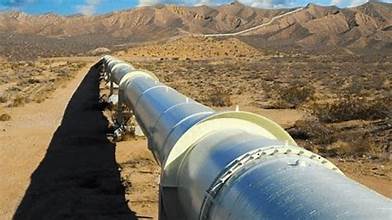
Over the past several years, Rabat has actively diversified its energy sources while investing heavily in LNG infrastructure, alongside advancing the Nigeria-Morocco Gas Pipeline project, expanding electricity interconnections with Europe, and accelerating investments in renewable energy.
Viewed through this lens, importing Russian LNG does not necessarily signify a geopolitical realignment. Rather, it reflects Morocco's pragmatic foreign policy, which seeks to diversify economic partnerships and maximize the strategic value of its geographic position.
Green Hydrogen: Investing in the Energy Economy of Tomorrow
One of the most noteworthy aspects of the Russian ambassador's statement was his emphasis on green hydrogen in addition to natural gas.
This is strategically important because green hydrogen is expected to become one of the defining energy markets of the coming decades, particularly as Europe advances its decarbonization agenda and gradually reduces dependence on fossil fuels.
Should Russian companies secure a role in Morocco's emerging hydrogen sector, bilateral cooperation would extend well beyond conventional hydrocarbons into the future energy economy. Such cooperation could position both countries to benefit from one of the world's fastest-growing investment sectors.
Balancing Moscow and the West
The prospect of closer energy cooperation naturally raises questions about its implications for Morocco's relations with its Western partners, particularly the United States and the European Union.
However, Morocco's foreign policy over the past decade suggests that Rabat has pursued a strategy of diversification rather than substitution. The Kingdom has simultaneously strengthened defense cooperation with Washington, deepened economic integration with the European Union, and expanded commercial relations with China, Russia, and Gulf countries.
Consequently, enhanced cooperation with Moscow in the energy sector should not necessarily be interpreted as a strategic shift away from the West. Instead, it reflects Morocco's increasingly pragmatic diplomacy, which seeks to separate economic interests from geopolitical rivalries whenever possible.
Regional Implications
The significance of this emerging partnership extends well beyond bilateral relations.
Algeria remains one of Europe's largest natural gas suppliers and has long derived a significant portion of its regional influence from its central role in European energy security. Morocco, by contrast, has sought to develop alternative sources of strategic leverage through LNG imports, regasification facilities, the Nigeria-Morocco Gas Pipeline, and large-scale renewable energy investments.
In this context, expanded Russian-Moroccan energy cooperation could introduce a new variable into North Africa's evolving energy competition. Should Morocco successfully establish itself as a major energy transit and distribution hub linking Africa and Europe, the regional balance of influence within the energy sector could undergo significant transformation.
Looking Ahead
At this stage, Ambassador Belyaev's comments represent a declaration of strategic intent rather than the announcement of concrete projects or binding agreements. Nevertheless, their timing—amid profound changes in global energy markets—gives them political significance that extends well beyond economics.
Energy has become one of the principal instruments of geopolitical influence in today's international system. Countries capable of building diversified networks for production, transportation, and distribution will enjoy greater strategic flexibility in an increasingly competitive global environment.
Morocco appears determined to capitalize on its geographic advantages and expanding infrastructure to establish itself as a regional energy hub. Russia, meanwhile, is searching for alternative markets and partnerships to offset its diminishing presence in Europe. If both sides succeed in translating these ambitions into tangible projects, cooperation in LNG and green hydrogen could emerge as one of the defining pillars of Russian-Moroccan relations over the coming decade, with implications reaching far beyond bilateral ties to reshape the geopolitical and energy landscape of North Africa and the wider Mediterranean.
Most read