Is the Lebanese-Israeli Crisis Entering a Decisive Phase؟

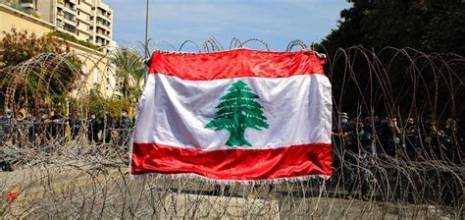
The Lebanese-Israeli crisis is entering a new and potentially decisive phase as the seventh round of indirect negotiations is set to convene in Rome on August 4. The talks come against a backdrop of mounting military pressure intertwined with carefully calibrated political messaging. While the parties prepare to resume negotiations, Israel has significantly intensified its military operations in southern Lebanon through a series of large-scale explosions—the most extensive in months—in what appears to be an attempt not only to achieve tactical military objectives but also to shape the political environment surrounding the negotiations.
The convergence of military escalation and diplomatic engagement underscores the nature of the current phase, in which developments on the battlefield have become an integral component of the negotiating process rather than a separate track. Israel appears intent on strengthening its bargaining position by creating new realities on the ground, while the Lebanese state seeks to project a different equation—one that demonstrates its ability, through its legitimate state institutions, to fulfill its security commitments without being drawn into a broader military confrontation.
Against this backdrop, President Joseph Aoun's position assumes particular significance. In his address marking Lebanese Army Martyrs' Day, he reaffirmed that the armed forces remain the guarantor of Lebanon's sovereignty, territorial integrity, and national unity. His remarks reflected the presidency's determination to reinforce the army's role as the sole legitimate institution entrusted with implementing the framework agreement, rather than any other actor. The message was directed both inward and outward: domestically, it reaffirmed the state's exclusive responsibility for national security, while internationally, it signaled Lebanon's readiness to honor its commitments through its official institutions.
The Lebanese position, however, has been met by an unprecedented Israeli escalation. Israel carried out extensive explosions targeting the vicinity of the historic Beaufort Castle (Qal'at al-Shaqif) and several southern towns, claiming to have destroyed Hezbollah tunnels and military infrastructure. Yet the scale of the operation—with reports indicating that nearly 700 tons of explosives were used, generating shockwaves felt across large parts of Lebanon—suggests that it went beyond immediate military objectives. The operation amounted to a demonstration of force and a strategic message of deterrence aimed at multiple audiences.
Notably, the operation also raised concerns extending beyond the security dimension. By affecting the surroundings of the historic Beaufort Castle, it reignited debate over the targeting of cultural and historical heritage during armed conflict. Parliament Speaker Nabih Berri condemned the attack, arguing that it endangered not only human lives but also Lebanon's cultural and historical legacy, while warning against continued international silence in the face of such actions.
Meanwhile, the United States has emerged as a central player in the evolving political landscape. The meeting between Lebanese Army Commander General Rodolphe Haykal and U.S. Ambassador to Lebanon Michel Issa, held just days before the Rome negotiations, was far more than a routine diplomatic encounter. It underscored Washington's continued investment in the Lebanese Armed Forces as the cornerstone of any future security arrangements in southern Lebanon. The ambassador's emphasis on the army's role within the implementation mechanism of the framework agreement further reflected the United States' commitment to strengthening Lebanese state institutions in line with the broader international objective of consolidating security responsibilities under the authority of the state.
On the domestic front, the Lebanese government is equally determined to capitalize on the current political momentum by linking security stabilization with reconstruction and recovery. Prime Minister Nawaf Salam's launch of the first phase of the government's recovery and return plan for southern Lebanon signals an understanding that sustainable stability cannot be achieved through military measures alone. Rather, it requires rebuilding devastated communities by clearing rubble, reopening roads, restoring essential public services, providing temporary housing, and rehabilitating critical infrastructure to facilitate the safe and dignified return of displaced residents.
This approach reflects an official recognition that any security arrangement will remain fragile unless accompanied by meaningful efforts to address the humanitarian and economic consequences of the conflict. It also explains the government's emphasis on reconnecting southern communities through strategic infrastructure projects, particularly the reconstruction of the bridge linking Qaqaiyat al-Jisr and Frun, viewed not merely as a transportation project but as a vital step toward restoring social and economic cohesion across the region.
Ultimately, the seventh round of the Rome negotiations represents far more than another diplomatic meeting. It constitutes a critical test of whether the parties can separate military escalation from political dialogue. Israel appears determined to enter the negotiations from a position of military leverage by intensifying pressure on the ground, while Lebanon is seeking to present an alternative model centered on strengthening the authority of the state and its legitimate institutions, supported by clear American backing for the Lebanese Armed Forces and by government efforts to integrate security with recovery and reconstruction.
The central question, therefore, is whether this delicate balance can transform the Rome talks into the starting point for consolidating the framework agreement, or whether military escalation will continue to serve as the preferred instrument for shaping the terms of any future political settlement. The answer will determine not only the future of southern Lebanon but also the trajectory of Lebanese-Israeli relations in the months ahead, as both sides navigate the choice between consolidating stability and sliding back into a cycle of renewed confrontation.
Most read


Read also