Western Sahara Amid International Shifts: Between Self-Determination and the Autonomy Proposal

Introduction
The Western Sahara question is one of Africa’s longest-running unresolved territorial disputes. Its contemporary origins lie in the end of Spanish colonial rule during the 1970s, after which it evolved into a multidimensional conflict involving legal, political, security, regional, and international considerations.
Despite the passage of decades since the establishment of the United Nations Mission for the Referendum in Western Sahara (MINURSO) in 1991, the international community has been unable to achieve a final settlement acceptable to the principal parties.
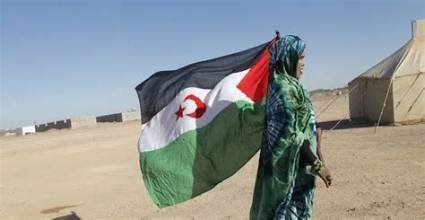
The central disagreement revolves around two competing visions for the territory’s future. Morocco claims sovereignty over Western Sahara and, since 2007, has proposed an autonomy arrangement under Moroccan sovereignty. The Polisario Front, meanwhile, advocates the Sahrawi people’s right to self-determination through a process that includes independence as an option.
The conflict acquired a new dimension in December 2020, when the administration of U.S. President Donald Trump formally recognized Moroccan sovereignty over Western Sahara, coinciding with Morocco’s resumption of diplomatic relations with Israel.
This development significantly altered the diplomatic environment surrounding the conflict, but it did not resolve the legal and political disagreement over the territory’s final status.
This study examines the evolution of the Western Sahara dispute, its position within international law, the impact of changing U.S. and European policies, the Moroccan-Algerian regional rivalry, and possible scenarios for the conflict’s future, while distinguishing between the political positions of the parties and the international legal status of the territory.
Historical Origins of the Conflict
Western Sahara was administered as a Spanish colony and was placed on the United Nations list of Non-Self-Governing Territories in 1963.
As African decolonization movements expanded, pressure increased for an end to Spanish rule and for the future political status of the territory to be determined.
In 1973, the Popular Front for the Liberation of Saguia el-Hamra and Río de Oro, commonly known as the Polisario Front, was established and began an armed struggle against Spanish rule, demanding independence for the territory.
Morocco, meanwhile, advanced historical and political claims to Western Sahara, regarding it as part of its territorial integrity on the basis of historical ties between the Moroccan Sultan and certain Sahrawi tribes.
Mauritania also advanced claims to part of the territory during this period.
Against this background, the UN General Assembly requested an advisory opinion from the International Court of Justice on the legal ties that had existed before Spanish colonization between Western Sahara, Morocco, and the Mauritanian entity.
The ICJ Advisory Opinion and Its Competing Interpretations
The International Court of Justice issued its advisory opinion on October 16, 1975.
The Court found that legal ties of allegiance had existed between the Sultan of Morocco and certain tribes living in Western Sahara. It also identified certain rights and legal ties between some Sahrawi groups and the Mauritanian entity.
At the same time, however, the Court concluded that the materials and information presented to it did not establish territorial sovereignty between Western Sahara and either the Kingdom of Morocco or the Mauritanian entity in a manner that would affect the application of the principle of self-determination.
The opinion subsequently became subject to competing political interpretations.
Morocco emphasizes the Court’s recognition of historical and legal ties with some of the territory’s tribes as an element supporting its historical narrative.
The Polisario Front and Algeria, by contrast, emphasize that the Court did not establish Moroccan territorial sovereignty and upheld the application of self-determination.
From an academic perspective, it is therefore important to distinguish between the recognition of historical or legal ties and the establishment of territorial sovereignty, concepts that the Court did not treat as equivalent.
From Spanish Withdrawal to Armed Conflict
Following the ICJ opinion, Morocco organized the Green March in November 1975, involving hundreds of thousands of Moroccans moving toward the territory.
Later that month, Spain, Morocco, and Mauritania concluded the Madrid Accords, establishing arrangements for the termination of Spanish administration.
Spain subsequently withdrew, but the question of sovereignty was not definitively settled internationally.
Morocco and Mauritania entered into armed conflict with the Polisario Front, which proclaimed the Sahrawi Arab Democratic Republic in February 1976.
Mauritania withdrew from the conflict in 1979 after reaching an agreement with the Polisario, while Morocco expanded its presence into areas previously administered by Mauritania.
Fighting between Morocco and the Polisario continued through the 1980s, during which Morocco constructed a series of defensive barriers commonly known as the sand berm.
This gradually produced a territorial reality in which Morocco controlled most of Western Sahara, including its principal cities and population centers, while the Polisario controlled less populated areas east of the berm.
The Ceasefire and the Referendum Problem
Morocco and the Polisario Front agreed to a UN-sponsored ceasefire in 1991.
As part of the settlement framework, the Security Council established MINURSO, with a referendum forming a central component of the proposed political process.
The referendum, however, was never held.
One of the most difficult issues concerned voter eligibility, with significant disagreement emerging over who should be permitted to participate and which criteria should establish an individual’s connection to the territory.
As time passed, implementation of the referendum became increasingly difficult, and the political process entered a prolonged period of stalemate.
The experience revealed one of the fundamental problems underlying the conflict: broad agreement on the need for a political settlement has coexisted with profound disagreement over the meaning and implementation of self-determination.
Morocco’s Autonomy Initiative
In April 2007, Morocco submitted its “Initiative for Negotiating an Autonomy Statute for the Sahara Region” to the United Nations.
The initiative proposes local legislative, executive, and judicial institutions with substantial authority over internal affairs, while the Moroccan state would retain responsibility for core sovereign functions, including defense, foreign affairs, and currency.
Morocco presents the initiative as a realistic compromise between full integration and independence, allowing extensive local self-government while preserving the territorial integrity of the state.
Several countries have described the initiative as serious, credible, and realistic, and its diplomatic support has expanded in recent years.
The Polisario Front, however, rejects autonomy as an adequate substitute for self-determination and continues to demand a process allowing the population to choose among options that include independence.
The disagreement has consequently shifted from the technical question of how to organize a referendum toward a more fundamental issue: Can autonomy constitute an exercise of self-determination, or does meaningful self-determination require independence to remain an available option?
The U.S. Policy Shift Since 2020
President Donald Trump’s December 10, 2020 decision to recognize Moroccan sovereignty over Western Sahara represented a significant change in U.S. policy.
The announcement came in the context of an agreement under which Morocco resumed diplomatic relations with Israel.
Previously, Washington had supported the UN-led process and described Morocco’s autonomy proposal as serious, realistic, and credible, but had not formally recognized Moroccan sovereignty over the territory.
The 2020 decision therefore moved U.S. policy from support for a Moroccan political proposal to recognition of Morocco’s sovereignty claim.
The Biden administration did not formally reverse the recognition, although it continued to express support for UN efforts.
Following Trump’s return to the presidency, the U.S. administration reaffirmed its support for Moroccan sovereignty in 2025 and described the autonomy proposal as the basis for negotiations toward a settlement.
The policy shift initiated in 2020 has therefore become more deeply embedded in U.S. policy rather than remaining a decision associated solely with the final weeks of Trump’s first term.
European Positions and the Changing Diplomatic Environment
The U.S. shift did not occur in isolation.
Several European governments have significantly adjusted their positions in recent years.
In 2022, Spain described Morocco’s autonomy initiative as the most serious, realistic, and credible basis for resolving the dispute.
France adopted a more explicit position in 2024, supporting autonomy under Moroccan sovereignty as the framework for resolving the issue.
These developments strengthened Morocco’s diplomatic position, particularly given the importance of the United States, France, and Spain in North African affairs.
Such bilateral positions, however, do not automatically alter the territory’s legal status within the United Nations system.
It is therefore necessary to distinguish between three levels: effective control on the ground, political recognition by individual states, and the territory’s final international legal status.
These levels interact, but they are not identical.
The United Nations Between Autonomy and Self-Determination
Despite diplomatic shifts, the United Nations remains the principal international framework for addressing the dispute.
Western Sahara continues to appear on the UN list of Non-Self-Governing Territories, while MINURSO continues to operate under successive Security Council mandates.
Security Council Resolution 2797 of 2025 demonstrated an important evolution in the political language surrounding Morocco’s autonomy proposal, while continuing to refer to a negotiated, viable, and mutually acceptable political solution consistent with the principle of self-determination.
It would therefore be inaccurate to suggest that the United Nations has collectively adopted the U.S. recognition of Moroccan sovereignty. At the same time, the growing political significance of the autonomy proposal within international diplomacy cannot be ignored.
The dispute has thus entered a phase in which efforts to reconcile political realism with legal requirements have become increasingly prominent.
Algeria and Regional Rivalry
The conflict cannot be adequately analyzed without considering Moroccan-Algerian relations.
Algeria hosts Sahrawi refugee camps near Tindouf and provides political and diplomatic support to the Polisario Front.
Algiers maintains that it is not a direct party to the dispute and that its position derives from its support for the principle of self-determination.
Morocco, by contrast, regards Algeria as a central actor and argues that its participation is essential to any final settlement.
This disagreement exists within a broader regional rivalry involving influence across North Africa and the Sahel, security policies, relations with major powers, border issues, military competition, and energy.
The severing of diplomatic relations between Algeria and Morocco in 2021 further reduced the prospects for creating a regional environment conducive to compromise.
A settlement of the Western Sahara question is therefore closely linked to the possibility of reducing Moroccan-Algerian tensions.
Western Sahara and Africa’s Geopolitical Transformation
Recent developments in the conflict have coincided with significant changes in Africa’s strategic environment.
The Sahel has experienced a decline in French influence, an expansion of Russian involvement, continued growth in China’s economic relations across Africa, and U.S. efforts to reshape security and economic partnerships on the continent.
Within this environment, Morocco occupies an important position for Western powers as a political, security, and economic partner in North Africa, while also expanding its economic and diplomatic engagement in West Africa and the Sahel.
Algeria, meanwhile, possesses significant energy resources, substantial military capabilities, longstanding relationships across the Sahel, and important ties with Russia, China, the European Union, and the United States.
This does not mean that international positions on Western Sahara can be explained exclusively through geopolitical competition.
It does, however, mean that broader regional and international transformations increasingly shape the environment in which governments formulate their policies toward the dispute.
International Law and Political Realism
Western Sahara provides a clear example of the potential tension between legal principles and political considerations.
From a legal perspective, self-determination has remained central to the United Nations’ treatment of the issue.
From a political perspective, the persistence of the dispute and the failure of previous settlement efforts have contributed to growing international interest in autonomy as a practical basis for compromise.
These two concepts are not necessarily incompatible.
In international law and practice, self-determination does not invariably result in the creation of an independent state and can take different political forms if the will of the population concerned is expressed freely and credibly.
The central difficulty in Western Sahara, however, is the absence of agreement among the parties over the process through which that will should be expressed and the options that should be available.
The dispute over how self-determination should be exercised has therefore become almost as important as disagreement over the ultimate outcome.
Future Scenarios
Four broad scenarios can be identified.
The first is continuation of the status quo, with Morocco maintaining effective control over most of the territory, the Polisario continuing to reject Moroccan sovereignty, and the UN process remaining active without producing a final settlement.
This scenario remains plausible if the gap between the parties persists.
A second scenario would involve a gradual shift toward detailed negotiations over autonomy, driven by expanding international support for Morocco’s proposal.
The success of such negotiations would depend on the substance of the autonomy arrangement, the guarantees attached to it, and the means through which acceptance by the population concerned and the principal parties could be established.
A third scenario would involve reformulating self-determination within a negotiated settlement combining extensive autonomy with an agreed mechanism for expressing the population’s political will.
Such an approach could create middle ground but would require substantial concessions from the parties.
A fourth scenario would involve renewed large-scale military escalation if the political process fails and mutual distrust continues.
Such an outcome would carry consequences beyond Western Sahara itself given the fragile security environment across North Africa and the Sahel.
Conclusion
The Western Sahara dispute is no longer governed by the same dynamics that shaped it in the 1970s.
The territorial balance has changed, international positions have evolved, and Morocco’s autonomy proposal has acquired increasing diplomatic prominence, while self-determination remains an essential element of the UN framework.
The U.S. policy shift since 2020 has strengthened Morocco’s diplomatic position, but it has not yet produced a final settlement or a collective change in the territory’s legal status within the United Nations system.
The Polisario Front, meanwhile, faces the challenge of maintaining its traditional demand in an international diplomatic environment increasingly receptive to autonomy, while Algeria remains a major regional actor whose influence on the prospects for settlement cannot be ignored.
The future of the conflict therefore appears less dependent on any single party achieving complete diplomatic victory than on the possibility of constructing a political process capable of reconciling three elements: realities on the ground, the principle of self-determination, and sufficient acceptance of the final settlement by the principal parties.
The central challenge is to move from managing the conflict to resolving it. After more than five decades, the principal obstacle may no longer be the absence of proposals, but the absence of agreement over the foundation on which a settlement should be built and the mechanism through which it can acquire political and legal legitimacy.
Most read




Read also